Marta Kos at Bled: Serbia Can't Sit on Two Chairs
The EU's enlargement commissioner said from Bled that Serbia must choose a side, while a Czech MEP asked Brussels to freeze accession talks over honors planned for Ratko Mladic.

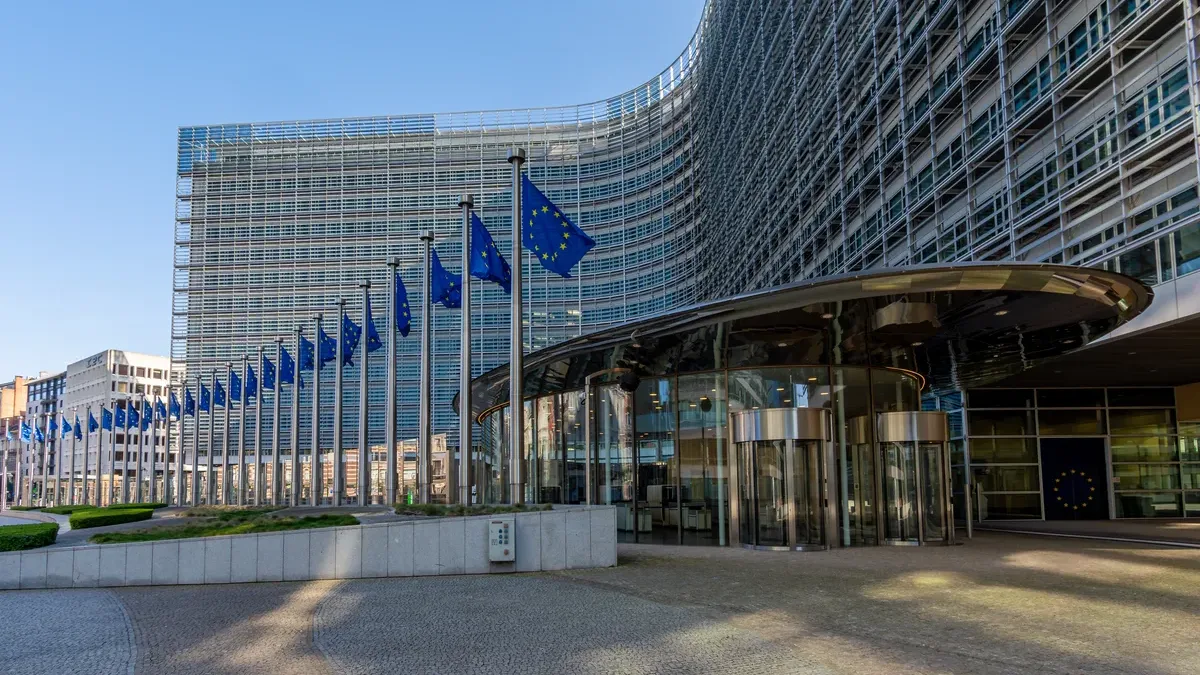
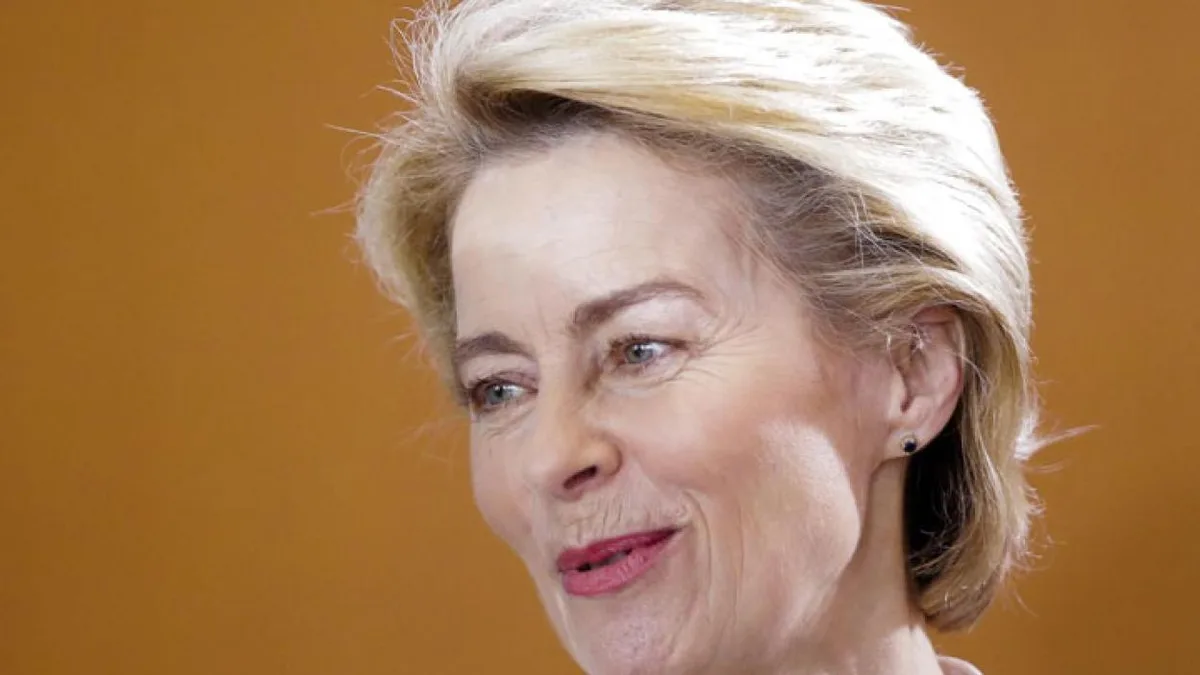
On September 1, 2026, EU Enlargement Commissioner Marta Kos used the stage of the Bled Strategic Forum to comment, for the first time in person and by name, on the planned state funeral of Ratko Mladic, telling Belgrade it has to decide which side it stands on. The same day, Czech MEP and the European Parliament’s standing rapporteur for Bosnia and Herzegovina, Ondrej Kolar, sent the European Commission a letter asking it to consider freezing Serbia’s accession negotiations. For a country that has spent years negotiating EU membership, that amounts to pressure from two directions in Brussels on the same day, one delivered publicly and the other in writing.
What did Kos say in Bled?
Kos spoke on a panel titled “Enlargement or Irrelevance? Europe’s Next Geopolitical Tool,” where the future of EU expansion was framed as a test of the bloc’s own relevance. Asked directly about the honors planned for Ratko Mladic, the commissioner did not soften her language.
“Ratko Mladic is a convicted war criminal,” she said, adding that glorifying convicted war criminals has no place in either member states or candidate countries.
She described the Western Balkans as a region full of open wounds and urged regional leaders, without naming anyone, to stop exploiting them for political gain. Her message to Belgrade, however, was personal and direct.
“You cannot sit on two chairs. At some point you have to decide where you want to belong.”
Kos added that it is in the European Union’s interest for Serbia to stay on its European path, but that this requires a clear strategic orientation and the implementation of key reforms, not just a declared commitment.
Responding to criticism that the EU is losing its appeal and that young people in the region increasingly doubt the enlargement process, Kos said: “The European Union is the best political project we have ever had in the world, because it gives us peace.”
What is Ondrej Kolar asking Brussels to do?
While Kos was speaking in Bled, Ondrej Kolar posted on Facebook that he would write to the commissioner asking her to consider suspending Serbia’s EU accession talks. In the letter itself, addressed to the European Commission, he asks for accession negotiations to be suspended or frozen until Serbian authorities unambiguously reject the glorification of people convicted of war crimes. Kolar also asks the Commission to halt any further deepening of Serbia’s integration into the Schengen area until Belgrade clearly demonstrates commitment to the core political values European integration rests on.
On his Facebook profile, where Portal Analitika first spotted the post, he wrote:
“The highest honors for a war criminal? Definitely not in the European Union. Ratko Mladic was convicted of genocide by an international tribunal in 2017 for his role in the war in Bosnia. Now Serbs are preparing his funeral with state honors. That goes against absolutely everything, including basic decency.”
Kolar added that his objection is not to enlargement itself: “I am in favor of the European Union’s enlargement. But we cannot have admirers of mass murderers among us,” he concluded.
To justify his request, Kolar pointed to two statements out of Belgrade: an announcement by Serbian Justice Minister Nenad Vujic that Mladic should be buried with state and military honors, and criticism of the Hague tribunal voiced by Serbian President Aleksandar Vucic, who accused it of “uncivilized behavior.” For the MEP, the combination of those two statements shows that glorifying a convicted war criminal in Serbia is not an isolated incident but a position coming from the top of the government.
Ratko Mladic was convicted by the International Criminal Tribunal for the former Yugoslavia in 2017, in a final ruling, of genocide committed during the war in Bosnia and Herzegovina. He died while serving a life sentence in The Hague, after which Serbia announced it would give him state honors at his funeral in Belgrade.
Why this is not just a symbolic dispute
Kolar’s position in the European Parliament gives his request weight beyond a single social media post. As the standing rapporteur for Bosnia and Herzegovina, he regularly writes the reports the Parliament uses to assess the state of affairs in the region, and his request targets two separate tracks of Serbia’s relationship with the EU: the accession process itself and further movement toward the Schengen area. Freezing either one would not be a formality, since it would halt negotiating chapters that Serbia has spent years opening, at a moment when the country is already behind its planned timetable.
Ratko Mladic’s funeral, announced with state honors, does not yet have an official date. Kolar’s letter is therefore reaching Brussels before the ceremony has taken place, serving as an advance warning that if Belgrade carries out the funeral as announced, it will have to reckon with consequences in the very negotiations it is conducting.