Marta Kos: EU Reviews Serbia's Candidate Status
European Enlargement Commissioner Marta Kos says Brussels must check whether Serbia is still on an honest EU path, after Ratko Mladic was buried with state honors in Belgrade.

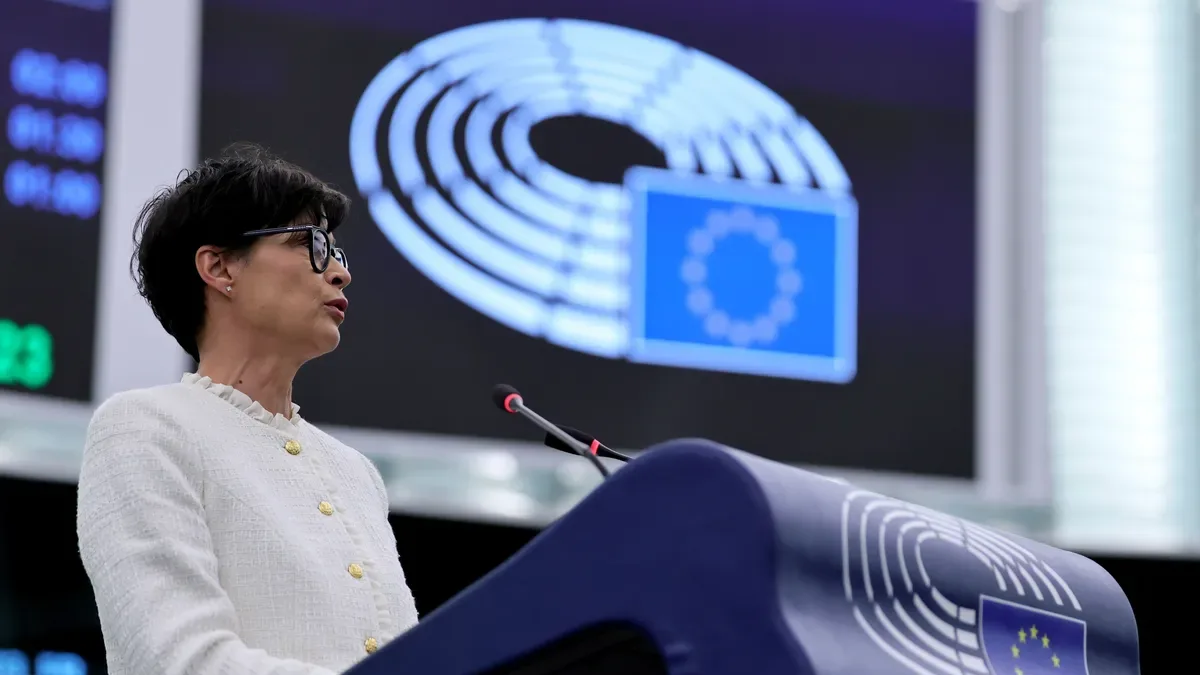
European Enlargement Commissioner Marta Kos said the European Union must check whether Serbia is still fit to remain a candidate for membership, after Ratko Mladic, definitively convicted of genocide and other war crimes in Bosnia and Herzegovina, was buried in Belgrade with full state honors. She made the comment in an interview with Germany’s Frankfurter Allgemeine Zeitung, published on September 10, 2026, and picked up by Nova.rs at 11:30 a.m. and by N1 the same day.
Kos tied the question of Serbia’s candidate status directly to the funeral. “Serbia is now at a turning point,” the commissioner said, adding that the accession process requires reckoning with the past and genuine reconciliation, along with respect for the rule of law and a clear strategic orientation for the country. “We have to check to what extent Serbia is still being honest about its European path,” she said.
Mladic’s state funeral was also the reason Kos canceled a planned visit to Belgrade. Asked why she had scrapped the trip, the commissioner answered with a question of her own: “How can you celebrate someone who was convicted as a war criminal?” She explained that traveling to the capital at a moment when so many people, not just politicians, were glorifying a war criminal would have made it impossible for her to ever again look the mothers of Srebrenica in the eye.
“Coming to terms with the past is one of the hardest issues we have to grapple with in the Western Balkans,” Kos said, noting that 31 years have passed since the war in Bosnia and Herzegovina. Responsibility for healing those wounds, she said, lies with political elites, not with reopening old wounds. As an example of genuine engagement with one’s own past, she pointed to Germany, whose state minister for Europe, she announced, will soon travel to Kragujevac over the crimes German units committed there during World War II.
What EU institutions are doing before October
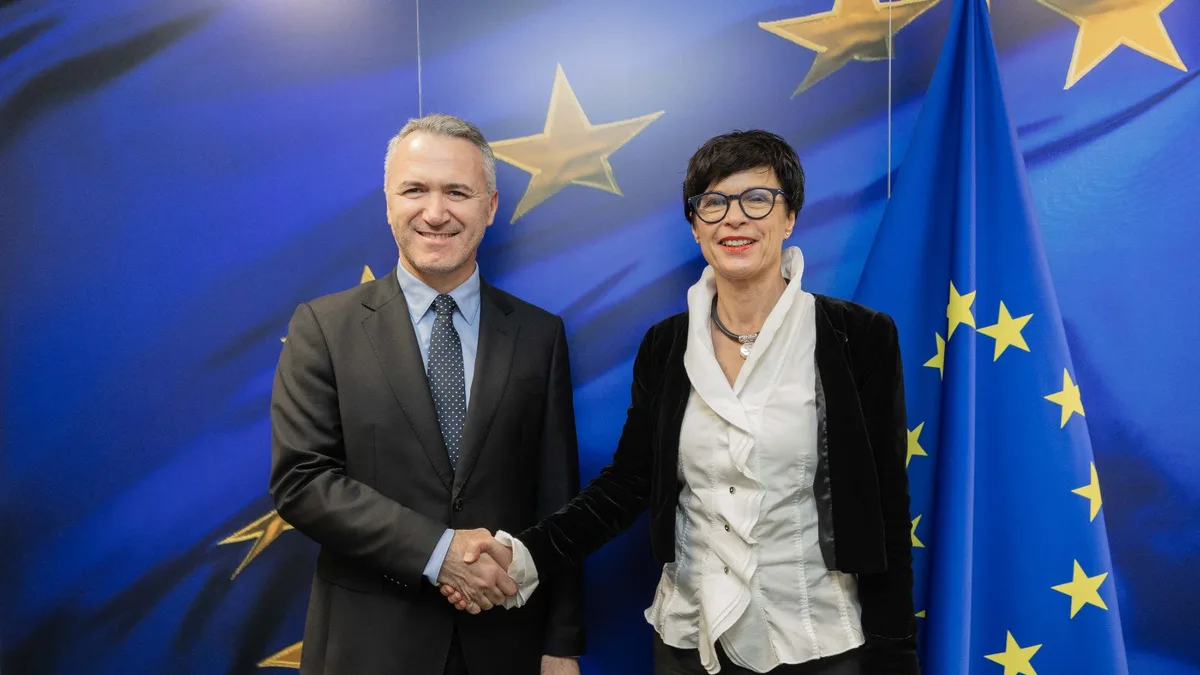
Kos said she would first discuss next steps with European Commission President Ursula von der Leyen in late September. The key document underpinning that discussion will be the Commission’s regular report on the Union’s readiness to admit new members. “Our report on the Union’s enlargement readiness will be finished by the end of September,” Kos said, adding that it would serve as the basis for discussion in the Council of the European Union in October.
In the FAZ interview, the commissioner also mentioned that Serbia is heading toward elections soon, without specifying a date, and said the fate of the country’s European path depends on both its politicians and its population. Serbia’s elections have been called for October 25, 2026.
Kos also spoke about the broader context of EU enlargement. She said geopolitical circumstances have forced Brussels to abandon the “all or nothing” logic, under which a candidate country only joins once it has met every single condition, and that gradual elements of integration are being introduced instead, such as earlier inclusion in the payment system or the removal of roaming charges, with energy, transport and critical raw materials to follow. She cited Moldova and Ukraine as examples, both of which the EU is helping to become fully energy independent from Russia by the end of 2027.
Asked about German Chancellor Friedrich Merz’s proposal for associate EU membership for Ukraine, the commissioner said gradual integration should apply to all candidates that need more time, adding that Ukraine will need more time than Montenegro, but that the decisive factor is not Germany’s view alone, but the position of all member states. She also pointed to Hungary’s blocking of European consensus as an example the Union needs to learn from, announcing protection mechanisms that would in future be built into accession treaties to ensure new members permanently respect the bloc’s rules and values.
The concrete date after which it will be clearer whether Serbia stays on the list of candidates is the end of September, when the Commission finishes its report, and October, when the Council of the EU discusses it. Until then, according to Kos, the burden of proving that Serbia’s European path is still genuine rests on both the country’s leadership and its citizens.