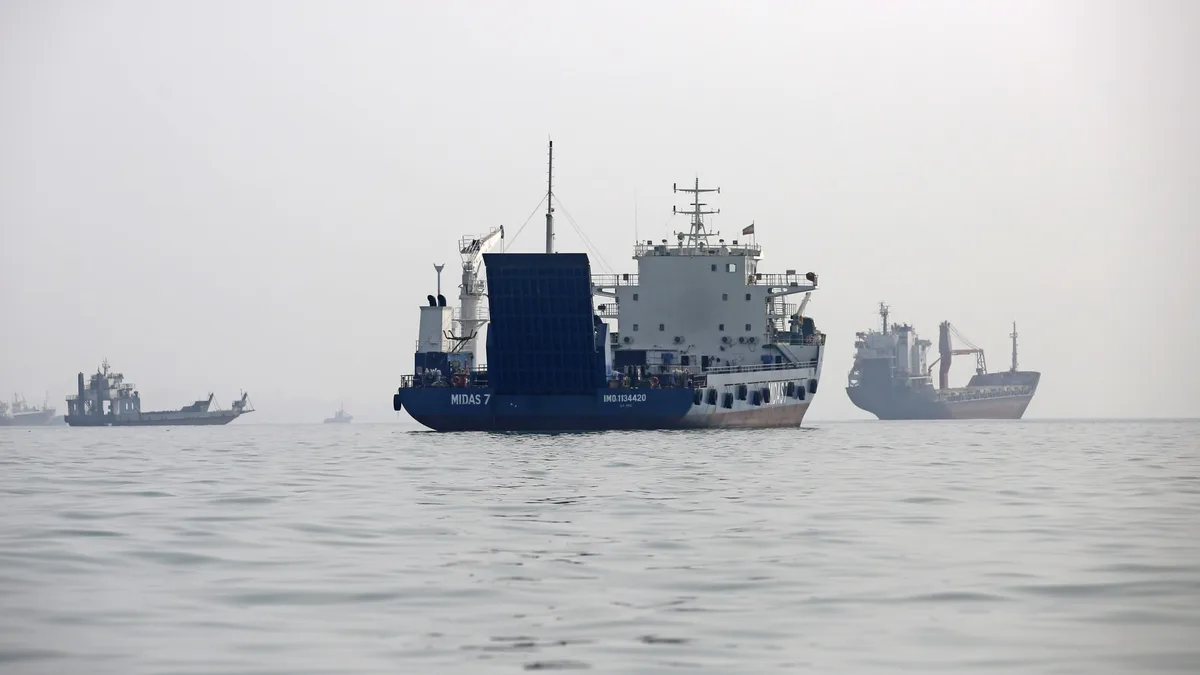
US Strikes Southern Iran After Tanker Attacks Near Khasab
The US Central Command struck Revolutionary Guard sites in southern Iran, a day after two supertankers carrying Saudi crude were hit near Oman's Khasab in the Strait of Hormuz.

The US Central Command (CENTCOM) said strikes on Revolutionary Guard sites in southern Iran began at noon Washington time on September 1, a day after two supertankers carrying Saudi crude were hit by unidentified projectiles in the Strait of Hormuz. For Serbia, where pump prices track the world price of Brent crude, any new escalation around a strait that carries a fifth of global oil exports is felt even thousands of kilometers from Belgrade, however distant the conflict itself may seem.
Several locations in southern Iran were targeted, near the port of Bandar Abbas, as well as Konarak, Chabahar, Qeshm and Sirik. Iran’s state-run Nour News reported explosions in Bandar Abbas and Chabahar. The target list included air defense systems, radars and anti-ship cruise missile launchers, and, according to some reports, tankers belonging to Iran’s state oil company, in what is being described as a tanker-for-tanker rule.
The strikes came after CENTCOM had earlier sought approval for action in the Strait of Hormuz, with President Donald Trump hesitant to give it. The immediate trigger was the attack on the two supertankers carrying Saudi crude in the same strait.
What Happened to the Tankers Near Khasab
The Sidr, sailing under the Saudi flag and operated by Bahri, was hit 16.6 nautical miles northeast of Oman’s Khasab at 19:52 GMT. A few minutes later, the Liberian-flagged Senegal Prosperity, managed by Sinokor, was struck by three missiles about 17 nautical miles east of Khasab. Both ships were carrying two million barrels of Saudi crude each, loaded at the Ju’aymah terminal a week earlier, after Saudi Aramco resumed loadings in the strait in August.
Accounts differ on the timing of the tanker attack. The Korea Herald reports the ships were hit Monday evening, while CNBC places the strikes on commercial vessels on the same day as the US strikes, according to CENTCOM.
Maritime intelligence firm Marisks said the crews of both vessels were safe. The UK Maritime Trade Operations (UKMTO) service said it had recorded three missiles hitting a tanker at the same location as the vessel was leaving the Strait of Hormuz, and stated:
“This represents a further deterioration of the security environment.”
CENTCOM linked the strikes to earlier attempted attacks by the Revolutionary Guard on commercial vessels and on US troops in the region, saying in a statement:
“The strikes followed recent attempted attacks by the Revolutionary Guard on commercial vessels in the Strait of Hormuz and on US troops stationed in the region.”
Timeline of the Past Few Days
Today’s strikes extend a sequence that began on August 30, when the US hit two launch sites on Larak Island, where, according to US officials, Revolutionary Guard forces were preparing missiles fitted with sea mines. Iran retaliated against two bases in Jordan. Trump described the new strikes as a response to a failed Iranian attempt to lay mines in the strait, and Srpske novine had earlier reported that CENTCOM sought approval for a new operation while the president hesitated to grant it.
Iranian President Masoud Pezeshkian said at the Shanghai Cooperation Organisation summit in Kyrgyzstan that Iran would immediately respond in kind if the US returns to the obligations of the memorandum signed in June. US Treasury Secretary Scott Bessent announced new weekly secondary sanctions targeting Iran’s banking sector and anyone trading with Iran, while Emirates NBD analyst Daniel Richards said:
“Additional US secondary sanctions on Iran are also expected, which keeps the geopolitical risk premium embedded in energy prices.”
Kharg Island, through which about 90 percent of Iran’s oil exports pass, with a capacity of seven million barrels per day, drew particular attention after Trump posted an AI-generated video on his social media platform showing the island in ruins.