US Sinks Five Iranian Tankers, Iran Strikes Jordan Base
The US military destroyed five Iranian oil tankers in the Strait of Hormuz and near Kharg Island, and Iran retaliated with missiles on a US base in Jordan, where 18 projectiles were intercepted.

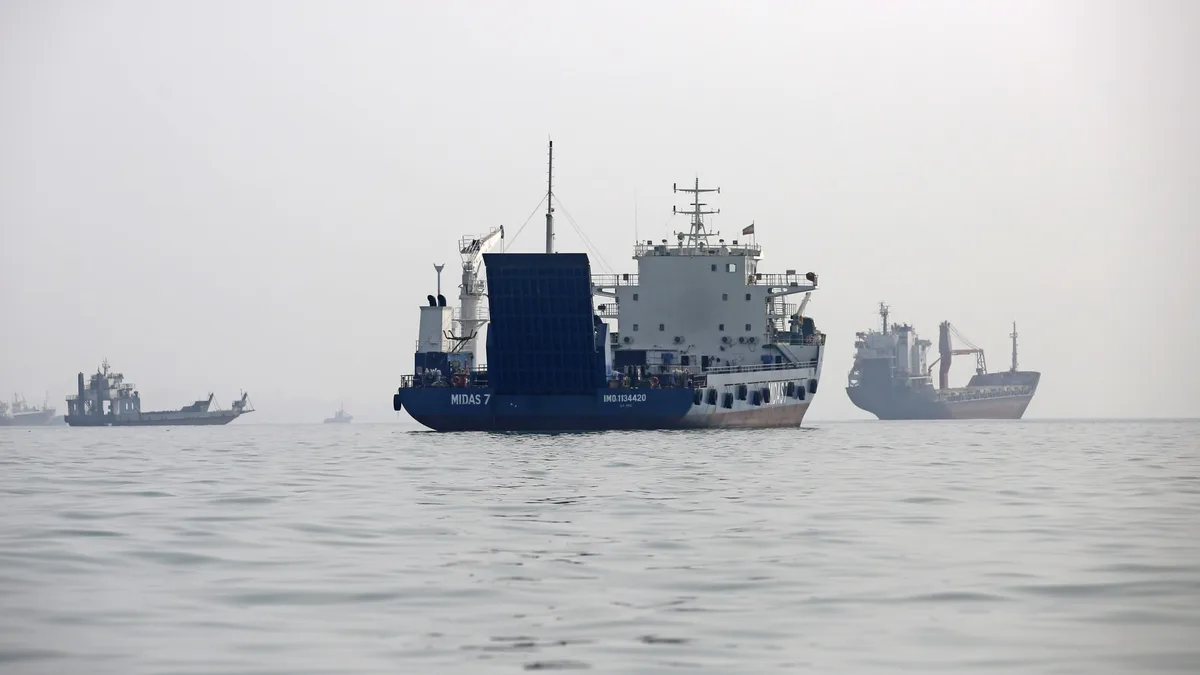
The US military destroyed five Iranian crude oil tankers on Tuesday, September 8, responding to two attempts by the Revolutionary Guard to strike a US warship in the region with rockets. Iran answered the same day with ballistic missiles aimed at the US Al Azraq air base in Jordan, where the Jordanian military shot down 18 projectiles and reported no casualties. The six month conflict between Washington and Tehran has entered a fresh round of strikes on vessels and military positions.
A Fifth Round of Tanker Strikes
According to a statement from US Central Command (CENTCOM), four tankers were hit in the Gulf of Oman and a fifth near Kharg Island, Iran’s main oil export terminal. The Americans say the vessels belong to what they call Iran’s shadow fleet, a network of tankers that, according to US claims, is used to export oil and fund the Iranian regime’s budget. Admiral Brad Cooper, commander of CENTCOM, said in the statement that any attack on US ships would carry an economic price.
“If you fire on two of our ships, we will impose an even greater economic cost,” Cooper said.
This is not the first strike of its kind. The US had already hit three Iranian crude tankers on September 5, and a few days before that Iran, according to earlier reporting by Srpske Novine, attacked six merchant ships in the Strait of Hormuz and sank the tanker Kajlo. The Revolutionary Guard has now said it targeted two American vessels and eight tankers, along with ten more ships it calls violators, claiming they tried to pass through a zone Tehran has declared restricted and unsafe.
Iran Strikes Jordan
Tehran’s response came the same day, with missiles fired at the Al Azraq air base, where American troops are stationed. Jordan is a longtime US ally in the region, and its bases regularly become targets of Iranian strikes when Tehran wants to answer Washington without attacking American soil directly. The Jordanian military said it intercepted 18 ballistic missiles, while two fell in an unpopulated area with no casualties.
The speaker of Iran’s parliament, Mohammad Bagher Ghalibaf, said on social media that Tehran would not accept attacks without a response.
“Strike our resources and you will be struck,” Ghalibaf wrote.
Sanctions Pressure
Alongside the military escalation, Washington has stepped up economic pressure on Tehran. Treasury Secretary Scott Bessent warned in a statement that anyone doing business with Iran’s remaining airlines risks being cut off from the global financial system.
“You risk being cut off from the global financial system,” Bessent said.
Iranian Foreign Minister Abbas Araghchi responded that new sanctions would not change the course of the war.
“Having failed to achieve its goals through sanctions or through war, Washington’s answer is more sanctions,” Araghchi said.
The Strait of Hormuz on Edge
The scale of the crisis in the strait is shown by the fact that on September 7, the day before the latest strikes, 42 tankers were waiting to pass through Hormuz, 18 of them carrying oil, with a combined capacity of 1.76 million cubic meters, or roughly 11.1 million barrels. That is about 11 percent of daily global oil demand, trapped in the narrow chokepoint that Iran and the United States have been alternately targeting since the war began. At least 75 ships have been attacked since the conflict erupted, at least 21 sailors have been killed, two incidents caused minor oil spills, and six led to fires.
The war is also being felt more heavily within the ranks of the US military. The number of wounded soldiers since July 7 has climbed to 403, after the latest report added 26 more cases from previous months. The cost of the escalation has spilled over into the oil market as well: Brent crude broke above 100 dollars a barrel on September 9 for the first time since July, trading at 100.44 dollars, after standing at 97.54 dollars a day earlier and around 72 dollars at the start of July.
Neither Washington nor Tehran currently shows any sign of backing down. Iran’s Revolutionary Guard has already announced new targets, while CENTCOM continues to track the tanker fleet it calls Iran’s shadow fleet. Judging by the pace of the conflict so far, with only a few days between strikes, the next move is unlikely to be long in coming.