Brac Wildfire Out of Control Again, Heading Toward Milna
The wildfire on Brac flared up again on its third day of firefighting, has now burned through 1,500 hectares and is moving toward Milna, prompting extra reinforcements from Dubrovnik and Sibenik.

A major wildfire on the Croatian island of Brac, one of the favorite summer destinations for tourists from Serbia, is entering its third day out of the control of firefighting crews. The flames flared up again on Saturday morning and are moving toward Duboka cove and the town of Milna, prompting chief fire commander Slavko Tucakovic to order additional intervention units from Dubrovnik and Sibenik.
The fire broke out on Thursday evening, September 10, in hard to reach terrain between Lozisca and Grabovica. According to an estimate from Split Dalmatia County fire chief Ivan Kovacevic, given to the Croatian news agency Hina, about 1,500 hectares of forest and low vegetation had burned by Saturday. That is more than what the Croatian portal Tportal reported on Friday morning, when it put the figure at over 1,000 hectares, a difference that shows how much ground the fire covered in just one day.
Around 11:30 on Friday, new flare-ups broke out in hard to reach terrain on the southwestern side of the island, in an area where until then there had only been smoke. At one point the fire moved toward the Blaca hermitage, a well known monastic complex that was ultimately saved, before turning toward Duboka cove and the town of Milna, where Canadair planes have been refilling with water nonstop throughout Saturday on the run to and from the fire zone.
On Saturday morning, four Canadair CL-415 planes were back in the air, putting out open flames on the southern part of the fire zone. A day earlier, eight aircraft had been deployed, five Canadairs and three air tractors, while around 100 firefighters with 32 vehicles worked on the ground during the morning operations.
From Zadar and Sibenik Knin counties, 52 firefighters with 17 vehicles arrived on Brac, with another 44 firefighters and 12 vehicles held in reserve from Istria, Primorje Gorski Kotar and Lika Senj counties. Those forces are now being joined by intervention units from Dubrovnik and Sibenik, whose deployment Tucakovic ordered after it became clear that the existing deployment was not enough to stop the fire from spreading toward populated areas.
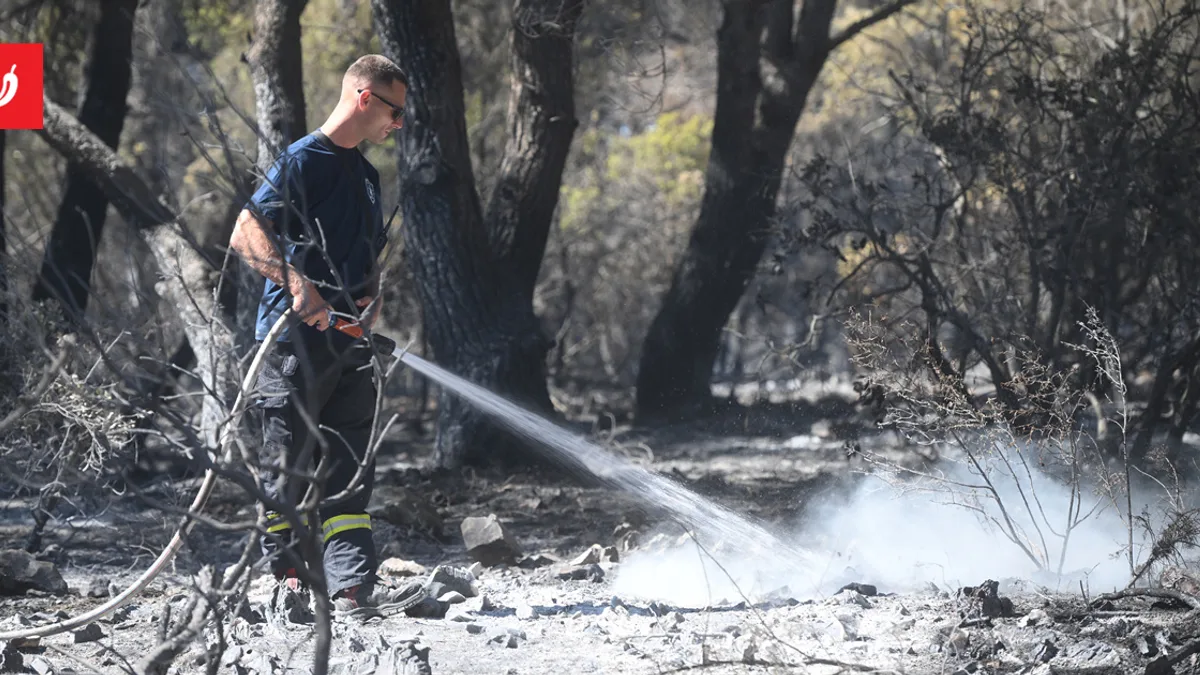
Houses in Lozisca were saved overnight, even though in some spots only a road separated them from the flames. An evacuation by sea had been prepared for residents of Gornje Bobovisce, with boats standing by to take people to the coast if needed. Commander Kovacevic personally picked up a fire hose and fought flames that had flared up right next to the main road, a scene that says enough about how uncertain the situation on the ground was.
Strong wind is making the situation even harder, threatening to reignite parts of the fire zone that had already been put out. Sources differ on wind direction: Croatian media reported on Friday that a southerly wind was pushing the fire toward new flare-ups in the southwest of the island, while the direction behind Saturday’s renewed flare-up is not stated consistently. What sources do agree on is that the absence of the rain that had been forecast is an additional complicating factor.
Srpske novine reported on Friday that Canadair planes were putting out the fire near Lozisca and Bobovisce, at a time when it looked like the flames were under control. Saturday’s flare-up shows just how uncertain firefighting is on this rocky, hard to reach terrain, and the outcome of the fight for Duboka cove and the town of Milna will also determine whether Croatian authorities need to seek additional help beyond what is already arriving from neighboring counties.