Brac Fire: Crews May Pull Back as Hectare Count Disputed
The Lozisca fire on Brac did not flare up again overnight; the chief says forces could be partly withdrawn. The official 1,500-hectare estimate is two days old; media report far higher numbers.

In brief
- The wildfire near Lozisca on Brac did not flare up again during the night into September 14
- The fire chief says that if favorable conditions hold today, part of the forces could be withdrawn from the island, though no decision has been made yet
- The Croatian Firefighting Association’s official estimate of roughly 1,500 hectares dates back to September 12, two days before this report
- Kurir cites more than 4,000 hectares burned and a fire line 35 to 40 kilometers long; a day earlier the same outlet reported an estimate of about 5,600 hectares from satellite imagery, noting it was not an official figure
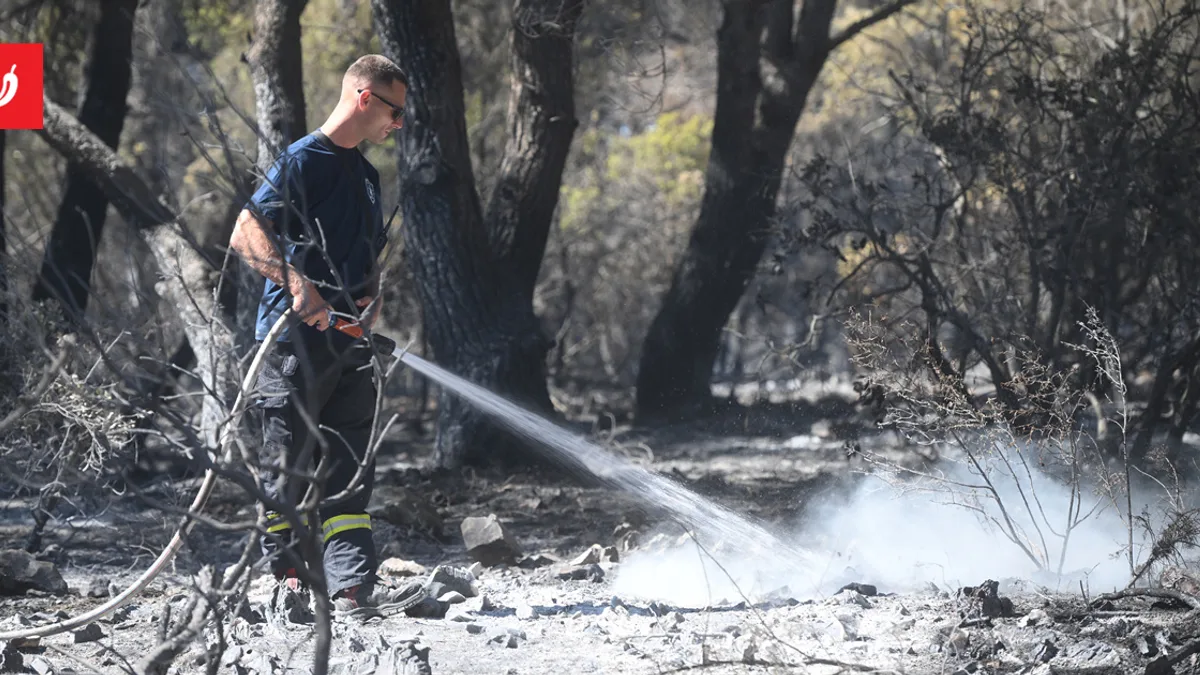
The wildfire that has been burning on Brac since September 10, one of the most visited destinations on the central Adriatic where large numbers of Serbian tourists spend their summers, did not flare up again during the night into September 14. Ivan Kovacevic, commander of the Split-Dalmatia County Firefighting Association, described the situation in his morning report as “very good” and said that if conditions stay favorable through the day, part of the forces could be pulled off the island. Srpske novine reported earlier this week on the moment the fire pushed back toward Milna, and now, after several calmer days, Croatian fire services are for the first time signaling that the pressure on the ground may ease.
That said, this is an announcement, not a decision already carried out. In the morning report from September 14, carried by Dalmacija Danas, Kovacevic said:
“The situation on Brac is very good. We had strong wind, but there was no reignition of the fire. The situation is similar in the Sevid area. This morning we requested two AT-802 firefighting aircraft, which will fly over Sevid and Brac and operate if needed. If the favorable situation continues today, we will probably release part of the forces from Brac.”
As of this morning, no report from the Croatian Firefighting Association had confirmed that the withdrawal had actually begun. On the contrary, 223 firefighters with 69 vehicles remained on the ground overnight, continuing to stand watch and secure the fire scene.
While attention turns to a possible drawdown of forces, the numbers on how much land has burned remain disputed. The Croatian Firefighting Association last updated its estimate on September 12, when it put the fire at around 1,500 hectares of low scrub, maquis and forest near Lozisca, in the same report noting that 134 firefighters with 36 vehicles were on the ground that night. That figure was not revised in the reports from September 13 or 14. Kurir, citing Kovacevic, reports that more than 4,000 hectares have burned so far, with the fire line estimated at 35 to 40 kilometers. A day earlier, the same outlet had published an estimate of roughly 5,600 hectares, drawn from satellite imagery on Google Maps, with an explicit note that this was not an official figure but an approximation. The gap between the last official number and the most recent media estimates is, in other words, close to fourfold.
A day earlier, on September 13, Kovacevic had offered a more measured assessment to the Croatian Firefighting Association: “The situation at the fire site is currently satisfactory. The day was spent securing the fire scene, and we carried out a shift change of firefighters who will remain on the ground tonight as well.”
The fire was first reported at 10:13 p.m. on September 10, when the Split-Dalmatia County fire operations center received word of a blaze near Lozisca. The critical moment came on the evening of September 12, when around 10 p.m. the fire spread toward Milna and threatened buildings at the Gava tourist resort. At 11:25 p.m., a preventive evacuation by sea began, using vessels from the Ministry of Interior, the Croatian Navy, the harbor master’s office and private boat owners. The resort’s main buildings were saved; only auxiliary structures were damaged, and two civilians suffered minor injuries and were taken to the Split Clinical Hospital Center.
Frane Lozic, head of the Milna municipality, described to Croatian media how quickly the situation changed within a matter of hours:
“Yesterday we thought we had it under control, that it was over, and then it happened: at nine in the evening the bura wind picked up, and a monster appeared out of nowhere.”
The situation grew more complicated on September 13, when three new fires broke out in the wider area: above Bol at 2:30 p.m. and 3:45 p.m., near Sevid in the Marina municipality at 4:11 p.m. on 20 hectares, brought under control by 9:15 p.m., and near Brnjaca in Grebastica on just 0.21 hectares, which was extinguished quickly. That day, 236 firefighters with 68 vehicles were deployed on the ground, and 223 firefighters with 69 vehicles were on duty overnight into September 14. From the air, four CL-415 Canadair aircraft and three AT-802 Air Tractor planes assisted in the firefighting effort. Reinforcements reached the island from the Sibenik-Knin, Zadar, Istria and Primorje-Gorski Kotar counties.
According to statements from the Croatian Firefighting Association, some residents and tourists from Osibova cove were ferried to Milna by boat, while about 200 people were housed in the Supetar sports hall and the pastoral center in Postira. Kurir, citing Croatian sources, reports that nearly 700 people were relocated during the sea evacuation. In a separate fire at a shopping center in Kastel Sucurac on the mainland, unrelated to the Brac blaze, Kurir reports that two firefighters were lightly injured.
For Serbia, how the situation on Brac develops matters chiefly because of tourist traffic to this part of the Adriatic, which continues well into the second half of September. Whether commander Kovacevic will actually be able to withdraw part of the forces depends on whether the bura wind, which has repeatedly and suddenly reversed the course of firefighting over the past several days, stays calm today as well. Croatian fire services say that answer will only come in the next daily report.