Rep. Keating: Dodik, Flynn Brothers Rewarded in Bosnia
Rep. Bill Keating's report says the Trump administration rewarded the president's allies in Bosnia and Herzegovina by lifting sanctions on Dodik and backing a gas pipeline tied to Flynn's brother.

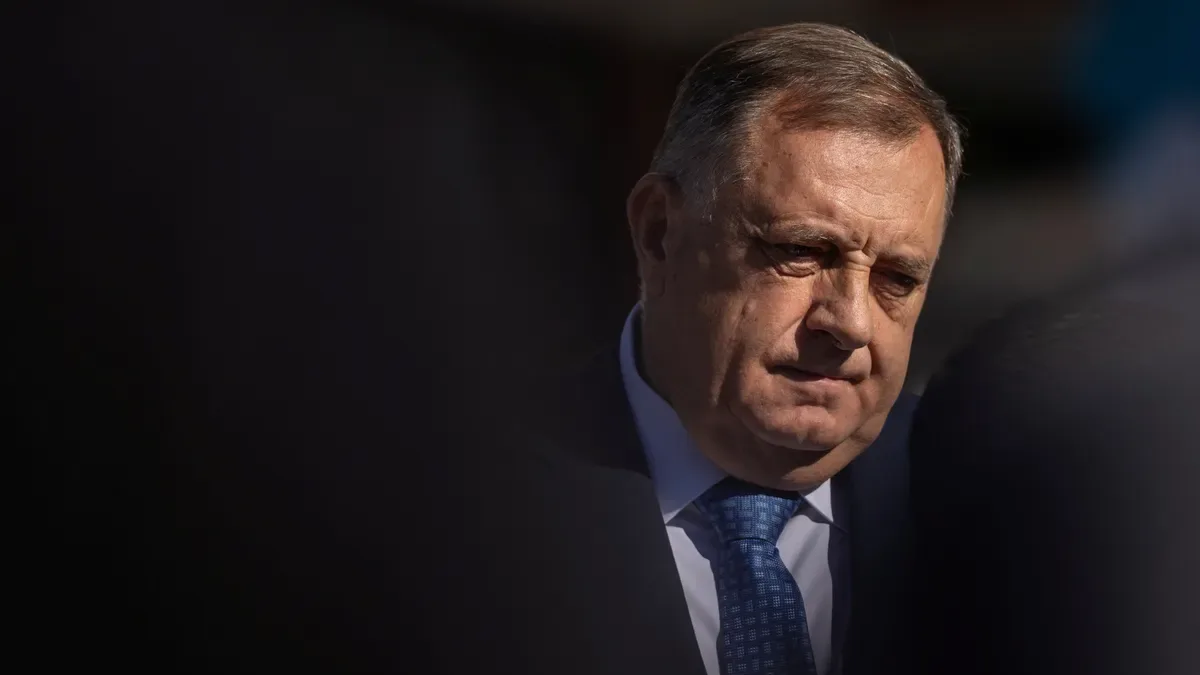
A report released today in Washington by Rep. Bill Keating, a Massachusetts Democrat, bears directly on Republika Srpska and its president, Milorad Dodik, a name that has for years been tangled up in Belgrade’s relations with Washington and Brussels. The document argues that the Trump administration, by lifting sanctions on Dodik and diplomatically backing a pipeline linked to the brother of former National Security Advisor Michael Flynn, rewarded the president’s allies at the expense of Bosnia and Herzegovina’s institutions and the Dayton peace agreement.
The report, titled “Pay for Play in the Balkans,” was published ahead of Tuesday’s House Foreign Affairs Committee hearing on the Western Balkans, where Deputy Assistant Secretary of State for Europe and Eurasia Daniel Lawton is set to testify. Keating is the ranking Democrat on the committee’s Europe Subcommittee, and the document is signed by every other Democrat on that subcommittee as well as the top Democrat on the full committee. According to the US outlet Semafor, which received the report first, Democrats are also framing it as groundwork for future oversight of Western Balkans policy should they win a House majority in November’s midterms.
Why were Dodik’s sanctions lifted?
The central section of the report concerns the Treasury Department’s October 2025 decision to remove Dodik, his children and his associates from the sanctions list. The sanctions were first imposed in 2017 and expanded by the Biden administration between 2022 and 2025 over what officials at the time described as destabilizing and corrupt activity. Keating’s report argues the fallout from that decision reaches well beyond Dodik himself:
The Trump administration’s policy toward Bosnia and Herzegovina undermines 30 years of bipartisan American strategy, threatens regional stability, enriches the president’s friends and allies, strengthens Russia, and puts the Dayton peace agreement at risk.
The State Department had earlier defended the sanctions relief by pointing out that on October 18, Republika Srpska’s National Assembly repealed most of the unconstitutional, anti-Dayton laws it had previously passed, arguing this opened the way for local actors to work out their own country’s future. Keating counters that Dodik has not behaved since the sanctions were lifted in a way that would justify that decision. He notes that in February 2026, during a visit to Washington, Dodik again spoke of Republika Srpska independence, called the Dayton agreement “unsalvageable,” accused then-High Representative Christian Schmidt of lacking legitimacy in Bosnia and Herzegovina, and voiced support for Russian policy during remarks he made in Moscow. The report’s conclusion is that by lifting the sanctions, Washington gave up the only leverage it had over Dodik while rewarding the people around him.
Per the report’s figures, Republika Srpska has spent roughly $8.9 million on Washington lobbying firms since January 2025, the start of Trump’s second term, according to Klix, which cites the document. Semafor does not give an exact figure but puts the total at at least $9 million. The single largest recipient is RRB Strategies, a firm tied to former Illinois governor Rod Blagojevich, which the report says was paid more than $700,000, while Michael Flynn received $100,000 a month from the Republika Srpska government for lobbying work. Keating adds that Flynn also received $1.25 million from the US government in March 2026 as part of a settlement in a civil suit, and that Jesse Binnall’s PAC paid $191,075.24 in 2023 for legal consulting.
A pipeline for Flynn’s brother’s company
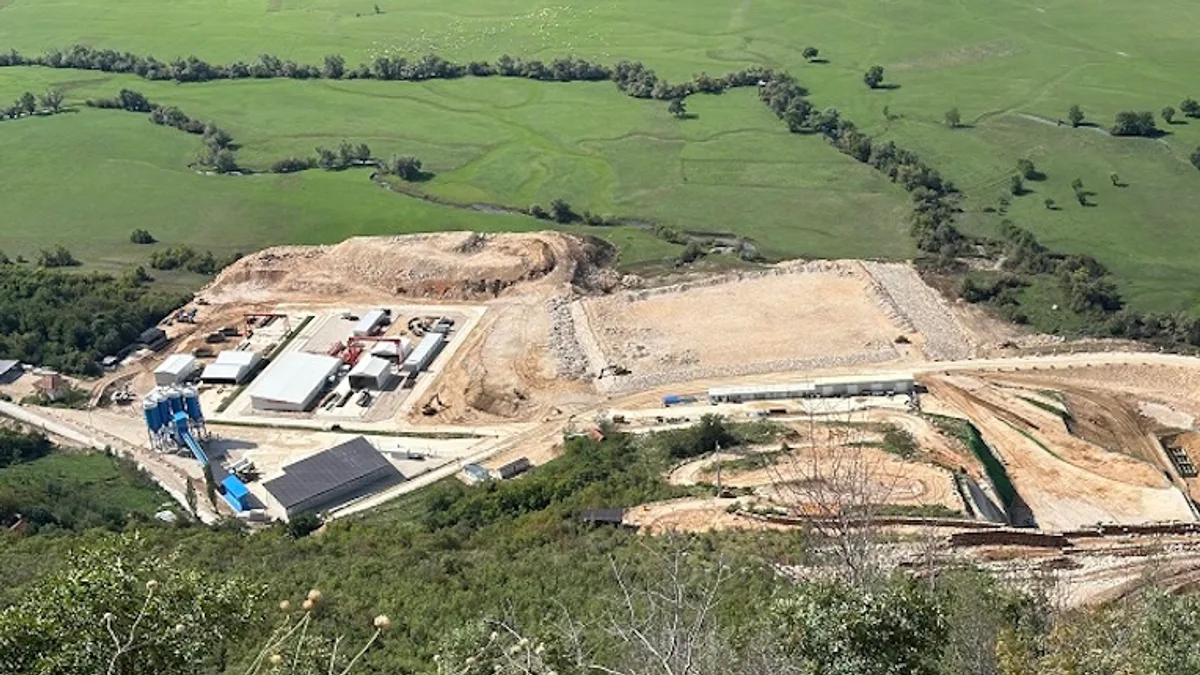
A second, longer section of the report focuses on the Southern Interconnection gas pipeline in Bosnia and Herzegovina. AAFS Infrastructure and Energy, the company the report describes as having received diplomatic backing to carry out the project, was founded on November 24, 2025 by Joseph Flynn, Michael Flynn’s brother, and Jesse Binnall, a Trump ally and attorney. According to Semafor, that was just four days after US Embassy officials in Sarajevo discussed with Federation of Bosnia and Herzegovina officials the possibility of an American company building and operating the pipeline. By April 2026, Keating writes, AAFS had been written directly into Federation of Bosnia and Herzegovina legislation as the investor, handing it what amounts to an exclusive position on a project Klix values at $1.3 billion and Semafor at $1.16 billion.
Keating stresses that AAFS, by his account, has no prior experience in either the energy sector or the region, yet American officials in Sarajevo and Zagreb actively lobbied on its behalf during January and February 2026. In an April letter to Secretary of State Marco Rubio, the congressman warned:
I am concerned that a possible award of this contract to an inexperienced firm reduces the likelihood that the pipeline will actually be completed and put into operation.
The State Department has rejected most of the criticism, arguing that the United States has supported the pipeline for nearly a decade and provided the Federation of Bosnia and Herzegovina only with technical assistance and advice:
The decisions to put the Southern Interconnection concession out to tender and to select an American company as lead investor were sovereign choices made by officials of the Federation of Bosnia and Herzegovina.
US diplomats add that the Federation’s parliament passed the pipeline legislation by a wide margin, 79 to 2 in the House of Representatives and 61 to 3 in the House of Peoples. Keating responds that this explanation says nothing about Flynn and Binnall’s close ties to the Trump administration. AAFS co-founder Jesse Binnall told Semafor that the cooperation began when Bosnian officials approached the firm themselves:
We then made contact with officials at the US Embassy, which is standard and expected practice for any American company operating abroad.
What this means for the region
For Belgrade and the rest of the region, the most sensitive part of the report touches on the question of state property in Bosnia and Herzegovina. Keating warns that the combination of Dodik’s lifted sanctions, a weakened Office of the High Representative, and the Southern Interconnection project could build pressure to settle that disputed issue in a way that favors Republika Srpska’s authorities, which, in his assessment, would further weaken Bosnia and Herzegovina’s state institutions and complicate its European path, an outcome that bears directly on the rest of the region, including Serbia as an EU candidate.
At the end of the report, Keating calls on the Trump administration to reimpose sanctions on Dodik, his family and his associates, and on Congress to use its subpoena power to obtain the administration’s complete internal communications on both the sanctions relief and the pipeline. He also proposes hearings for Flynn, Blagojevich and other lobbyists hired on Republika Srpska’s behalf, and asks that the State Department halt its diplomatic advocacy for AAFS and work with Bosnia and Herzegovina’s institutions to find an American company with genuine experience building and maintaining pipelines. “The Trump administration chose to hand a win to separatists in Bosnia and Herzegovina who reject the Dayton agreement, while enriching its own friends in the process,” Keating concludes.
How much traction the report gains will depend largely on Tuesday’s hearing, where the State Department will defend its record before the very same subcommittee.