Podgorica Police Detain 13 at Mladic Tribute Rally
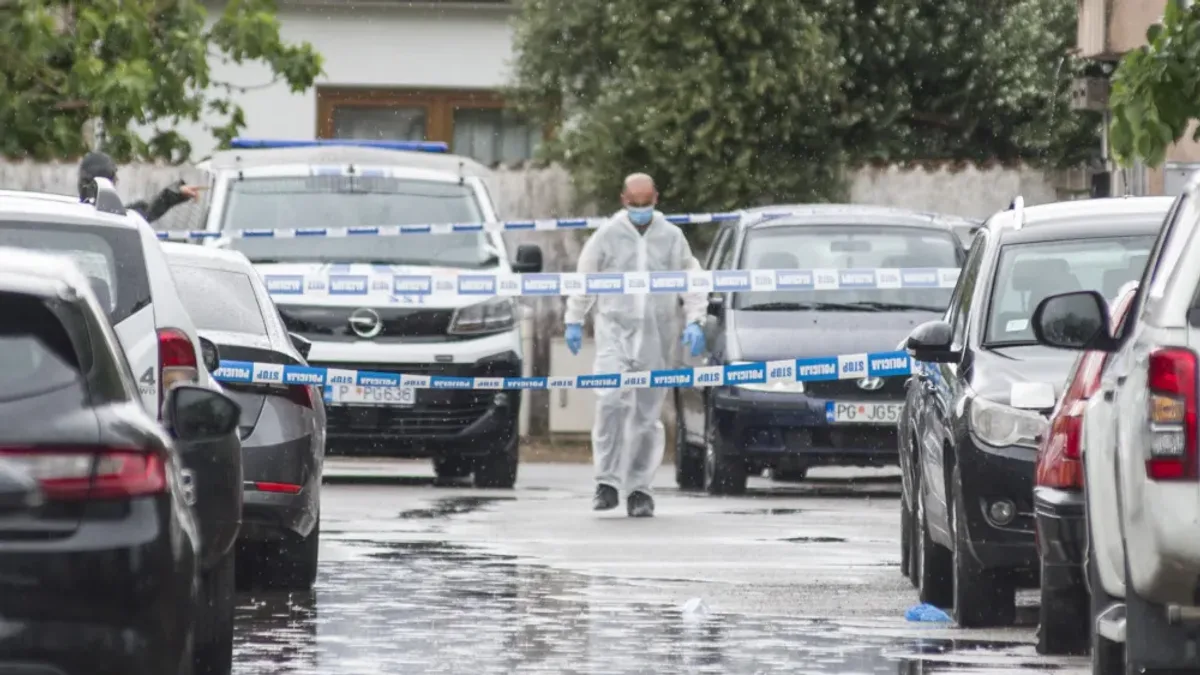
Montenegrin police broke up a gathering in Podgorica last night billed as a tribute to Ratko Mladic; 13 people gathered around a representative of the Miholjski Zbor were unofficially detained.

Police in Podgorica broke up a gathering last night, September 16, that had been organized to pay tribute to the late Ratko Mladic, the former commander of the Army of Republika Srpska. Although it took place in Montenegro, the case bears directly on Serbia, since Mladic sits at the center of the same historical knot that has strained relations between Podgorica, Belgrade and Brussels in recent months, ever since President Jakov Milatovic, backed by European institutions, condemned every attempt to glorify him.
According to reporting from Podgorica outlets, also picked up by Serbian media, the gathering was meant to start in the Masline neighborhood, from where the group planned to head toward Kuce. Organizers had announced a commemoration involving fireworks, Serbian iconography and songs, a ritual similar to ones that have already drawn sharp reactions from officials in Brussels when staged in Republika Srpska and parts of Serbia.
Montenegro’s Police Directorate had not issued an official statement on the intervention as of this morning. Portal Analitika reports learning unofficially, though from within the Police Directorate itself, that 13 people were detained: twelve men and one woman, all from Podgorica, and that statements were taken from everyone. Mondo and Danas cite the same number of detainees but stress that it remains unofficial, since police have not commented on the matter at all, meaning no outlet currently has official confirmation, only matching unofficial sources.
Those detained were, according to available information, gathered around Jovan Merdovic, the Podgorica representative of the Miholjski Zbor, an organization that has used social media to keep Mladic’s memory alive since his death, outside the context of the final rulings handed down by the Hague Tribunal. Portal Analitika reports that the legal classification of the case will be decided by a prosecutor at the Higher State Prosecutor’s Office in Podgorica, meaning the case is only now entering the phase where it will become clear whether it amounts to a misdemeanor or a criminal offense.
Footage of the intervention itself surfaced last night on the Facebook page Zavjetnici Tvrdos Niksic, showing police stopping the gathering before it could even set off toward Kuce. For now, that clip is the only thing available to the public, while the official version of events, the exact number of detainees and any eventual charges remain to be addressed by the relevant authorities.
Why This Matters for Montenegro’s EU Path
The case comes at a moment when glorifying Mladic in Montenegro has already drawn sharp criticism. Our newsroom has reported that both President Milatovic and representatives in Brussels condemned such attempts, calling them an obstacle to the country’s EU path. Montenegro is negotiating membership in the European Union, and the chapter covering the judiciary and fundamental rights, including the treatment of war crimes, is regularly cited as one of the most sensitive parts of that process. Any public attempt to present a commander finally convicted of genocide in Srebrenica as a victim rather than a war criminal is read in Brussels as a sign that Montenegro’s institutions are not sufficiently resolute in enforcing that policy.
For Serbia, the case also matters because of regional dynamics: organizations like the Miholjski Zbor operate as a network, with sympathizers in both Serbia and Republika Srpska, so every intervention, or conversely every failure by authorities in a neighboring country, shapes how similar gatherings are assessed at home. Belgrade follows such cases closely precisely because the treatment of glorification of war criminals in neighboring countries regularly comes up in talks with European officials.
While the official statement from the Police Directorate and the prosecutor’s decision on how to classify the offense are still pending, the question remains open whether the unofficially confirmed 13 detainees will ultimately face any legal consequences, and how Montenegrin authorities will explain their own conduct to Brussels, which follows cases like this far more closely than it did just a year ago.