Drones Halt Ilsky Refinery as Two Women Die in Zaporizhzhia
Ukrainian drones struck the Ilsky refinery in Russia's Krasnodar region, halting operations. Russian strikes killed four people in Ukraine, including two women in Zaporizhzhia.

Ukrainian drones struck the Ilsky refinery in Russia’s Krasnodar region overnight into September 26, setting off a fire and halting operations at one of the largest fuel processing plants in southern Russia. The same night, Russian strikes on Ukraine killed four people, including two women in Zaporizhzhia. For Serbia this is not just a story from a front line thousands of kilometers away: NIS, Serbia’s national oil company (Naftna Industrija Srbije), majority owned by Russia’s Gazprom Neft, depends on supply from Russia’s refining network, and every new strike on that network adds fresh uncertainty to the market that dependence runs through.
Why Ilsky Is the Target
The strike on the refinery was carried out by units of the 1st Separate Center of the Unmanned Systems Forces and the 414th Unmanned Systems Brigade, known as “Madyar’s Birds,” using FP-1 drones launched from around 400 kilometers away, according to Ukraine’s Unmanned Systems Forces. The Ukrainian company Fire Point says three of the plant’s main processing units and a tank farm were damaged, forcing the refinery to suspend operations. The facility, one of the largest on Russia’s Black Sea coast, produces close to 6.6 million tons of fuel a year and, by Ukraine’s count, has now been hit at least 16 times since Russia’s full scale invasion began. Kyiv makes no secret of the strategy: the goal is to choke off fuel supplies to the Russian military and cut into the revenue funding Moscow’s war.
Krasnodar region governor Veniamin Kondratyev confirmed casualties and fires at two facilities in the Seversky district but gave no further details. Accounts of the toll diverge: the Associated Press reports the strike killed three people and wounded two, while the Kyiv Independent says only that Kondratyev spoke of casualties and one person seriously injured, without giving an exact death count.
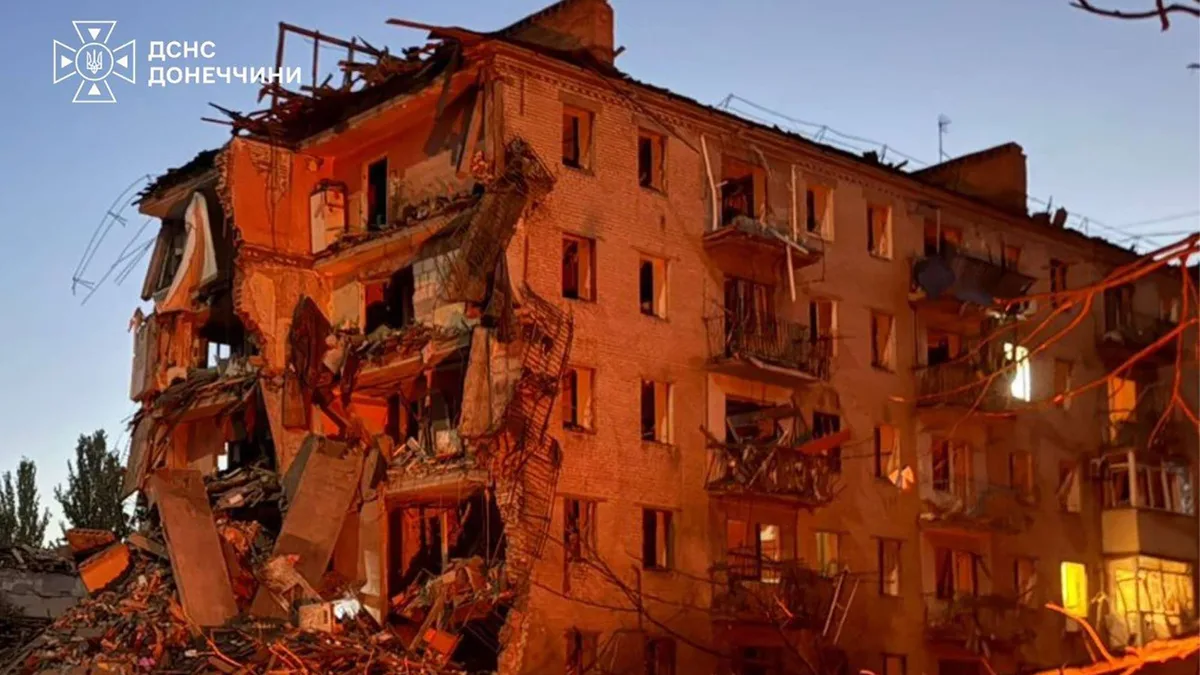
Russian strikes hit multiple parts of Ukraine that same night. Two women in Zaporizhzhia died after their home collapsed on top of them, and the strikes also hit the city’s central market and residential areas, the regional military administration said. This is the city under Ukrainian government control and should not be confused with the Russian occupied part of Zaporizhzhia region, where three people were reportedly killed in Ukrainian strikes, according to Moscow appointed official Yevgeny Balitsky. In Sumy, Russian strikes killed two people, two more were wounded in Kyiv region, and four were hurt in Kyiv itself, according to the AP. The Kyiv Independent puts the number of wounded in the capital at five. Russia launched 173 Shahed type drones overnight, 50 of them jet powered variants, and Russian strikes also damaged a data center that serves mobile internet and Starlink connections in Kyiv, according to Moscow, knocking several Ukrainian media outlets offline for a time.
Ukrainian President Volodymyr Zelensky posted Saturday morning listing strikes on apartment buildings in Kyiv, Zaporizhzhia, and the Odesa, Sumy and Kharkiv regions:
“It’s important that our partners don’t forget: Russia is escalating every day. If the Russians have decided to make their strikes even more brutal, the world must respond with stronger measures, so the war doesn’t spread any further.”
Zelensky, in New York for the UN General Assembly session that same day, called on the world to cut off Russia’s revenue through sanctions and trade restrictions.
US President Donald Trump commented Saturday on his Tuesday meeting with Zelensky, saying he hopes the Ukrainian leader will “make a deal” with Russian President Vladimir Putin:
“You know what I want him to do? Make a deal. I want him to make a deal with Putin, and I want Putin to make a deal with him.”
Trump added he hopes a deal comes together “maybe before a rough winter,” even though during his 2024 reelection campaign he claimed he could end the war almost immediately. Despite years of diplomatic effort, no breakthrough in the talks has come.
The economic side of this war is what touches Serbia most directly. As Ukraine keeps hitting Russia’s refining network in a systematic way, the price and availability of oil products on the European market stay tied to the supply chain feeding Serbia’s own industry, which still operates under Russian ownership. We wrote earlier this week about a similar pattern of night strikes on Kyiv, including a hit on the Shyba market, and Friday night’s strikes show that the air war, instead of cooling down, keeps climbing on both sides of the front, with no date in sight for any deal between Zelensky and Putin.