Istocno Sarajevo without water, 15 breaks in 10 days
Two breaks on the main transport pipeline emptied a network of about 100 kilometers, a school suspended classes, and the water utility's director plans a gradual refill.
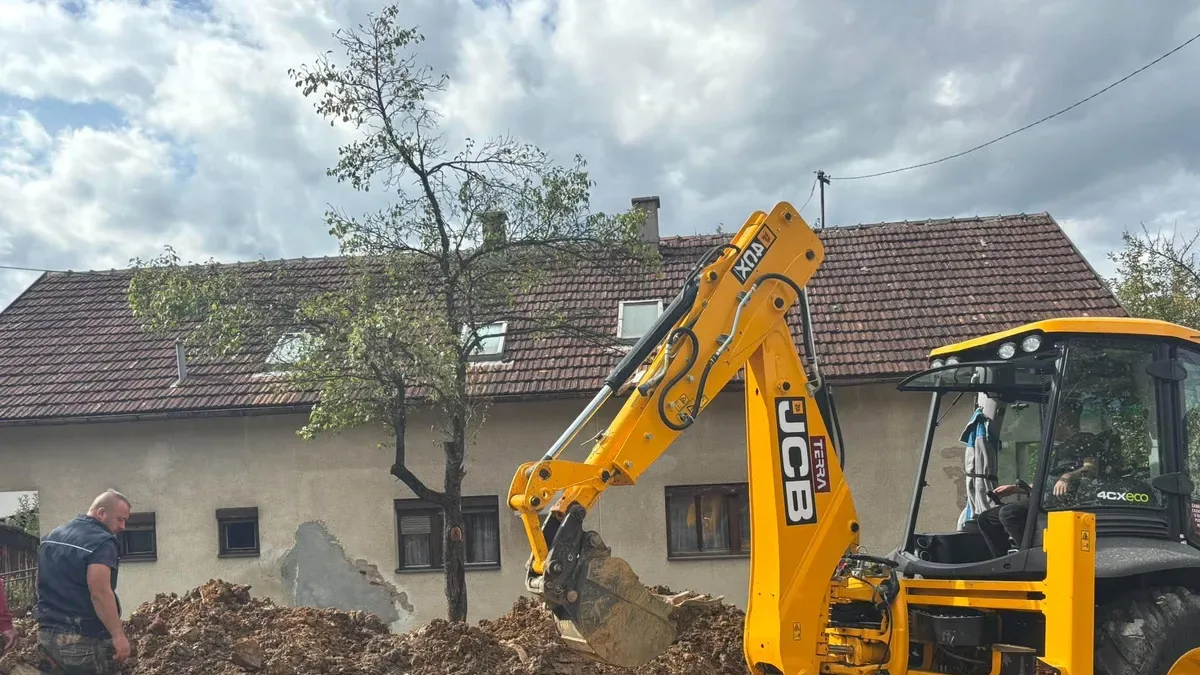
Much of Istocno Sarajevo, a town in Republika Srpska right on the border with the Bosnian capital, has been without water since October 7. Residents, schools and restaurants are living with the fallout of a failure that, in the words of the utility’s director, has never happened at this spot before.
Two breaks in the places a water utility most wants to avoid
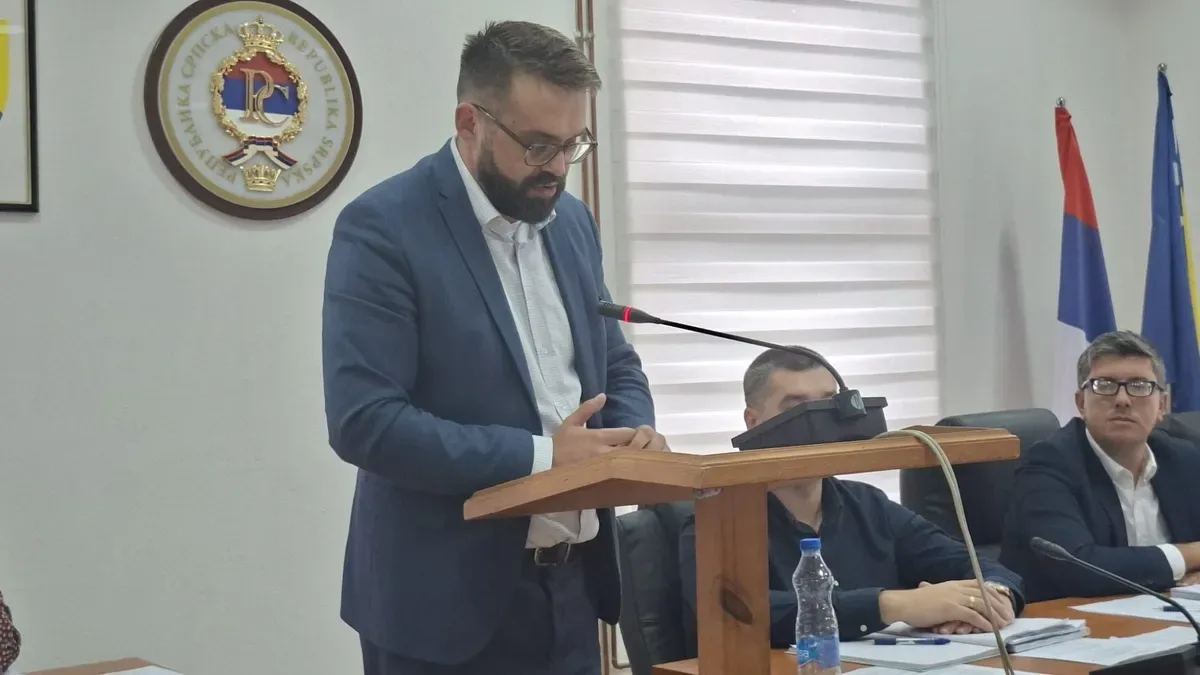
There are two simultaneous failures: one on the main transport pipeline in Vuka Karadzica Street and another at a junction designated T0. Together they drained the reservoirs and a network about 100 kilometers long. Ljubisa Lalovic, director of the Istocno Sarajevo water and sewage utility, explained to N1 why these two spots are the hardest to deal with.
“You see, the least desirable thing for any water utility, and that goes for the Istocno Sarajevo utility too, is for failures to happen at exactly these places. These are the two breaks that are active right now. One is on the fi 500 transport pipeline, which carries water from the filter plant, the water factory, to a significant part of the city, and the other is at the T0 branching”
According to Lalovic, the pipe split along a stretch of roughly two to two and a half meters. Two crews worked on October 7 from 1 p.m. until 3 a.m., and resumed on October 8 at 7 a.m. Lalovic hopes both breaks will be repaired during the day: “I hope that today, during the day, we will repair both breaks and start filling the system.”
Why water will not reach everyone at once
Repairs do not mean water returns to households right away. The system is refilled gradually, and Lalovic warned of hydraulic shocks that could damage the network elsewhere.
“I hope that within the next few hours we will repair the breaks, and then we will go zone by zone, slowly. First we have to fill the transport pipeline, which is the most sensitive, and then release water at lower pressure so that we avoid hydraulic shocks that can damage the network in other places”
The sequence, then, is the transport pipeline first, followed by one zone at a time at reduced pressure.
A school without classes, shops closed
The “Sveti Sava” primary school suspended classes because it cannot provide basic hygiene conditions. The municipality of Istocna Ilidza did not operate on October 8, and in the municipality of Istocno Novo Sarajevo only on-duty services worked until 3 p.m. Some hair salons, cafes and restaurants have closed, and shops reported reduced stocks of bottled water.
Parts of the town with alternative supply kept their water. Lalovic said:
“We secured the hospital from the Matic spring. The primary school in Decanska Street is supplied from another elevation zone. Part of Decanska, Hilandarska and Spasovdanska streets, as well as part of the Mladice settlement, have water”
The state prison, part of Vojkovici and Dobrinja 4 also have water.
Three tankers or four: the sources disagree
The number of tankers on the ground differs between the two sources. Lalovic told N1 there are four: one from the RAD municipal company and three fire trucks. The utility’s own statement mentions three tankers for sanitary needs. According to the company, tankers have been at Tesanovo Brdo, Prljevo Brdo, Vojkovici and Donje Mladice, and the next delivery goes to Dobrinja 1, Donji and Gornji Kotorac, Nikole Tesle Street, Karadjordjeva Street, part of Vuka Karadzica Street, Gornje Mladice, and Spasovdanska, Hilandarska and Decanska streets.
The statement includes a warning that arrival times cannot be announced: “It is not possible to announce delivery times at all locations because the tanker cannot be kept at the previous locations.”
Fifteen breaks in ten days and dried-up springs
Lalovic places the failure on the transport pipeline within a wider series. By his account, all of them were on cast iron pipes, and he sees the cause in temperature swings and pressure changes in the network:
“In the last ten days or so we have had 15 serious failures, and all of them were on cast iron pipes. That means the cause is roughly the same: temperature differences, which do not suit cast iron, and pressure variations in the network itself”
Drought adds to the problem. The Tilava spring normally yields up to 240 liters per second and is now giving 70: “Under normal conditions the Tilava spring has a yield of up to 240 liters per second, and at this moment it is at 70 liters.” Speaking about conditions in the wider Sarajevo area, Lalovic said he does not remember a year like this in his working life: “This is a year like none in my working life, or in the working lives of many before me, where we have both a dry summer and a dry autumn.”
The director rejected responsibility for the failure, explaining that spare parts, machinery and people were immediately available. He acknowledged that the network contains worn-out sections that need replacing, but called this break unforeseeable. The utility, he says, has four crews ready to respond.
The utility has not said when water will reach every street. The only deadline put forward is the director’s expectation that both breaks will be repaired by the end of the day on October 8, after which the 100-kilometer network will be refilled, one zone at a time.