

Trump: No Iran Strike Before Nov. 3 Midterms, Blockade Stays
The U.S. president said there will be no new strikes before the midterms, while the naval blockade and sanctions remain in force. Tehran says it will answer the American counterproposal.
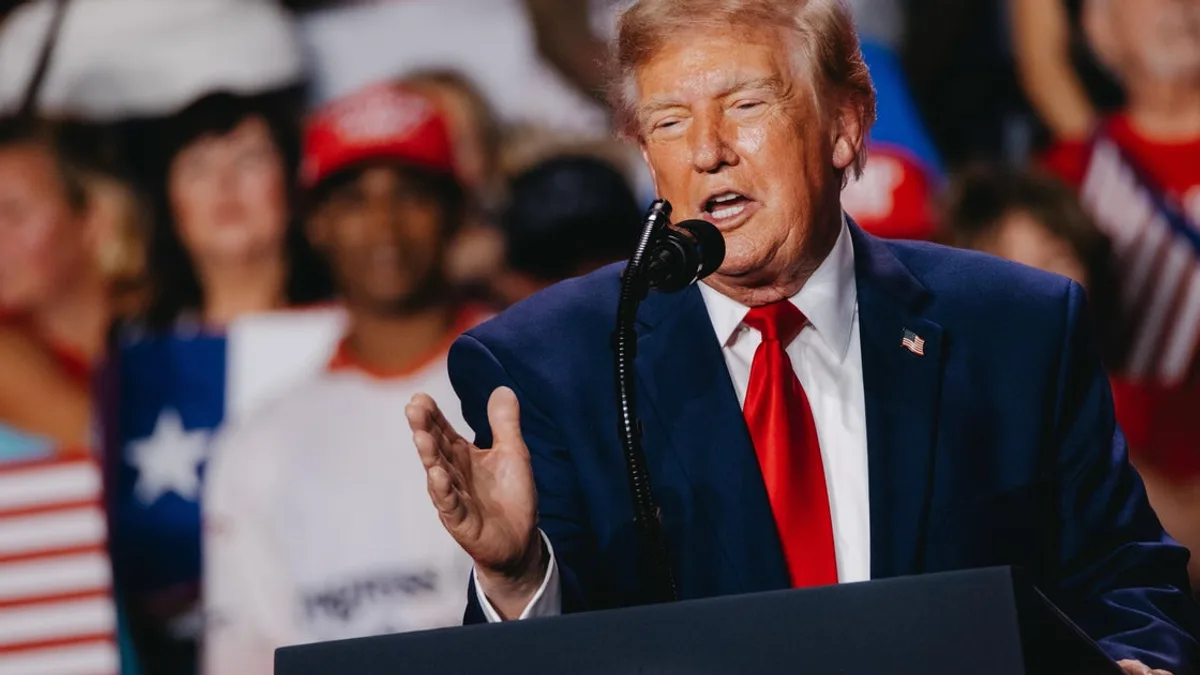
U.S. President Donald Trump promised on Thursday, October 8, that the United States will not attack Iran before the November 3 midterm elections. Brent crude, which also drives fuel prices at Serbian gas stations, first jumped to 105 dollars a barrel that day, then fell to 103 once the post appeared. Trump published the message on Truth Social, a day after The Atlantic reported that the White House had asked the Pentagon for options for a strike before the vote.
The relevant part of the post reads:
“I want everyone to be clear that, even though Iran is in very bad shape, both economically and militarily, and even though the blockade will remain fully in place, while oil flows through the Strait of Hormuz in record quantities (22 million barrels just last night, and not a single barrel is coming from Iran or going to Iran!), we will not attack Iran at any point before the midterm elections held in the United States on November 3.”
In the same post Trump also mentioned “productive talks” with Iran but gave no details. CBS News assessed that 22 million barrels in a single night would be close to prewar levels, noting that the administration regularly publishes such figures for oil escorted through the strait by American forces.
What did The Atlantic report, and how did the White House respond?
The Atlantic wrote on Wednesday, October 7, citing two administration officials, that the scope and goals of possible strikes are still under discussion and that a broader operation could come only after the November 3 vote. According to the magazine, the preparations show how much Trump wants to bring down fuel prices and show progress in the conflict, since consumer prices weigh on voters ahead of the midterms. Backers of the plan, per the same source, do not expect strikes to force Iran into negotiations or open the Strait of Hormuz. They calculate that strikes would show American strength before the vote.
A Republican familiar with the discussion told The Atlantic:
“The president would look like he had scored a win, and gas prices would start to fall.”
Asked by CBS News, an unnamed White House official replied that “the commander in chief has all options available at all times.” The official added:
“The United States is in a very strong position, with control over the Strait of Hormuz and an Iranian economy that is collapsing. Iran has been decimated, and things will go one of two ways: the easy way or the hard way. President Trump holds all the cards and will do whatever is best for the United States.”
Brent rose more than four percent on Thursday after the article came out, which CBS linked to the story in its report. Before Trump’s post it stood at 105 dollars, about four percent above Wednesday’s close, and after it at 103.
How does the promise fit with Trump’s earlier statements?
The American side has not announced a single strike on Iran in weeks, but Trump has repeatedly threatened to resume attacks after the midterms. Last week he told Time magazine he could order new strikes after the vote, and he told reporters separately that he believes the U.S. will win the war “right after the election,” adding “maybe even before the election.” Now he has tied the deadline explicitly to November 3.
The war has lasted since February 28. A June interim agreement, which provided for a 60-day ceasefire, fell apart within weeks. In late September Trump publicly rejected an Iranian proposal to open the strait for seven days if the U.S. met certain conditions, and indirect talks are being led by envoy Steve Witkoff. We reported earlier on the demand by Vice President JD Vance that Iran cut back its uranium enrichment, which Tehran did not accept.
What does Tehran say?
Iranian Foreign Minister Abbas Araghchi said in Tehran on Thursday, after attending a funeral, in remarks to the Student News Network, that negotiations continue through intermediaries. In CBS’s translation, he said:
“We presented our plan, the one called the seven-day plan. We heard the Americans’ positions in response. We are now reviewing them. I think we will respond within a few days. As I said, the negotiation process continues.”
President Masoud Pezeshkian called talks with Washington pointless this week. On the same day Trump made his promise, Russian President Vladimir Putin spoke with Pezeshkian ahead of a regional summit in Turkmenistan and, according to Russian news agencies, said: “We are ready to do everything in our power to help resolve this situation.”
What remains of the pressure on Tehran?
The blockade stays, and on Thursday the U.S. Treasury Department imposed sanctions on 17 vessels of the so-called shadow fleet, which carried Iranian oil and petrochemical products to markets in South and East Asia. The ministry’s statement says the measure “effectively neutralizes the vast majority of the remaining Iranian shadow fleet network,” and Treasury Secretary Scott Bessent added that the goal is to deprive Tehran of the funds needed to “wage war in the region.”
At sea, pressure is not easing from the other side either. The British maritime agency UKMTO reported that on Tuesday another crude oil tanker was hit in the Strait of Hormuz by an “unknown projectile,” with no injuries, while damage to the vessel is unknown. Several other ships in the passage were hit as well.
The war is also measured in equipment. A Congressional Research Service report, updated this week, says at least 81 American military aircraft have been lost or damaged: 45 MQ-9 Reaper drones, 12 F-15E fighters, seven KC-135 tankers and one F-35A. The aircraft carrier Abraham Lincoln sailed into San Diego the same day after 321 days at sea, with more than 4,500 sailors aboard.
The promise has a clear deadline: November 3, election day. What Washington will do after that, The Atlantic describes as a broader operation that is only being discussed.


