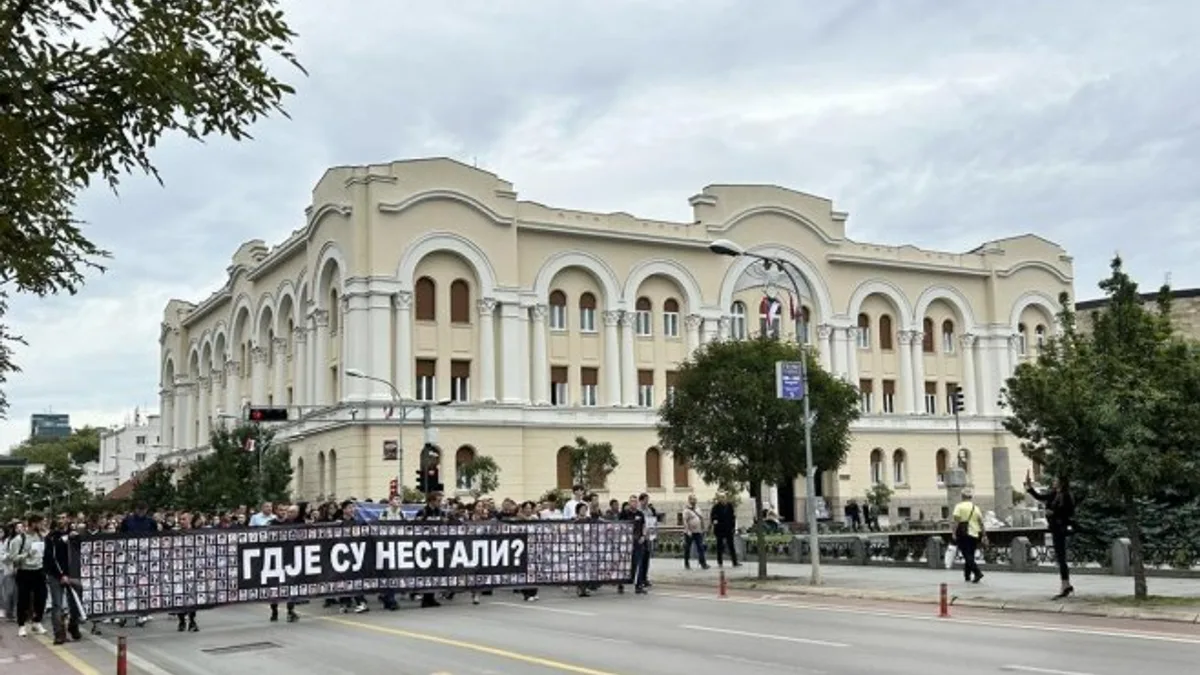
Mrkonjic Grad marks 31 years since the expulsion of Serbs
Republika Srpska Prime Minister Savo Minic and the head of a victims' families association spoke about the missing and said justice for Serb victims has yet to arrive.
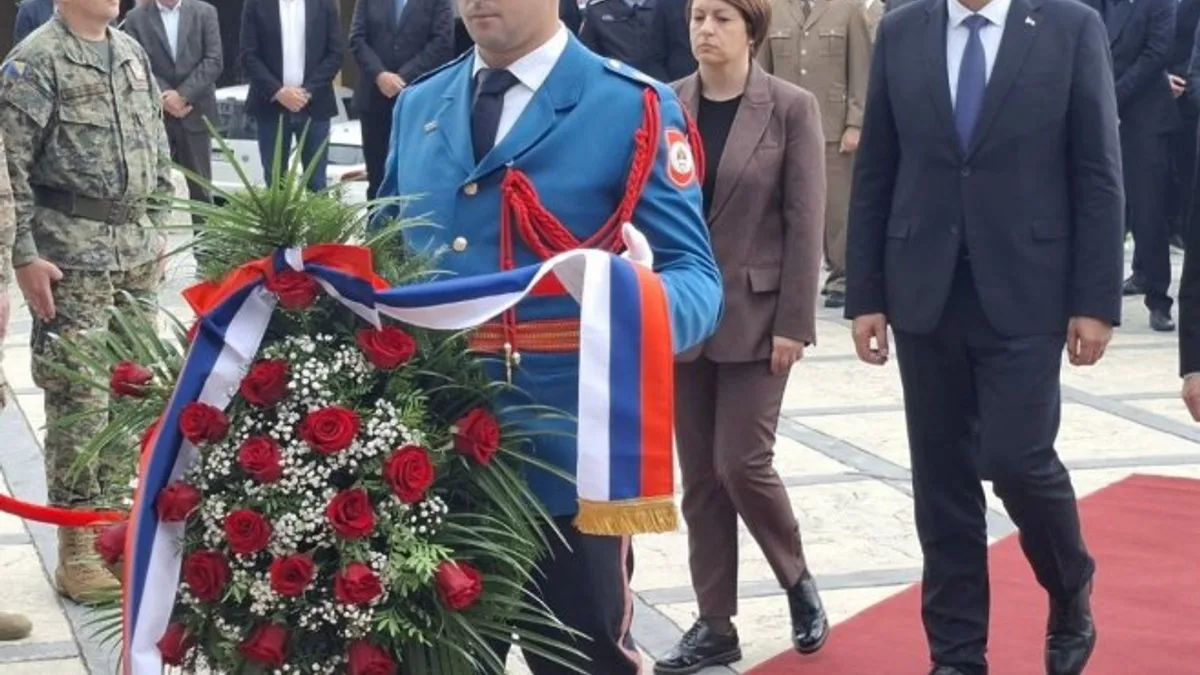
Mrkonjic Grad marked the 31st anniversary of the expulsion of more than 120,000 Serbs from 13 municipalities in the Western Krajina on Saturday, October 10, 2026. A consul from Serbia’s Consulate General in Banja Luka was among those who laid wreaths. Clergy of the Mrkonjic Grad parish of the Serbian Orthodox Church held a memorial service at the memorial to the mass grave, followed by the laying of wreaths and flowers.
Savo Minic, Prime Minister of Republika Srpska, laid a wreath, and Maja Gacic attended on behalf of the Serb member of the Presidency of Bosnia and Herzegovina. Wreaths also arrived from representatives of the Ministry of Labor and Veterans’ and Disability Protection. Delegations of the Veterans’ Organization of Republika Srpska, the Republic Center for Research of War, War Crimes and Missing Persons, the Third Infantry Regiment, the municipality of Mrkonjic Grad and other municipalities laid flowers. The organizer was the Republika Srpska Government Committee for Cultivating the Tradition of the Liberation Wars, the relevant ministry said.
What did Savo Minic say?
Speaking at the memorial, the prime minister addressed the causes of the events and those who are still being searched for:
“The aggression against the Western Krajina municipalities was part of a criminal plan, which also involved NATO. Everything here was done with the aim that we disappear from this area. Mrkonjic Grad is the embodiment of rising from the ashes, the embodiment of resurrection. What hurts us most are our missing victims, to whom we cannot, according to our religious customs, pay respect.”
Minic stressed that it falls to the institutions of Republika Srpska to mark dates from their own history, and then said:
“It is up to us to talk about this, it is ours to explain this to our children, and up to the institutions to strengthen the status of veterans. We will take it upon ourselves as a sacred task that this is written about, that this is talked about, that the truth is simply known.”
According to RTRS, the prime minister also assessed that in this case justice is not merely slow but far too slow, and that it is a question whether anything can be expected at all from the judiciary in Bosnia and Herzegovina and in The Hague. He added:
“You have video recordings of who carried the Mrkonjic Grad sign here, you have those who boast about what they did here, you have footage of our only surviving fighter, whose comrades were all killed here. For Republika Srpska, that yardstick is unacceptable, in which Serbs are constantly being labeled by someone, while nobody answers for crimes against Serbs.”
In a message about the commemoration, reported by RTRS, Minic said he felt both pain and obligation: “Today in Mrkonjic Grad, before the shadows of the victims, I feel both pain and the duty that their sacrifice is never forgotten.” He added: “It is our duty to preserve peace, our people and our Republika Srpska.”
What do the victims’ families say?
Isidora Graorac, president of the Republic Organization of Families of Captured and Fallen Fighters and Missing Civilians, said that court practice in Bosnia and Herzegovina is such that the families of Serb victims from the last war have not yet seen justice, and that those responsible for the crimes are not held to account. She also addressed those gathered:
“It is important that the Serb people remember, keep in memory and document all crimes, because only in that way can anything similar be prevented from happening again. October 10 is one of the hardest days for the residents of Mrkonjic Grad and the surrounding municipalities, because they went through ethnic cleansing in those days. We are standing at the place where the remains of 181 fighters and civilians were found, and for their families this is one of the hardest days.”
What do the numbers say?
RTS reports that Muslim-Croat forces expelled more than 120,000 Serbs from 13 municipalities in the Western Krajina. According to figures presented at the commemoration, 2,214 civilians and soldiers were killed at the time, while RTRS carries a message that cites 2,214 murdered Serbs. The two sources therefore describe the victims differently, but the number is the same.
The search for the missing continues: 149 civilians are still listed as missing, and 79 members of the Army of Republika Srpska are also being sought. The largest mass grave was found at the Orthodox cemetery in Mrkonjic Grad, from which 181 bodies were exhumed.