Graorac Urges Minic to Set Up Missing Persons Office
The head of a families' organization asks the Republika Srpska prime minister for a dedicated search body and disputes the credit claimed by the Missing Persons Institute of BiH for the Ozren find.
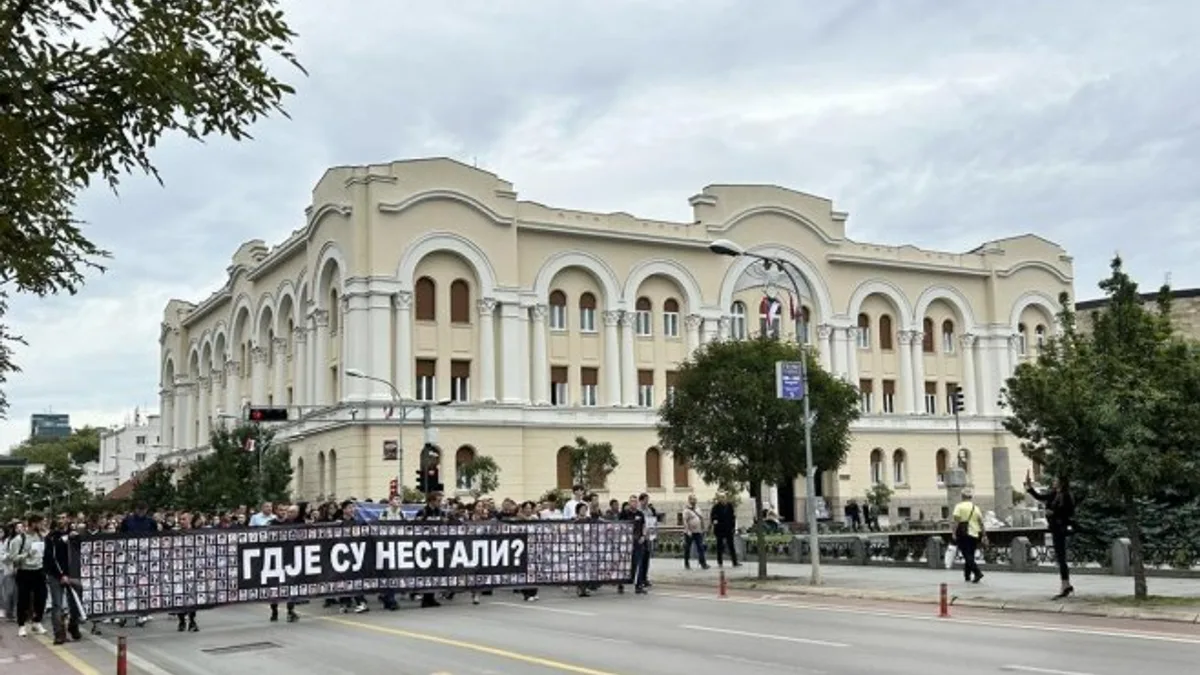
Isidora Graorac, president of the Republic Organization of Families of Captured and Fallen Fighters and Missing Civilians, has asked Republika Srpska Prime Minister Sava Minic to set up a republic-level office for finding missing persons. She cites a long stalemate in the search for missing Serbs, and the trigger is the recent discovery of the remains of two soldiers on Ozren.
What was found on Ozren?
According to Viktor Nuzdic, acting director of the Republic Center for Research of War, War Crimes and Search for Missing Persons, the find came from information provided by a former member of the Army of Republika Srpska. Graorac uses that case as an argument for her request. She told the Srna news agency:
“The latest case of two sets of remains found on Ozren, thanks to a witness and a researcher from Republika Srpska, shows that more remains can still be found today, regardless of the time that has passed, and that it is necessary to form this office.”
In her reading, the find shows that the passage of time does not make the search pointless, provided there is a body to lead it.
Why does Graorac dispute the Institute’s credit?
Alongside her request to the government, Graorac also responded to a statement by Nikola Perisic, a member of the Board of Directors of the Missing Persons Institute of Bosnia and Herzegovina (BiH), about the Ozren find. She called that statement improper and claims the Institute deserves no credit for the discovery and did not reach it through its own work. On the Institute, she said:
“The Institute for Missing Persons of BiH exists as an institution, but on this matter they have done little through their own work and commitment. And while they adorn themselves with borrowed feathers, families are anxiously waiting for news about the identification of their loved ones.”
Graorac adds that Perisic, after nine years as a member of the Institute’s Board of Directors, has only now heard of the relocated grave of the “Gostovic” group in Kucice. That grave was located by the Republika Srpska Commission for Missing Persons of the time.
What is known about the grave in Kucice?
According to Graorac, only one location with ten bodies was found in Kucice, while the remains of the others were moved to an unknown destination. Among them are presumed to be 52 missing, captured and killed fighters of the Army of Republika Srpska from the “Gostovic” camp. She described it this way:
“Unfortunately, too late, because they found only one location with 10 bodies, while the others were moved to an unknown destination, presumably with 52 missing, captured and killed fighters of the VRS in the Gostovic camp.”
What exactly does she ask of the government in Banja Luka?
Graorac believes time is not on the side of the families of the fallen and missing in Republika Srpska. She asks that the search for missing Serbs begin as soon as possible, the way it was done before, because soon, she warns, there will be no one left to whom remains could be handed over. Her specific demand is a republic-level office, and the addressee is Prime Minister Minic.
By the time of publication, neither Minic nor the Missing Persons Institute of BiH had responded to the request or to Graorac’s assessments.