New Delhi locked down ahead of election commission protest
Authorities deployed nearly 30,000 security personnel, cancelled trains and cut the internet, and leaders of the Cockroach Janta Party were detained.
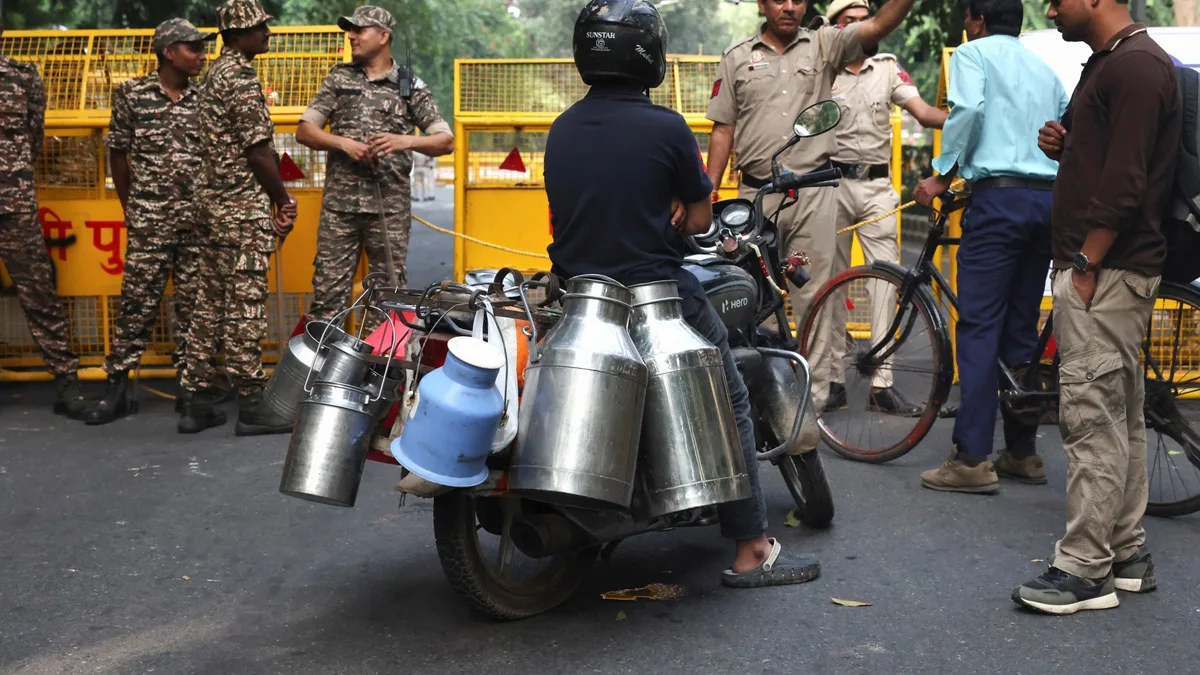
India’s capital turned into a fortress on Saturday, October 10, 2026, ahead of a protest organized by the Cockroach Janta Party together with a wider youth movement, which demands the resignation of Chief Election Commissioner Gyanesh Kumar. Police barricades went up around Connaught Place, the colonial-era square near the Jantar Mantar observatory, and authorities deployed nearly 30,000 security personnel across New Delhi.
The trigger is the revision of the voter rolls. According to the demonstrators, it has wiped 130 million names off the lists, and critics say the revision hits Muslims, the poor and other minorities disproportionately. At stake is who gets to vote in the world’s most populous democracy.
What did the authorities do before the protest?
The measures began a day earlier. On Friday, all trains to New Delhi were cancelled, more than 50 metro stations were closed and the internet was shut off. Police also sent officers to the homes of thousands of students to warn them against joining the rally.
Students from other Indian states were pulled off trains and buses on their way to the capital, and many were put under house arrest in cities hundreds of kilometers from New Delhi. The movement says thousands of people have been detained across the country and that demonstrators will keep coming back to the streets.
Movement leaders were detained as well. According to Indian television reports, police met party founder Abhijit Dipke at New Delhi airport early Saturday as he arrived from Mumbai and asked him to call off the rally, which authorities had banned. Party leaders Saurav Das and Ashutosh Ranka were detained on landing, the movement said. Left-wing student organizations the All India Students’ Association and the Students’ Federation of India also backed the protest.
What do those heading to Connaught Place say?
Dipke said on X that the government had crossed a line:
“Narendra Modi has just made a STATE OF EMERGENCY official. This intimidation will not work, Modi. The young people of this country are no longer afraid of you.”
The comparison is deliberate. The current restrictions in the capital and the crackdown on demonstrators across the country recall the 1975 state of emergency, when then Prime Minister Indira Gandhi suspended civil liberties, imposed press censorship and jailed political opponents.
Santosh Kumar (29), a street sweeper at Connaught Place, told Al Jazeera he was frustrated by the sight of detained teenagers at the barricades:
“How can you stop these kids? They detain 10, 50 more come. Modi, the dictator’s time is up: he won’t last until 2029.”
He added that this is the moment for Delhi to turn into Nepal and Bangladesh, referring to the youth movements in those countries.
Engineer Sameer Irshad (28) from Gurugram came to the barricades pushing his mother, Shiba Abdi (57), in a wheelchair. She told Al Jazeera:
“Delhi has not seen this kind of suffocation, where we cannot peacefully express our disagreement. Why has the government turned this place into a fortress? Why are they so afraid of citizens like me?”
Student activist Arif (24), a district coordinator for the Students’ Federation of India who did not want to give his surname, is locked inside his home in Saharanpur, about 200 kilometers from the capital. He told Al Jazeera that police pounded on his door late on Thursday night, asked his parents where he was and threatened him with criminal charges.
Why is this protest different from earlier ones?
The same movement blocked key streets in New Delhi in July, after which Education Minister Dharmendra Pradhan left office. Modi biographer Nilanjan Mukhopadhyay says the prime minister is now taking harsher measures because he wants to keep the image of a leader who never yields to public pressure.
The election commission itself is under pressure. The Indian Express reported in September that Kumar had dismissed objections from the two other election commissioners about the integrity of the changes to the voter database.
Prashant Bhushan, a Supreme Court of India lawyer and human rights activist who planned to join the protest, told Al Jazeera:
“Modi’s government looks quite scared of the people. People in India are rising up and demanding answers. And when a government gets scared, it resorts to draconian measures to stay in power. But more and more people will rise because of the repression.”
The protest is scheduled for Saturday, and how many people manage to reach Connaught Place through the barricades, without trains or internet, will only become clear during the day.