Pope Leo XIV has lung cancer, surgeons remove a lobe
The Vatican confirmed adenocarcinoma after surgery at Gemelli hospital. Surgeons used a video-assisted technique to remove the lower lobe of the right lung, with no complications.
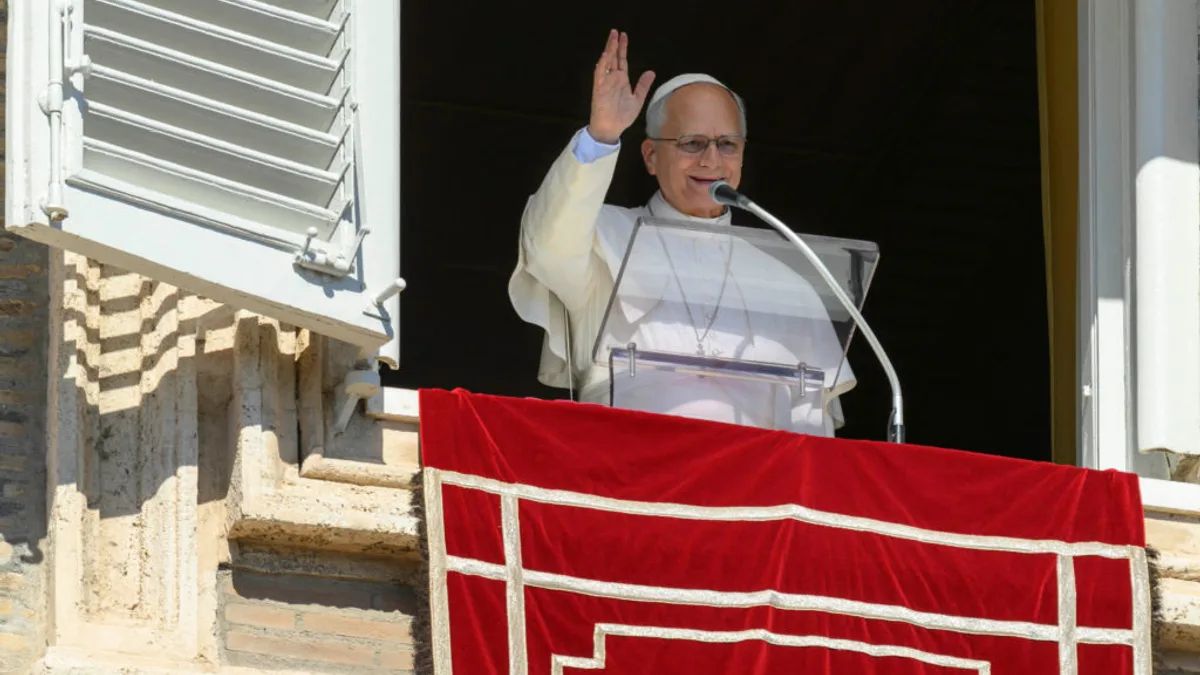
Pope Leo XIV has lung cancer, the Holy See announced after surgery on Tuesday, October 13, at Gemelli hospital in Rome. The health of the head of the Roman Catholic Church is not only a Vatican matter, it also concerns believers in Serbia, above all in Vojvodina, so the diagnosis confirmed during the operation is news for our readers as well.
As we reported on October 11, the Vatican had spoken only of a nodule on the lungs until Tuesday. The pope mentioned it publicly on Sunday, October 11, during the Angelus prayer, and it is the first serious health problem he has disclosed in 17 months at the head of the Church. It is now known that the growth is malignant.
What did the Holy See say about the diagnosis?
The Holy See Press Office stated in its announcement after the operation: “To ensure a radical resection, the lower lobe of the right lung was removed using a video-assisted technique.”
The diagnosis, according to the same statement, was confirmed in the operating room: “Intraoperative histological examination confirmed the diagnosis of lung adenocarcinoma, as suspected on the basis of preoperative tests.”
On the outcome of the procedure, the Press Office said: “The operation was successful and there were no complications.” The pope, who is 71, spent about three hours in the operating room, while the surgery itself lasted about 90 minutes. He was operated on by a team led by Professor Stefano Margaritora, together with Professor Elisa Meacci, Dr. Maria Teresa Congedo and Dr. Leonardo Petracca Cavarella. Anesthesia was handled by Professor Massimo Antonelli, Dr. Giovanni Punzo and Dr. Giuseppe Bello.
Before the procedure the pope walked in through the main entrance of the hospital and waved to dozens of believers who had gathered, the Associated Press reported.
How did the pope spend the first night after surgery?
After waking up and a short period of observation, he was returned to a room on the 10th floor of the hospital. The director of the Holy See Press Office, Matteo Bruni, said the pope asked for dinner in the evening and spent the night with his secretaries and other Vatican staff. On Wednesday morning the Vatican reported that the night had been calm.
Additional tests are being carried out on the removed tissue in the coming days. The hospital stay is expected to last about a week, and all audiences have been cancelled until October 20. The papal apartment at Gemelli, used by his predecessors, is currently being renovated, so Leo XIV is staying in a nearby room, the Vatican Press Office said.
What do doctors outside the Vatican say about the prognosis?
Several specialists spoke to AFP. David Carbone, director of the Oncology Center at Ohio State University, assessed the operation as routine: “Part of his right lung was removed, which is a standard procedure.” He also said he expects a quick recovery: “I would expect him to return to a fully active level very soon.”
Adenocarcinoma, as oncologist David Spigel of the Sarah Cannon Research Institute in Nashville explained, is the most common form of non-small cell lung cancer. Small cell cancers, which spread aggressively, make up about 10 to 15 percent of diagnoses. A representative of the American Lung Association, Dr. Juanita Mora, said that five-year survival for well-contained lung adenocarcinoma is roughly 63 to 67 percent, and that for early detection, especially after surgical removal, it ranges from 80 to 98 percent. In such a case, Spigel said, the patient “will be cured and cancer will never threaten his life.”
Carbone pointed to one detail that, in his view, works in the pope’s favor. The pope received no therapy before the operation, which the oncologist interprets this way: “Because if it had spread, for example to the lymph nodes in the center of the chest, he would have had some therapy before surgery, which was not the case.” Carbone concluded: “They go straight to surgery only for the earliest stages of tumors, which is why I think this was a very early-stage tumor, with a fairly good prognosis.”
Will there be additional treatment?
The answer, according to the experts AFP consulted, depends on the size of the removed mass, the aggressiveness of the tumor, its genetic characteristics and whether it has spread. A Vatican source said additional tests are under way, so the question of chemotherapy or radiation remains open until their results are released. Until then, only the schedule is known: about a week in the hospital, and audiences cancelled until October 20.