Torcida Chants Nazi, Antisemitic Slogans in Split
Chants of “Trample the Jews” and “Rise, Adolf” in Split are no one-off: after Thompson's Hipodrom concert violence against Serbs has grown, and the Ustasha salute is not expressly banned.
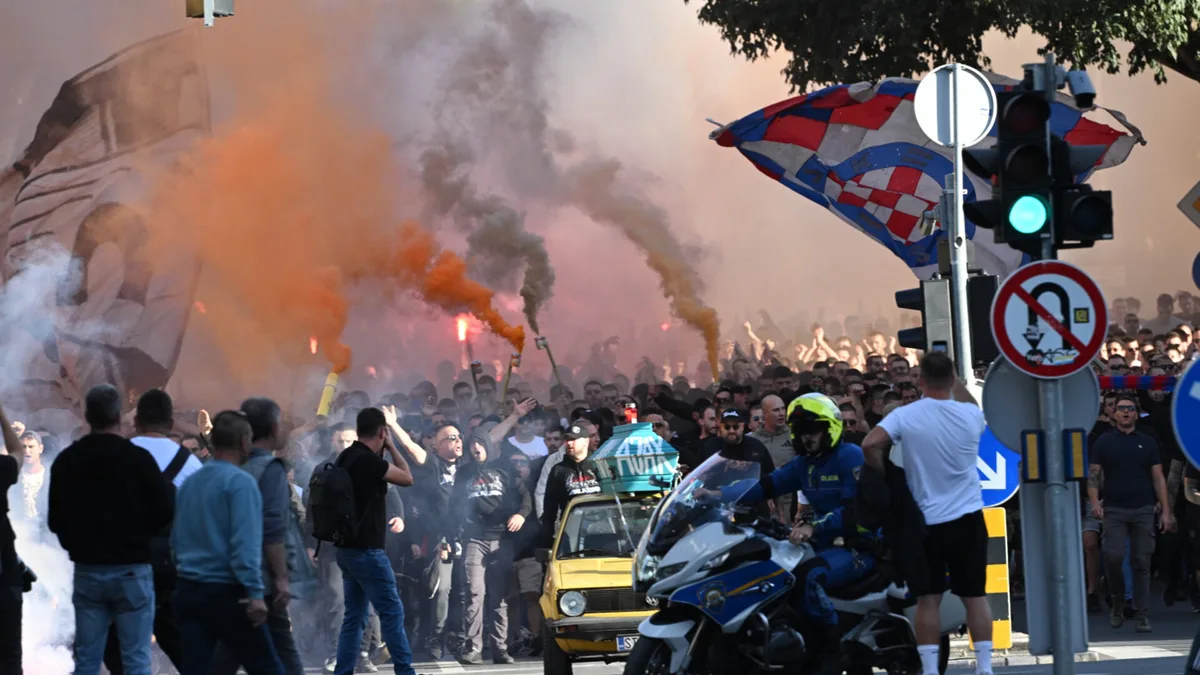
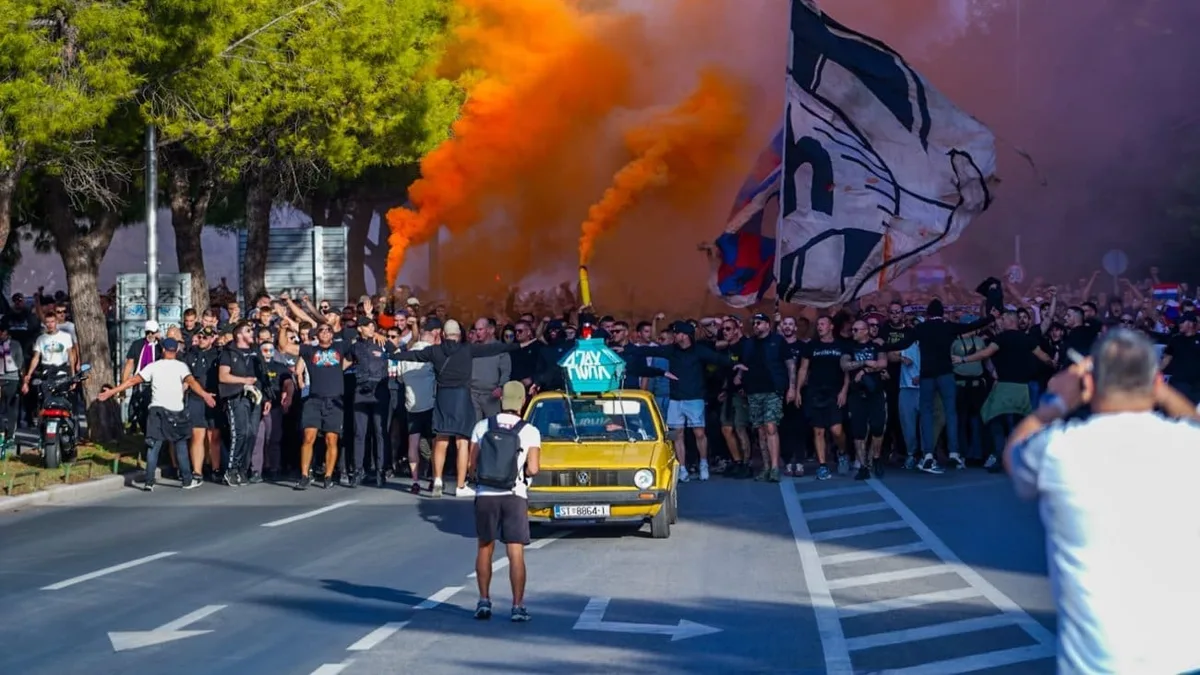
On Thursday, October 15, a Torcida march moved through Split toward the Poljud stadium ahead of the Hajduk-Ajax Conference League match, with chants of “Auschwitz, Auschwitz,” “Trample, trample, trample the Jews”, “Rise, Adolf” and “Come on, come on, Ustashas”. Fans also sang about Anne Frank. For Serbia this is not someone else’s story: the Ustasha salute and the symbols of the Independent State of Croatia, whose regime killed Serbs, Jews and Roma at Jasenovac, are returning ever more openly to Croatian public space, and the Serb National Council records that violence against Serbs has grown since the concerts of Marko Perkovic Thompson. The same supporters, Torcida, were among the masked men who disrupted the Days of Serbian Culture in Split in November 2025.
What happened in Split, and who has been arrested so far?
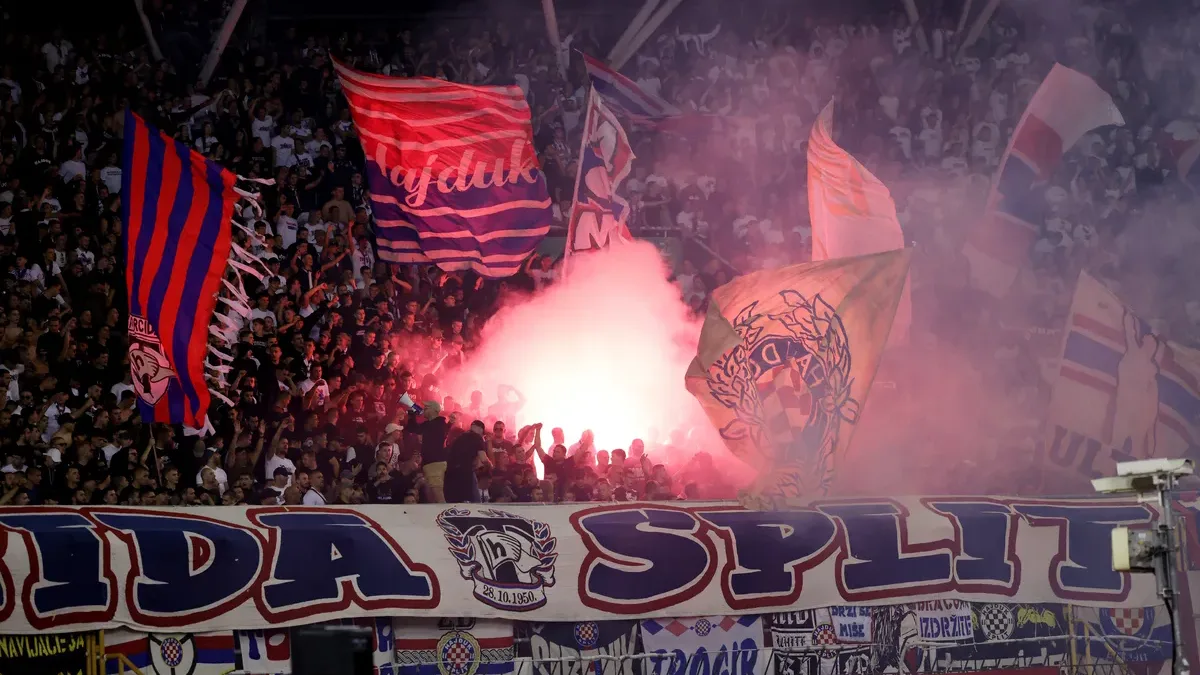
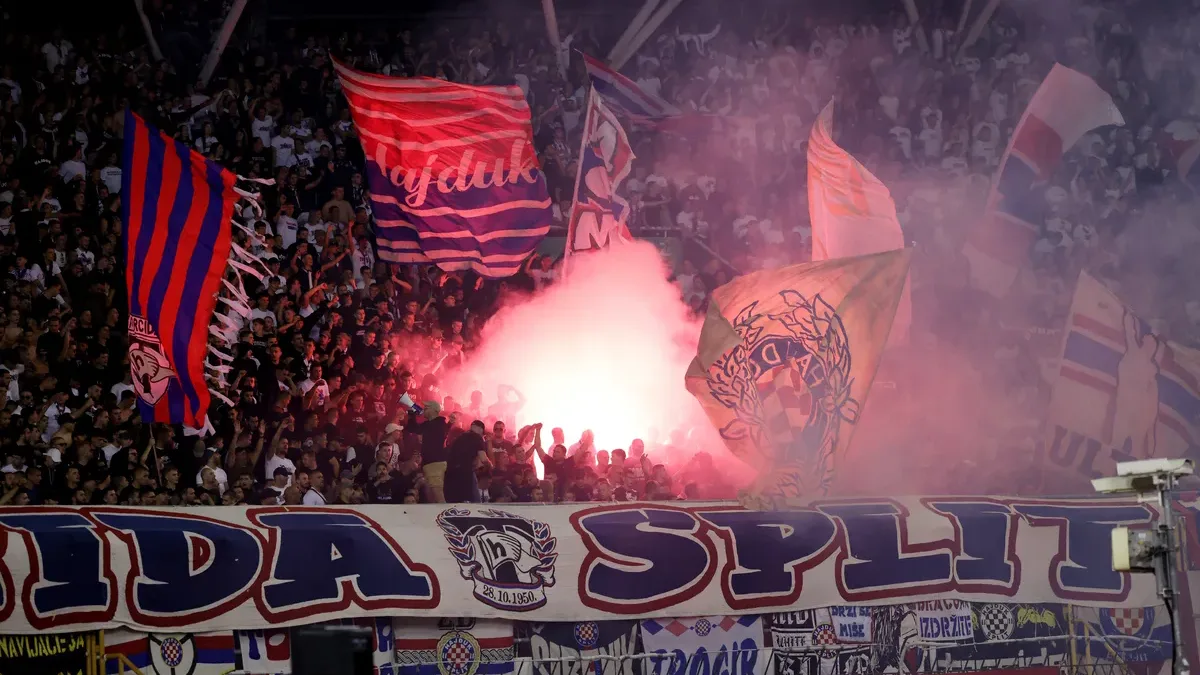
A yellow car led the column, carrying a coffin with the word “Ajax” on it. The fans later took the coffin off the car and smashed it, with fresh chants against Jews. According to police, there were 31,273 spectators in the stadium, 1,413 of them visiting fans. Hajduk won 2-1, and in the 77th minute the match was stopped for 12 minutes because of pyrotechnics on the north stand.
The Split-Dalmatia Police Department said on Friday afternoon:
“At this moment 3 persons have been arrested and a criminal investigation is under way against them on suspicion of committing the offense under Article 325 of the Criminal Code (Public incitement to violence and hatred). Several more persons have been identified and the arrest and search procedure is in progress. We are continuing to identify persons from the footage.”
By Friday evening four fans had been arrested, and about 20 people had been identified on video. Police did not find some of the suspects at their addresses. They also asked the media to hand over photographs and footage of the march. Croatia’s Criminal Code provides up to three years in prison for public incitement to violence and hatred.
The first punishment came from the Misdemeanor Court in Split, but not for the march. A young man identified as J. D. (24) was arrested at 8:25 p.m. on the west stand, where, with 1.66 per mille of alcohol in his blood, he was shouting toward the Ajax bench. He received 10 days in prison, because the court rejected a fine of 260 euros: he had been punished for misdemeanors before and a criminal case is already pending against him.
How did the government, Israel and the Jewish community react?
The Croatian government spoke up on Thursday, on the social network X:
“We strongly condemn the unacceptable chants glorifying the Nazi regime that were recorded during the march of a part of the fans before today’s match in Split. The police are conducting a criminal investigation to identify and prosecute those who shouted punishable chants in the march. Such shameful behavior is a negation of sport and of the democratic values that modern Croatia cherishes.”
Prime Minister Andrej Plenkovic said in Brussels:
“I am extremely pleased that Hajduk won, but extremely displeased with everything else. These messages cannot be interpreted in any way other than as messages of antisemitism. I condemn that in the strongest terms. I expect the police to analyze who shouted those slogans and to file reports. I expect the same from the courts.”
The Israeli embassy in Zagreb said: “We are deeply shocked by the grave antisemitic incident that took place yesterday in Split and condemn it in the strongest terms. Such incidents must be unequivocally and resolutely condemned by all competent bodies at all levels.”
The president of the Zagreb Jewish Community, Ognjen Kraus, told N1: “This is the greatest disgrace that has happened in the Republic of Croatia, and you can see that the world’s reaction to it is appropriate.” Kraus, as reported by Index, also judged that the authorities have tolerated Ustasha ideology for years and that Split is a consequence of that. Of Hajduk’s statement he said: “It doesn’t surprise me, it’s shameful, because that club once meant something historically, and so did that city.”
In its statement, Hajduk apologized to UEFA and Ajax: “We apologize to the organizer of the competition and to the leadership and players of Ajax, who witnessed scenes for which we do not want Europe to remember us.” The statement does not mention the chants from the march. The Croatian Football Federation was more specific:
“The Croatian Football Federation condemns in the strongest terms the shameful and unacceptable chants that could be heard during the fan march ahead of Hajduk’s match against Ajax in Split, which spread antisemitism and hatred and glorified Nazism, Ustasha ideology and their crimes.”
Interior Minister Davor Bozinovic pointed to the courts: “If in the numerous cases this year, I think there were 150 misdemeanor reports, everything had been adjudicated within a short time, I am sure we would not be watching such scenes…” Justice Minister Damir Habijan said: “What I expect is that the result of this rampage has its epilogue … in the form of the harshest sanctioning.”
UEFA has not yet announced formal proceedings. The chairman of Hajduk’s Supervisory Board, Ljubo Pavasovic Viskovic, told RTL: “There will certainly be a punishment, there is no doubt about that.” Hajduk was already fined 56,000 euros in August, along with a suspended order to close at least 1,000 seats for two years, and UEFA fines over the last three seasons total 1,240,850 euros.
From Hipodrom to Poljud: what happened at Thompson’s concert?
Split did not begin in Split. On July 5, 2025, Thompson held a concert at the Hipodrom in Zagreb, and his manager Zvonko Barisic announced: “Exactly 504,000 visitors were recorded.” There was no independent count. Dnevnik.hr estimated that between 400,000 and 450,000 people gathered, police said more than 450,000 tickets had been sold, and 6,523 police officers secured the concert.
Thompson opened the song “Bojna Cavoglave” with the shout “Za dom spremni” (“For the homeland, ready”), the salute of the Independent State of Croatia. Zagreb Mayor Tomislav Tomasevic said after the concert: “To my great regret, the Ustasha salute was used at the concert.” He added: “A number of visitors did have T-shirts, scarves and caps with the Ustasha salute or other Ustasha insignia.” Of the police he said: “The police did not try to stop that, or to check the identity of the offenders.”
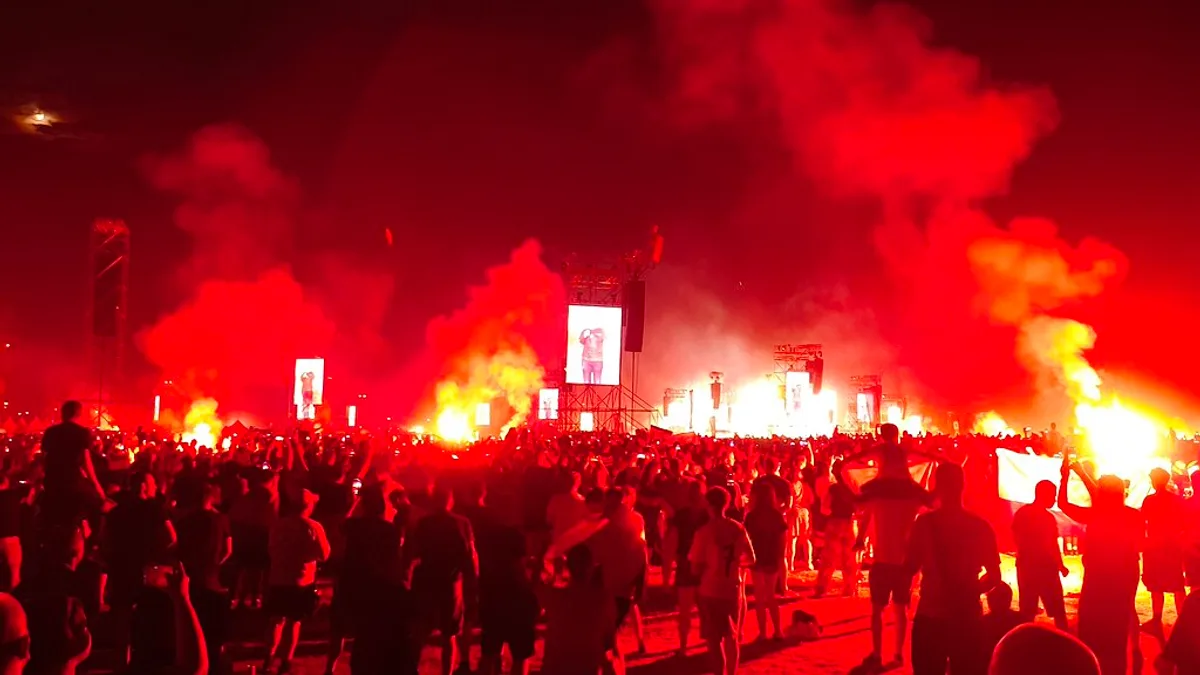
Prime Minister Plenkovic attended the concert’s dress rehearsal, and at the concert itself, according to the Serb National Council’s bulletin, were Parliament Speaker Gordan Jandrokovic and Defense Minister Ivan Anusic. Two days later Plenkovic said: “If something is part of a song, nobody will censor or ban the song, it has been around for 35 years and will probably be around for a hundred,” and added: “That does not mean any historical revisionism, it does not mean any promotion of Ustasha ideology.” According to the AFP agency, Bozinovic said he could not understand those who try to portray half a million people as extremists.
The other side described the gathering differently. The Initiative of Young People for Human Rights called it the largest fascist gathering held in Europe since World War II. Milorad Pupovac said it “is a glorification of Ustasha ideology and an act of reviving the Ustasha spirit.” The European Commission told Index: “We strongly condemn every expression of fascism that reminds us of the darkest periods of European history,” and Germany’s Berliner Zeitung headlined its report with a sentence saying half a million Croats celebrate fascism. The Ombudswoman warned that the absence of public condemnation sends the message that attachment to the Ustasha is acceptable in today’s Croatia.
After the Hipodrom, Thompson performed at the Arena Zagreb on December 27, 2025, again with the Ustasha salute at the start of a song. In November 2025 the Zagreb City Assembly banned Ustasha symbols and “Za dom spremni” in premises managed by the city. At a concert in Vukovar on August 29, 2026, the salute was spelled out in the sky by drones, and police filed 85 misdemeanor reports. For a concert in Frankfurt on November 13, 2026, the Left party and the Greens are demanding cancellation. As we reported this month, Thompson’s song was also sung on a recording by Jakov Jozinovic, who performs at Belgrade Arena on October 24 and 25.
Why do hatred of Serbs and hatred of Jews appear together?
After Split, Pupovac told N1: “It was only a matter of time, and that time has come, for this to be directed at Jews.” The Serb National Council’s figures explain what came before. Its bulletin on 2025, published in March 2026, states:
“There were 22 recorded cases of threats and ethnically motivated physical violence. That is a significant increase compared with last year, when 11 people suffered physical violence or threats.”
There were also 51 recorded cases of vandalism, 12 more than a year earlier, and in 20 cases monuments to the antifascist struggle and to victims of genocide were damaged. The bulletin also says: “The perpetrators of attacks were often members of fan groups…” and that there has been “a rise in the number and intensity of examples of hate speech and ethnic violence after the concerts of Marko Perkovic Thompson in Zagreb and Sinj.” In Gornji Karin the graffiti “Za dom spremni!” and “Ubij Srbina” (“Kill a Serb”) appeared, and in Malesnica in Zagreb “Srbe na vrbe” (“Serbs to the willows”).
The closest link to Thursday is November 3, 2025. Then dozens of masked men, among them Torcida members, interrupted a folklore evening at the Days of Serbian Culture in Split with shouts of “Za dom spremni.” Nine suspects, aged 23 to 59, including a local HDZ official, were given one month of detention. Plenkovic spoke of an “unacceptable attack on the Serb national minority,” and Torcida then organized a protest demanding that those arrested be released.
The same week students from Subotica were attacked in Split, a car with Serbian plates was damaged in Karlovac, and in Rijeka an attack on karate athletes from Serbia was prevented, amid shouts of “Srbe na vrbe.” The Serb National Council then said: “Nationalist outbursts are not individual incidents but a symptom of a society that has not broken with the legacy of the 1990s.” This month Anja Simpraga, a member of parliament for the Independent Democratic Serb Party (SDSS), spoke in the Sabor about the village of Otisic near Vrlika and said that Otisic “woke up the very next morning with messages of hate and death such as the Ustasha U, ZDS or Kill a Serb,” after remarks by Sinj Mayor Miro Bulj.
Institutions see the same. In its report for 2025 the Ombudswoman wrote: “Negative attitudes toward members of the Serb national minority and incidents have increased,” and added:
“During the summer (before the concerts), Ustasha songs were openly sung on the streets of Zagreb and Sinj. More than in previous years, the salute ‘Za dom spremni’ was used in public space… However, the Constitution and the Misdemeanors Against Public Order and Peace Act have not changed.”
The Council of Europe’s European Commission against Racism and Intolerance (ECRI), in its 2025 report on Croatia, states that the most frequent targets of negative narratives are LGBTI people, Roma and ethnic Serbs, that a large share of racist hate speech is tied to symbols of the Ustasha regime, including the salute “Za dom spremni,” and that many physical attacks on Serbs happen around football matches and other sporting events. According to the EU Agency for Fundamental Rights, Croatia’s Interior Ministry recorded zero antisemitic criminal offenses for 2024 and one for 2023.
Jasenovac, Sisak and Jastrebarsko: what do the chants celebrate?
The chant “Ustani, Adolfe” and the salute “Za dom spremni” lead to the same period, 1941 to 1945. According to the US Holocaust Memorial Museum, the Ustasha regime killed between 77,000 and 99,000 people at Jasenovac: 45,000 to 52,000 Serbs, 12,000 to 20,000 Jews, 15,000 to 20,000 Roma and 5,000 to 12,000 Croats and Muslims. The same museum states that the Croatian authorities of the time killed between 320,000 and 340,000 Serbs in Croatia and Bosnia, and more than 30,000 Croatian Jews, in Croatia or at Auschwitz-Birkenau. According to Yad Vashem, of 37,000 Jews in Croatia, 30,000 perished. The chant “Auschwitz, Auschwitz” on a Split street is therefore not an abstraction.
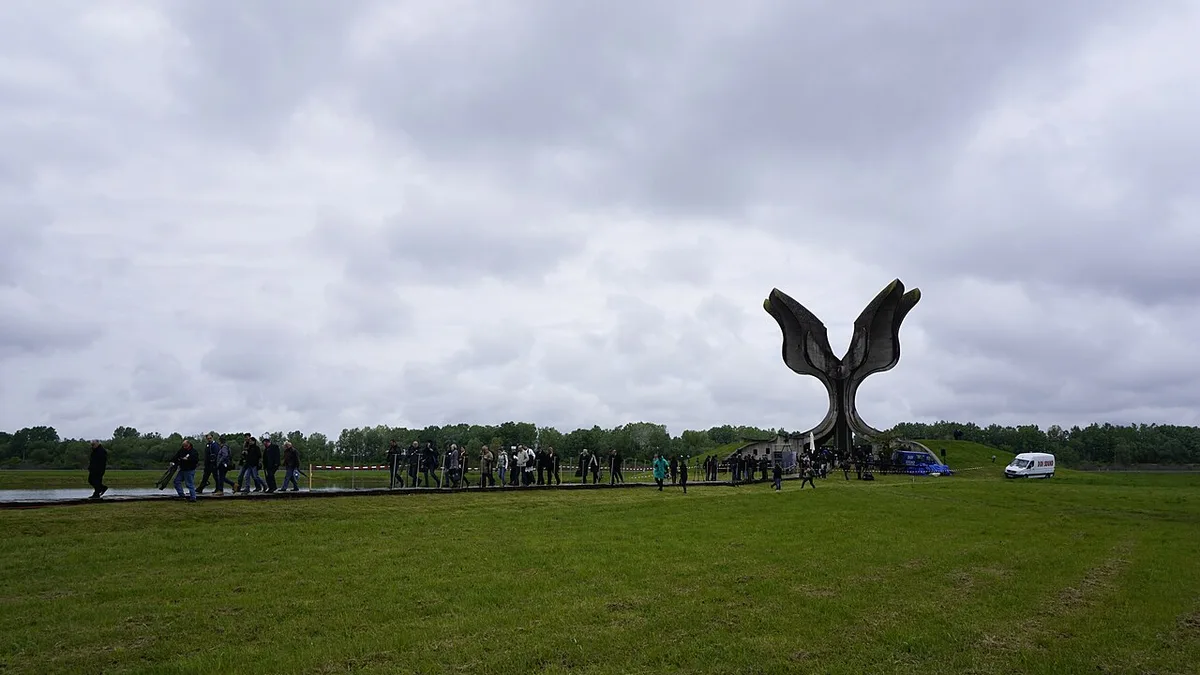
The Jasenovac Memorial Site has so far identified 83,145 victims by name, among them 47,627 Serbs, 16,173 Roma, 13,116 Jews, 4,255 Croats and 1,128 Muslims. Of that number, 20,101 were children under 14. From the winter of 1942, Stara Gradiska was a camp for women.
The Ustasha state also ran camps for children. According to the Jasenovac Memorial Site, between five and seven thousand children passed through the children’s camp in Sisak before it closed on January 8, 1943, and according to the camp registers 1,152 children died, while another source gives 1,631. In Jastrebarsko and Gornja Rijeka there were about 3,336 children. Diana Budisavljevic kept a card file on about 12,000 children and saved about 10,000 of them. As we reported on October 4, the victims of the Sisak camp were commemorated this autumn.
Why has Croatia not done what Germany did?
Germany wrote its break with Nazism into its criminal law. Section 86a provides up to three years in prison or a fine for using symbols of Nazi organizations, and expressly counts flags, insignia, parts of uniforms, slogans and greetings among those symbols. Section 130 provides up to five years in prison for anyone who approves of, denies or plays down crimes committed under National Socialism. Since 1996, January 27 has been Germany’s day of remembrance for the victims of National Socialism.
Croatia took a different path. In 2016 the Constitutional Court rejected a constitutional complaint by former national team player Josip Simunic, who had been punished for shouting that salute, and in 2019 the European Court of Human Rights declared his application inadmissible. But on June 3, 2020, the High Misdemeanors Court, sitting in a session of all its judges, concluded that the salute at the start of the song “Bojna Cavoglave” is not a violation of public order and peace. In 2018 the Council for Dealing with the Past proposed an exception for the insignia of the HOS (Croatian Defense Forces) from the 1990s, and on July 13, 2026, a court in Split acquitted Marko Skejo and 12 HOS members of the charge of shouting “Za dom spremni” in Knin in 2022.
A HOS plaque with that salute was put up on November 5, 2016, in Jasenovac itself, and was moved to Novska only on September 7, 2017. In its reply to an interpellation, the government then wrote: “No government to date has reviewed the existing legal framework, which does not provide for an express in abstracto ban on the use of the phrase ‘Za dom spremni.’” The Jewish community and the Serb National Council therefore boycotted the state commemoration at Jasenovac for years. In 2018, when the boycott was in its third year in a row, Kraus reminded: “Under the Constitution … that salute is unconstitutional!” A joint commemoration was held only in 2020, and in 2022 the Jewish community again held its own.
In October 2025 a round table was held in the Croatian Sabor at which Igor Vukic claimed that “Jasenovac and Stara Gradiska were not death camps.” SDP leader Sinisa Hajdas Doncic responded: “It can happen anywhere, but not in the Sabor.” Former prime minister Jadranka Kosor made the comparison with Germany herself ahead of the Hipodrom: “Imagine that in Germany, for example, the parliament speaker and the prime minister bowed to some singer who violates the constitutional values of that country.” Efraim Zuroff, director of the Simon Wiesenthal Center in Jerusalem, warned as far back as 2019 that books such as “The Exposed Jasenovac Lie” would be banned immediately in Germany and Austria, and rightly so.
Milanovic: from Grubori to Split
President Zoran Milanovic issued a written statement on Friday morning in which he asks the institutions not only for condemnation but for measures and sanctions:
“The behavior of a part of the Torcida fans in Split is unacceptable, shameful and deserving of every condemnation. The chants and actions that openly celebrate the Nazi and Ustasha regimes demand an urgent and systematic reaction from the Croatian police, the state attorney’s office and ultimately the courts. I call on all competent institutions to approach the investigation of this shameful event with the utmost seriousness, so that nothing like it happens again. Words of condemnation such as we hear from the government are no longer enough; measures and sanctions are necessary that will show there is no place in Croatia for the glorification of Nazism and Ustasha ideology. Fans who love and respect their football club must not be hostages of a minority that disgraces not only Torcida and Hajduk, but Croatia.”
Those words carry weight because of what Milanovic said earlier. On August 25, 2020, he went to the Serb National Council’s commemoration in Plavno and Grubori near Knin, together with Minister Tomo Medved and Deputy Prime Minister Boris Milosevic. On August 25, 1995, after Operation Storm, members of the Lucko anti-terrorist unit killed six elderly Serb villagers in Grubori: Jovo, Milos, Marija, Milka and Jovan Grubor and Djuro Karanovic. Most of the houses in the hamlet were burned.
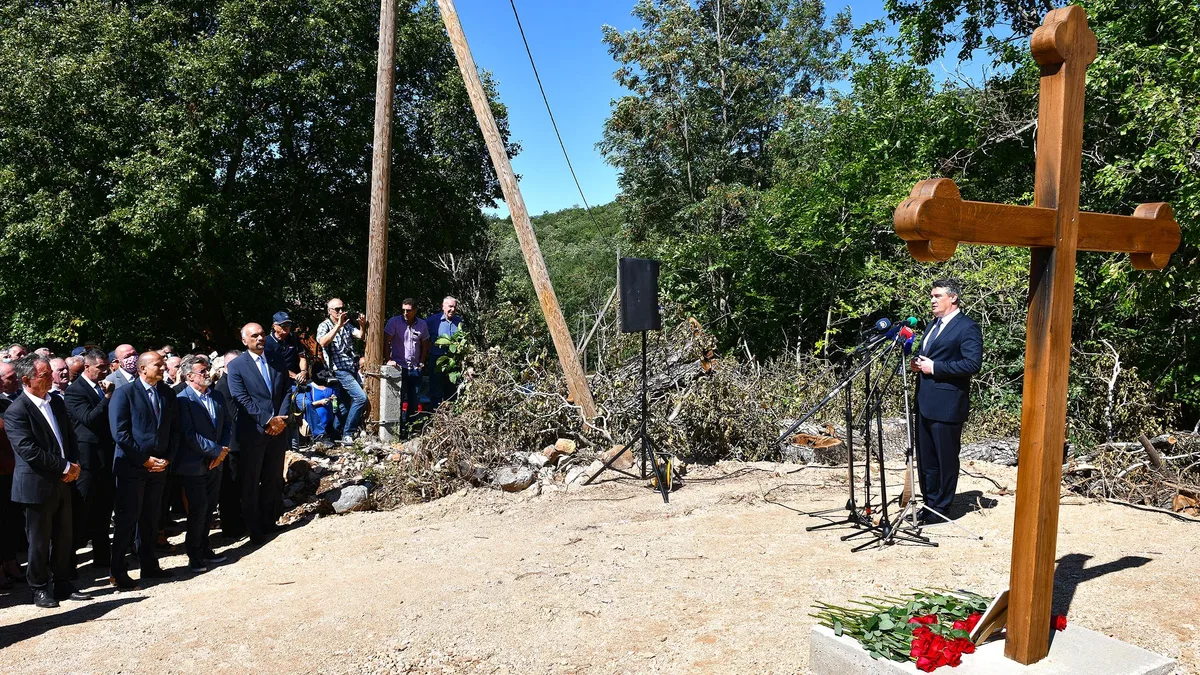
Milanovic said then:
“This is not a protocol event, this is a kind of debt of honor to what happened twenty-five years ago and what then caused moral horror in me. It is easy now, twenty-five years later, to say that nobody was personally held responsible for this. It is roughly known which unit was here that day.”
Of the victims he said: “The killing of six innocent, elderly people causes horror,” and asked: “In the name of what damned justice do people act who could kill innocent civilians?” He also said: “It disfigured Croatia’s reputation, which until then had not been bad, the reputation of a state that was attacked.” He then spoke about the two peoples:
“The wars are over and it is time for the normal in us, for the normal that exists in every person: good, gentle and naive. Enough of what marked the relations between two peoples, or nations, for whom it is hard to find two more similar ones in modern Europe. Croats and Serbs are the two most similar nations with the greatest number of points of contact.”
He ended the speech with lines by the poet Aleksa Santic: “Stay here, the sun of a foreign sky does not warm as this one does, bitter are the morsels of bread where one has no home and where no brother is!” This year, on Antifascist Struggle Day, June 22, in Brezovica near Sisak, he repeated the same thought in other words: “They would not have gotten past the first railway line had there not been Croatian Serbs in Banija and Kordun. That must be said and repeated a thousand times, because without that synthesis this whole story would remain an untold story.” Six years after Grubori, the same president is asking the government that after Split, deeds show what words have not: that in Croatia “there is no place for the glorification of Nazism and Ustasha ideology.”