Serbia and Srpska Link 56,000 Hectares in Tara-Drina Area
Ministers Sara Pavkov and Bojan Vipotnik signed an agreement at Mitrovac creating the Tara-Drina Cross-Border Area, which joins four protected areas on both sides of the Drina.
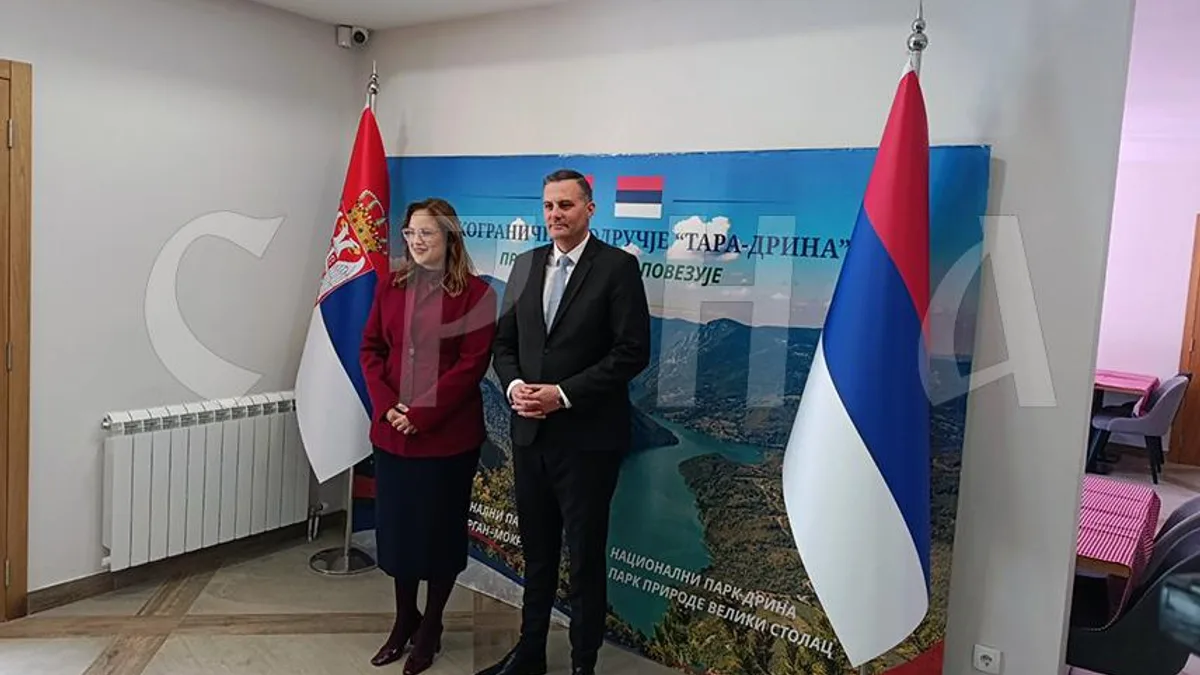
Serbia’s Minister of Environmental Protection Sara Pavkov and Bojan Vipotnik, Minister of Spatial Planning, Construction and Ecology of Republika Srpska, signed an agreement on October 19, 2026 at Mitrovac na Tara, in the municipality of Bajina Basta, linking the protected areas on both sides of the Drina. For Serbia, it means that Tara National Park and Sargan-Mokra Gora Nature Park will now be managed together with the neighboring protected areas across the river, under a new name: the Tara-Drina Cross-Border Area.
What does the Tara-Drina Cross-Border Area include?
On the Serbian side, the joint area takes in Tara National Park and Sargan-Mokra Gora Nature Park. From Republika Srpska come Drina National Park and Veliki Stolac Nature Park. Together they cover more than 56,000 hectares of protected nature.
The agreement was signed a year after the two environment ministries concluded a memorandum of understanding and cooperation. Vipotnik described it to reporters at Mitrovac like this:
Just one year after signing the joint memorandum of mutual understanding and cooperation in the field of environmental protection, we have just signed an agreement on the joint linking of four protected areas: Tara National Park and Sargan-Mokra Gora Nature Park in Serbia, together with Drina National Park and Veliki Stolac Nature Park in Srpska.
What changes in practice?
Vipotnik named three concrete benefits: joint management and protection of natural assets, joint appearances before international funds, and the delivery of large environmental projects. He singled out tourism, saying the project is not only an environmental one:
A concrete benefit is also the development of sustainable eco-tourism that will serve local communities on both sides of the Drina, because this is not just an environmental project but a development project as well.
According to him, a major focus will be on engaging all citizens, local communities and interested parties, so that the area can be positioned as a great ecological oasis on the map of Europe. He also called the agreement a project that joins more than 56,000 hectares and proves that working together can turn visions into reality.
Vipotnik closed by thanking his counterpart across the Drina and the staff of institutions on both sides:
Thank you to my colleague Pavkov, and to all employees in both ministries, in the institutes, in Republika Srpska and in Serbia, for showing together, through dedicated work, that visions can become reality.
Minister Pavkov’s statement was not available at the time of publication. The sources used for this article give no information on when joint management begins or before which funds the area will first present itself.