Sjeverin: Groups Demand Civilian Victim Status From Serbia
On the 34th anniversary of the abduction of bus passengers near Mioce, three groups from Bosnia and Serbia ask Belgrade to recognize civilian war victim status and pay compensation to families.
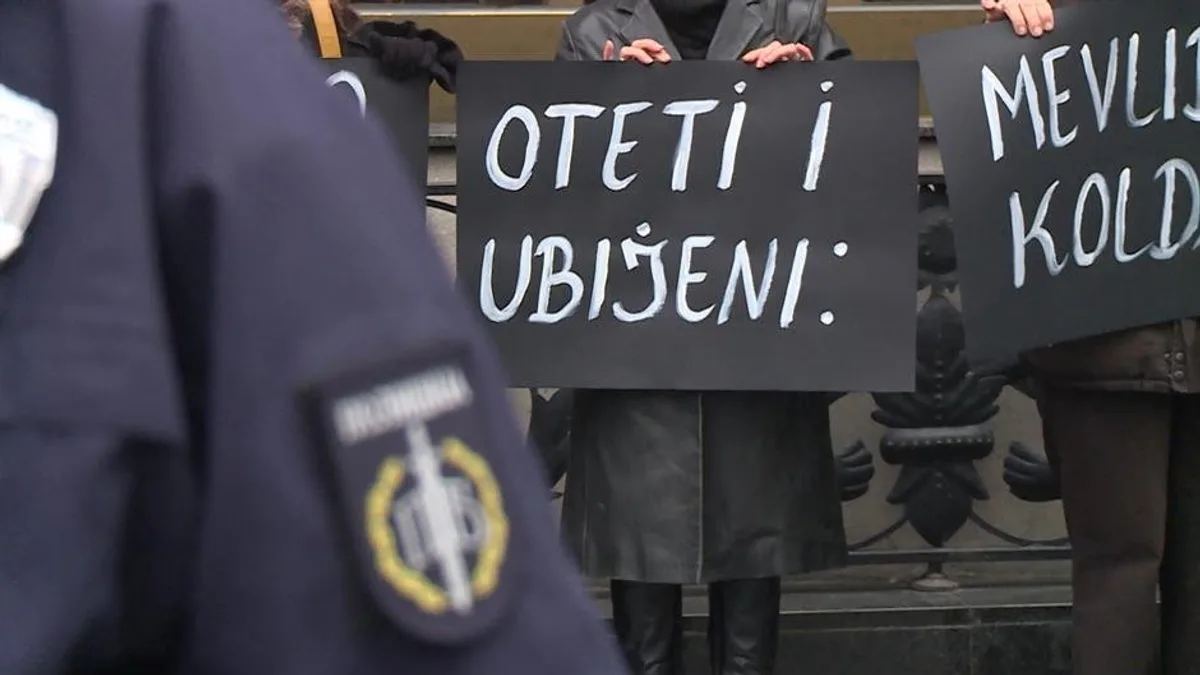
UDIK from Sarajevo, the Center for Democracy and Transitional Justice from Banja Luka and Women’s Voice from Priboj issued a joint statement on October 22, 2026, the 34th anniversary of the Sjeverin abduction. In it, they ask the relevant Serbian institutions to recognize the families of the abducted and murdered passengers as civilian victims of war and to provide them with financial compensation. The crime was committed on the territory of Bosnia and Herzegovina, but the victims were workers at companies in Priboj, and the verdict was handed down in 2005 by a court in Belgrade.
What happened on October 22, 1992?
That morning, members of the “Avengers” (Osvetnici) formation, commanded by Milan Lukic, stopped a regular bus of the Uzice company “Raketa” in the village of Mioce, in the municipality of Rudo. The bus ran on the Priboj-Rudo-Priboj line and carried workers from Priboj companies. After checking documents, they pulled fifteen men and one woman off the vehicle.
The abducted passengers were taken by truck, which according to Bosnian press reports was driven by Oliver Krsmanovic, to the “Vilina Vlas” hotel in Visegrad. There they were abused, then taken to the bank of the Drina and killed.
How many people were killed?
Sources differ on this point. In its report on the statement, the N1 portal says 16 Bosniaks were abducted and killed. Sarajevo’s Klix writes about 17 innocent civilians, because it also counts Sabahudin Catovic, whom the abductors took the night before, in front of his family home. Klix also published the names of all seventeen victims, among them Mevlida Koldzic, the only woman in the group.
Neither figure changes the essence: these were civilians on their way to work.
What is known about the trial and the search?
In 2005, the District Court in Belgrade sentenced Milan Lukic, Oliver Krsmanovic and Dragutin Dragicevic to 20 years in prison each, and Djordje Sevic to 15 years. The fate of most victims remains unresolved three decades later. The groups recall that the remains of only one person have been found and identified: Medredin Hodzic, whose body parts were found in Lake Perucac in 2010. The search for the others continues.
What exactly do they ask of Serbia?
The statement lists four demands addressed to Serbian institutions:
- recognize the victims’ families as civilian victims of war
- provide them with financial compensation
- step up the search for the missing
- offer the families concrete support
The groups justify the demand by the fact that the crime was committed in another country, and the statement says of this:
“The fact that the abduction and murders were committed on the territory of another state does not release Serbia from its moral obligation to grant the victims the status of civilian victims of war and to show respect for their suffering.”
The organizations also appealed to institutions in Bosnia and Herzegovina and across the region, urging them to deal responsibly with the legacy of war crimes. As an example, they cite an initiative by the Centre for Civic Education from Montenegro and UDIK, after which Montenegrin institutions ended cooperation with the “Vilina Vlas” hotel, where the abducted passengers were mistreated before their deaths.
Serbian institutions’ response to the statement was not known at the time of publication.