Joanikije Says Djukanovic Offered Split From Belgrade
In an interview with RTV Podgorica, the Metropolitan of Montenegro and the Littoral calls himself a witness to the former president's proposal and weighs in on Serbia's October 25 election.
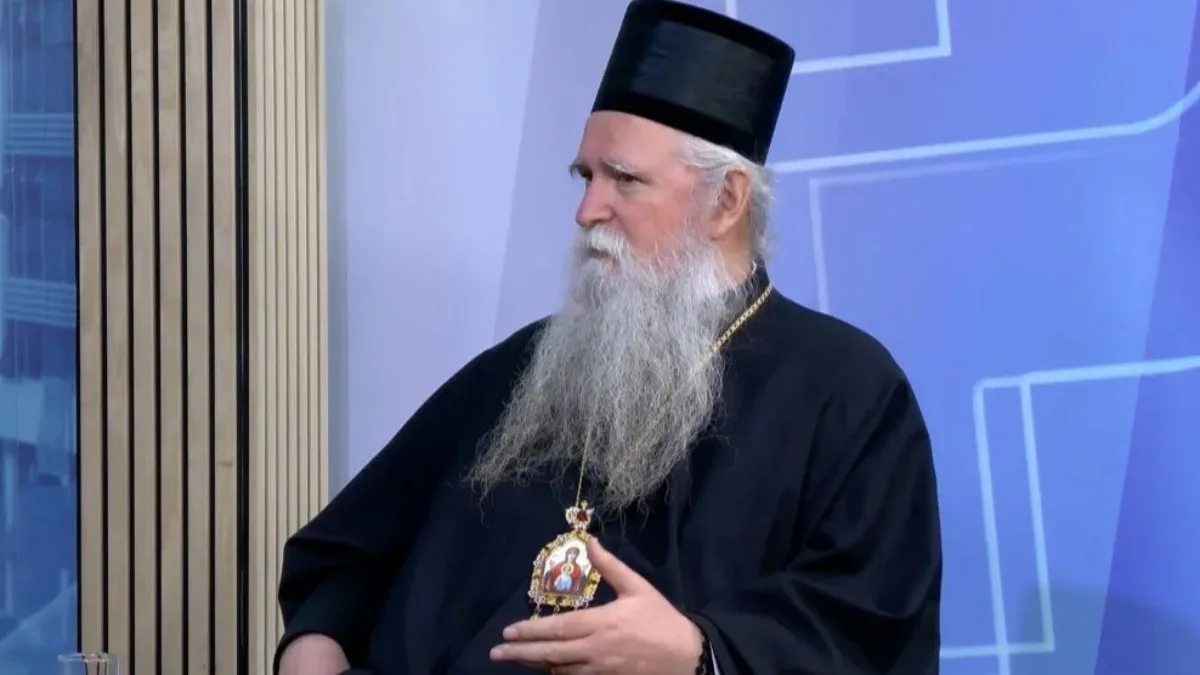
Metropolitan of Montenegro and the Littoral Joanikije said in an interview with RTV Podgorica, aired on the evening of October 29, that he is a personal witness to former Montenegrin president Milo Djukanovic proposing to the Metropolitanate’s clergy that it break away from Belgrade. The conversation also touched on Serbia: Joanikije assessed the outcome of the October 25 election, praised Aleksandar Vucic for conceding defeat, and rejected claims that Vucic played a decisive role in Montenegro’s religious processions. Djukanovic’s response has not been published in coverage of the interview.
What did Joanikije say about Djukanovic’s proposal?
According to Joanikije, the proposal came when the Law on Freedom of Religion was being adopted, a time when, in his words, they were in the worst possible situation. The metropolitan says they were told directly: “Break away from Belgrade and tell us what you need.” He added that such an option was never on the table for them.
“I am a witness to that. Djukanovic offered us that.”
With that statement, Joanikije answers accusations that he and the late Metropolitan Amfilohije advocated separating the church in Montenegro from the Serbian Orthodox Church. He calls such accusations a setup and says some media outlets in Serbia had earlier spread claims that Amfilohije was a separatist. He described the Metropolitanate’s ties with Belgrade as firm.
Vucic, the processions and Serbia’s election
Joanikije describes the religious processions that followed the adoption of the law as a spiritual and popular movement that, he says, came neither from Belgrade, nor from Brussels, nor from Moscow. He called the claim that Vucic played a decisive role in the processions, or in preventing separatism, a manipulation, and said that with such statements Vucic in many ways reminded him of Djukanovic.
At the same time, he said he was not a supporter of Vucic’s government, but that he appreciates that Vucic conceded defeat after the October 25 election and congratulated the winners. He called the move fair and described the outcome of the vote as peaceful:
“Although a lot was said, ‘Oh, they won’t give up power without bloodshed,’ something quite the opposite happened. It was a fair move.”
The metropolitan added: “Thank God, it all ended, above all, peacefully.” He also rejected accusations that students are traitors or that someone from outside is leading them, and said he is glad about the “new energy” that, in his view, young people and the citizens who backed them have brought. He said he did not want to interfere in political processes in Serbia.
Patriarch Porfirije and the status of the Metropolitanate
Of his relationship with Patriarch Porfirije, Joanikije says they have been friends since their student days. “I have great trust in our patriarch,” he said, noting that differing opinions within the church do not call into question his relationship with the Patriarchate and the Serbian Orthodox Church.
Speaking about the earlier Episcopal Council of the Serbian Orthodox Church in Montenegro, the metropolitan insists it was not a step toward autocephaly, but was formed to regulate relations with the state. Those relations, he says, are now settled by the signed Basic Agreement. He attributed talk of detaching the Bay of Kotor from the Metropolitanate to political circles.
Cyrillic, the Serbian language and new churches
Joanikije argues that Cyrillic is not adequately protected in Montenegro and that the Serbian language has no official status even though a large share of the population speaks it. He asked: “If something is dominant and has such a long tradition, how can it not have its place in the state?”
He also announced the construction of new Orthodox churches in Podgorica, saying the Church of Saint George is too small for the faithful.
“In front of the Church of Saint George, every Sunday you have between 200 and 1,000 people standing outside the church.”
For the church to be built at Konik, the metropolitan said, the site was obtained from the Capital City with the government’s consent, and construction, as he announced, begins soon.