UN Security Council Extends EUFOR Mandate in Bosnia
All 15 members backed the British resolution, but the debate on Bosnia showed deep divisions over the OHR and Republika Srpska, and Belgrade was drawn into a dispute over Mladic's funeral.
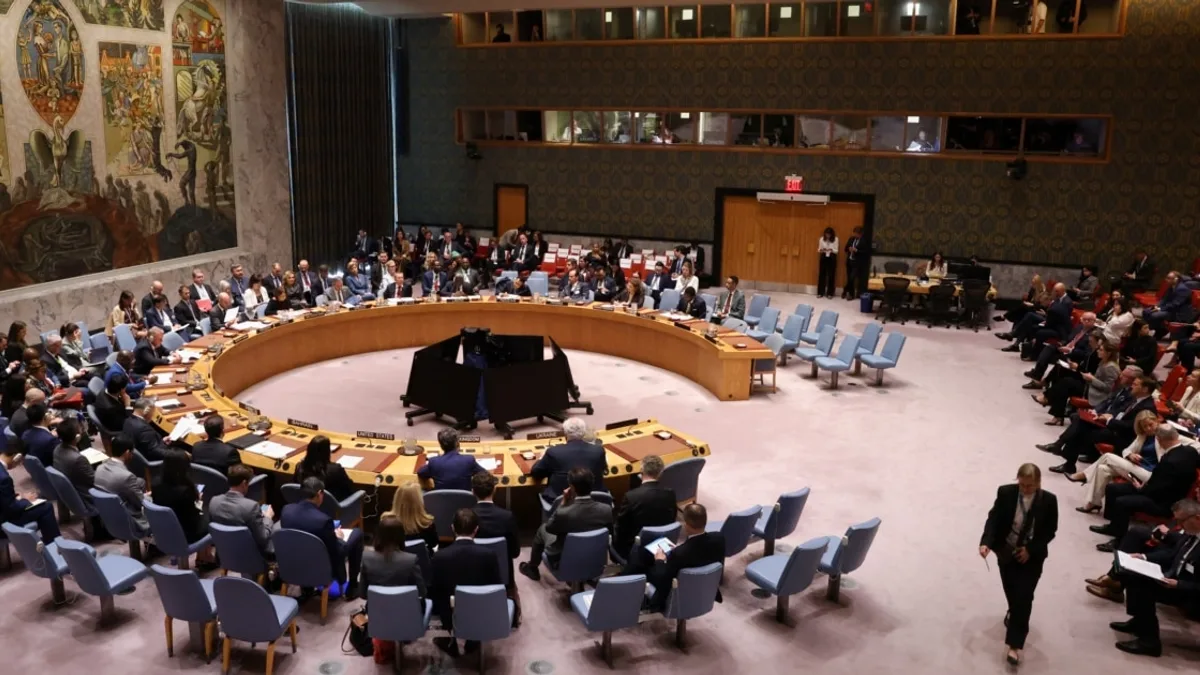
The UN Security Council voted unanimously on Friday, October 30, in New York to extend the mandate of the EUFOR Althea military mission in Bosnia and Herzegovina by another 12 months. The debate that followed reached Belgrade too: Serbia’s representative, Radomir Ilic, had to answer accusations over the funeral of Ratko Mladic, while reactions from Republika Srpska to the outcome came only today, October 31.
The resolution was tabled by the United Kingdom and backed by all 15 Council members. The mandate was extended at the very start of the session on the situation in the country, which left the rest of the hour to the question the members have not settled: how long the Office of the High Representative (OHR) should exist.
What did the Council decide on EUFOR?
EUFOR, the European Union Force in Bosnia and Herzegovina, has operated since 2004 under Operation Althea and currently counts several hundred troops from 24 European countries. Its mandate also allows the use of force if the “safe and secure environment is seriously threatened and the existing security structures are in danger of collapsing.”
The session took place in the shadow of a tragedy: a day earlier, a mission helicopter crashed near Brcko, and the delegations of the United States, Russia and China offered condolences to the families of the Italian EUFOR members. According to Radio Free Europe, four people died, while other reports from the session mention at least three dead. Security Council Report, a non-governmental organization that monitors the Council’s work, said before the session that members wanted a straightforward extension, to preserve consensus and avoid reopening sensitive questions about the OHR. The unanimous vote confirms that assessment, but the debate showed the dispute has only been postponed.
What do the OHR and Republika Srpska government reports say?
The OHR and the Government of Republika Srpska submitted reports on the situation in the country over the past six months. Acting High Representative Louis Crishock, an American, did not attend the session. He took over temporarily on July 1, after the resignation of Christian Schmidt, because the Peace Implementation Council did not choose a successor.
The OHR report covers the period from April 16 to October 15, 2026, and describes the actions of the Republika Srpska authorities as part of a “wider strategy aimed at the de facto separation of Republika Srpska from the constitutional and legal framework of Bosnia and Herzegovina.” As examples it cites challenges to the jurisdiction of state institutions, the refusal to recognize some rulings of the Constitutional Court of Bosnia and Herzegovina, and announcements of a return of entity powers over defense, border control, the intelligence sector and indirect taxation. A special place is given to the new constitution of Republika Srpska: Milorad Dodik, president of the Alliance of Independent Social Democrats, has said it could be adopted on January 9, 2027.
In its report, the Government of Republika Srpska asks for all decisions imposed by high representatives to be annulled, while claiming it remains committed to the Dayton Agreement and the constitutional order of Bosnia and Herzegovina. It also calls for the OHR to be closed, arguing that the period of international administration of the country is a completed phase.
What did the major powers say?
Russian Ambassador Vasily Nebenzia welcomed the extension of the mission, expecting it to operate within “strictly agreed parameters,” but was sharper toward the OHR. He disputed Crishock’s legitimacy because the Security Council has not confirmed him, and said the Dayton Agreement has no such thing as an acting high representative. He demanded:
“We insist on the swift abolition of this foreign protectorate and the abolition of the office of the high representative without any additional conditions.”
At the same time, he said that “Republika Srpska protects the Dayton Agreement and rationally calls for dialogue among domestic representatives.” China’s representative, Sun Lei, backed the same line, explaining that the institution of the high representative and the Bonn powers were “special arrangements for a special period.” His message was:
“The fate of Bosnia and Herzegovina should be in the hands of its people, and its citizens should decide independently on state affairs.”
The American position was more nuanced. Deputy US Permanent Representative Tammy Bruce supported the work of the OHR, but urged leaders in Bosnia and Herzegovina to “quickly form governments and take responsibility for the country,” at the state, entity and cantonal levels after the general elections held in early October. She described the office of the high representative as temporary by nature:
“The success of the high representative means building a stable, secure and sovereign Bosnia and Herzegovina, even if that means that his office will one day become redundant.”
The British ambassador, whose name is given differently in reports from the session, said the conditions for closing the OHR have not yet been met and that the OHR has a “vital and legitimate role,” and called “unilateral calls for secession or the creation of a third entity” a risk to peace. Greek Ambassador Aglaja Balta said that “the Dayton Peace Agreement remains the cornerstone of preserving peace and stability in the country,” and French Ambassador Jerome Bonafon said that “leaders elected in Bosnia and Herzegovina can count on Paris’s support in carrying out the necessary reforms.” Denmark expressed regret over Bosnia and Herzegovina’s insufficient progress toward EU membership and recalled that the conditions for opening accession negotiations have not been met.
What did Belgrade tell the Council?
The Chairman of the Presidency of Bosnia and Herzegovina, Denis Becirovic, accused the Republika Srpska leadership of preparing secession:
“The separatist leadership of the Bosnian entity Republika Srpska is trying to create the preconditions for secession. That is why we must make it clear in the UN Security Council as well that any attempt at secession would mean destroying the peace and the Dayton Peace Agreement.”
He called on the international community to consider reintroducing targeted sanctions against actors of destabilization, and he criticized Serbia over the military and state honors given to Ratko Mladic. Serbia’s representative, Radomir Ilic, replied that Belgrade supports the sovereignty, territorial integrity and Dayton constitutional order of Bosnia and Herzegovina, along with the principle of “one state, two entities and three equal constituent peoples.” The funeral, he said, was organized by the family, and Serbian state bodies provided only logistical and security support. He added that Becirovic’s positions are not an agreed position of the Presidency of Bosnia and Herzegovina.
Bosnia and Herzegovina’s UN Ambassador Zlatko Lagumdzija replied that Becirovic had every right to speak on behalf of the state, and that he voiced criticism of the funeral “on behalf of the victims,” recalling that Mladic was convicted by an international court of genocide, crimes against humanity and war crimes. Croatia’s representative, Hrvoje Curic, condemned secessionist rhetoric and attempts at political centralization, and repeated that changes to election legislation are needed.
Today, the speaker of the National Assembly of Republika Srpska, Nenad Stevandic, reacted to the outcome of the session. He told the Srna news agency that “the three biggest powers” had said time had run out for the OHR, and said of the Bosniak public: “I think he is keeping them only so that they don’t make deals with the Serbs.” The American and Russian statements do not support the same conclusion, though: Washington backed the work of the OHR and allowed that the office may one day become redundant, while Moscow demands its swift abolition.
EUFOR’s mandate has been extended for 12 months, and the first date that could test this divide is January 9, 2027, when Dodik expects the new constitution of Republika Srpska to be adopted.