Bozovic to Zagreb: Montenegro Offers Draft Border Treaty
In a letter to Croatia's state secretary, Montenegro's chief negotiator rejects a unilaterally drawn land border and proposes a draft agreement or a dispute before an international body.
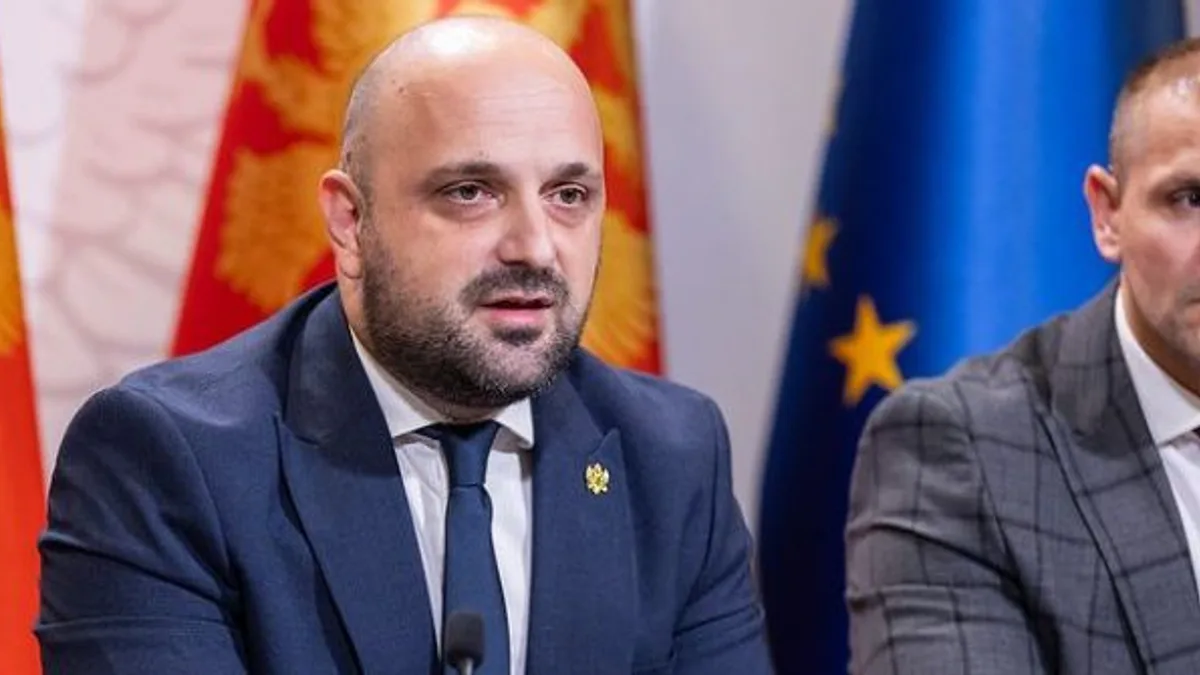
Montenegro will not accept a border line that Croatia has drawn unilaterally, and offers its own draft agreement on the land and sea boundary instead. That is the core of a letter that Bojan Bozovic, head of Montenegro’s negotiating team, sent on November 18 to Andreja Metelko-Zgombic, state secretary at Croatia’s Ministry of Foreign and European Affairs, according to RTCG, as relayed by Borba, Antena M and Novosti. Whether a bilateral dispute should be allowed to slow EU accession also matters to Serbia, the other candidate country in the region.
What did Bozovic tell Zagreb?
The letter responds to public statements by Croatian officials and to conclusions drawn from contacts between the two delegations. In it, Bozovic expresses concern that Montenegro’s progress toward European integration is being tied to acceptance of Croatia’s proposed treaty on the land border.
He bases his reply on the results Podgorica cites as its argument:
“Montenegro has confirmed its commitment to European Union membership through concrete results and consistent fulfillment of the obligations it has taken on. We expect its progress to be assessed solely on the basis of achieved results and established European criteria,” Bozovic said.
Montenegro, the letter says, does not question the principles of the Badinter Commission or international law as the basis for determining state borders. But accepting those principles, Bozovic stresses, does not mean agreeing to a specific border line set unilaterally.
“Montenegro cannot accept a solution that is not the result of negotiations and an agreement between the two states, nor can it give up its legal positions. The border question must be resolved on the basis of facts and international law, with respect for the interests of both states,” Bozovic said.
What does Podgorica propose instead of Croatia’s draft?
The Montenegrin negotiator does not stop at rejection. He puts two possible paths on the table:
- a draft agreement: Podgorica is ready to prepare and submit it as soon as possible, and it would be open to further talks between the two sides;
- an international body: if no deal is reached, Bozovic proposes an agreement to jointly submit the land and sea boundary dispute to a body that both states accept.
The letter announces the draft in these words:
“Montenegro is ready to prepare and submit, in the near term, a draft agreement on the land and sea border, which will be subject to further talks between the two sides, with respect for the interests of both states,” the letter states.
In Bozovic’s assessment, resolving the matter before an international body would provide legal certainty, equality between the parties and a lasting outcome. Podgorica, he adds, is also ready for intensive bilateral dialogue aimed at a solution acceptable to both sides.
Why does Montenegro cite Croatia’s 2011 declaration?
Bozovic recalls that on October 21, 2011, the Croatian Parliament adopted the Declaration on the Promotion of European Values in Southeast Europe. Under it, open bilateral issues must not obstruct candidate countries’ accession to the European Union or serve as a reason to slow the process. Montenegro, he writes, expects the same principles to be applied consistently to it.
“At the same time, an open bilateral issue should not be used as a means of imposing conditions in the final phase of accession negotiations. Such an approach is not in line with the spirit of European integration, the principle of good neighborly relations, or the principle of equal treatment of candidate countries,” Bozovic said.
Montenegro and Croatia, the letter notes, are friendly, neighboring and allied states that share European and Euro-Atlantic values, so differences should be settled with mutual respect. Bozovic closes the letter with a statement of Podgorica’s goal:
“Montenegro wants to become a member of the European Union as an equal state, with open issues resolved, but not at the price of giving up legitimate legal positions. We are convinced that such an approach serves the interests of both states and the European future of the region,” Bozovic concluded.
The published sources do not include a response from the Croatian side.