

Serbian Language Petition in Montenegro Hits 16,000
Matica srpska in Montenegro wants Serbian made equal to Montenegrin, and two deputy prime ministers back it. The Democratic Party of Socialists cites constitutional barriers.
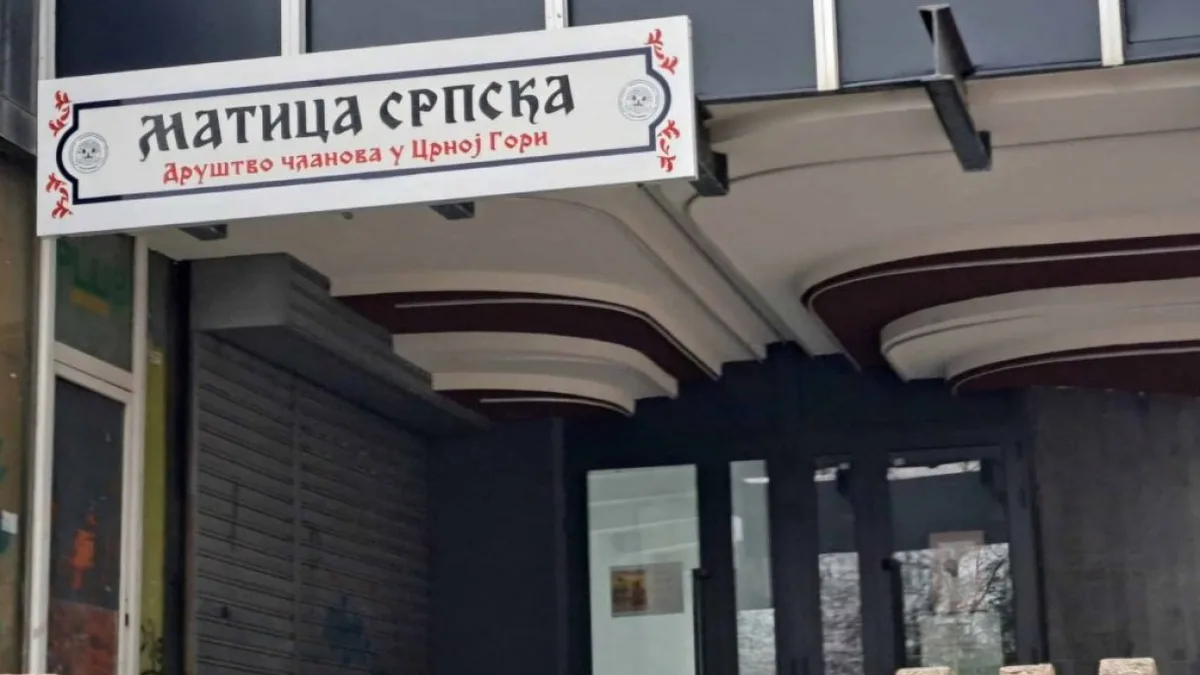
The status of the Serbian language in Montenegro, where according to the petition’s figures 43.18 percent of the population speaks it, has become a political dispute that directly concerns Serbia as well. It is the most widely spoken mother tongue in a neighboring country that stands at the threshold of the European Union. The petition to make it equal to Montenegrin was launched by Dusan Krcunovic, president of Matica srpska in Montenegro, and in recent days it was submitted to the Montenegrin Parliament and its Constitutional Committee. Reactions from the government and the opposition have already arrived.
What does the petition demand, and who launched it?
The initiative was launched by Prof. Dr. Dusan Krcunovic, president of the Matica srpska Society of Members in Montenegro. The text asks that Serbian be made equal to Montenegrin, the second most widespread language, both in the domestic legal order and in the process of accession to the European Union. Signing is electronic and runs until January 15.
The figures on the number of signatures come from participants and the media, and they do not match in every detail. Novosti reports that the petition already has 16,000 signatures. Marko Kovacevic, president of the municipality of Niksic and an official of New Serb Democracy, said that the requested 6,000 signatures were collected in a little over an hour on the first day, while Democrats MP Nikola Rovcanin speaks of “a few hours.” Both say that more than 15,000 people signed the petition in less than 24 hours.
Who has backed the initiative?
Support came from New Serb Democracy and Democratic Montenegro, and two deputy prime ministers have also spoken out publicly. In a post on X, Momo Koprivica said that the Serbian language is not imported but is the language of people who live in Montenegro, with deep historical and cultural roots in the country. He added:
“That is why I support the initiative for the equality of the Serbian language”
Koprivica also said that basic values are above politics:
“Basic values are and must be above politics, especially party politics. Language equality is a European standard and an inseparable part of a democratic society”
He recalled that the initiative arrives as Njegos Day is marked, when, as he put it, Njegos printed the “Serbian Primer for the Church and Civic Reading Instruction of Youth” in 1836 and the “Serbian Grammar Compiled for Montenegrin Youth” in 1838.
Budimir Aleksic, Deputy Prime Minister for education, science and relations with religious communities, told RTCG that he expects an outcome different from earlier attempts:
“We hope that we will have an epilogue this time, when it is launched by an institution that is not part of the political spectrum. So this is now being launched by a scientific and cultural institution. I assume they will secure a majority in Parliament and that we will have more luck this time, as subjects who have been striving for this for 20 years now, whose demand, of course, is a clear position of the Serbian language in the Constitution of Montenegro, as it deserves and as citizens clearly stated in the census. Full support for this initiative”
Kovacevic told Novosti that the Serbian language is “a natural thing in Montenegro,” which, as he put it, is shown by census results, by the history and tradition of the region, and by the state’s institutional memory. In his view, the state should find a way to recognize the place of Serbian in the future, ending the institutional discrimination that, he claims, was established by the previous regime. Jelenka Andric, an MP from the Europe Now Movement, assessed that the initiative is “more than a petition,” because it concerns civil and human rights. Rovcanin said he signed the petition both as a citizen and as an MP:
“I believe the initiative is well founded, it is right on the mark”
Why does the DPS say a petition cannot change the Constitution?
The Democratic Party of Socialists considers the petition an attempt to change the constitution by force and to mislead citizens for the purposes of an election campaign. DPS Vice President and MP Aleksandra Vukovic Kuc interprets the petition as relying on Article 15 of the Constitution, which regulates the manner of accession to the European Union, and argues that it gives no authority to amend Article 13, which defines Montenegrin as the official language. She told RTCG radio:
“We are entering Europe with our own name, our own language and our own dignity. Article 15 of the Constitution regulates the manner of accession to the European Union, and does not give authority to change the constitutional status of the language. Article 15 cannot be used to skip Article 13 while pretending that Article 157 does not exist. The Constitution is read as a whole, and not according to the needs of Mandic and the campaign of his associates. A change in the status of the language requires a two-thirds majority in Parliament and the support of at least three fifths of all voters in a referendum. Article 157 itself is protected by the same referendum condition. So there is no parliamentary shortcut, and no coalition agreement that can replace the decision of the citizens. The Constitutional Committee must reject the demand to bypass that procedure”
Under the same interpretation, amending Article 13 requires a two-thirds majority of all MPs, and the change becomes final only if at least three fifths of all voters support it in a national referendum. In a new statement carried by RTCG, Vukovic Kuc said that Montenegrin is the official language of a sovereign Montenegro and that its name is a symbol of statehood, not a threat to anyone’s identity. She added that the DPS respects the Serbian language and the right of citizens to call their language Serbian, and said of changing the status of the language by petition:
“The Constitution, however, is not a coalition agreement.”
What do Cetinje and Brussels say?
The Faculty of Montenegrin Language and Literature in Cetinje called on Parliament and the Constitutional Committee to reject the initiative as constitutionally inadmissible, and on the government and all parliamentary parties to state their positions on it clearly. Its statement reads:
“Despite its name, this initiative works against Montenegro’s entry into the European Union. In the final stretch of the accession process, its authors raise the question of the official language and tie it to the accession treaty, turning the most important state task of this generation into a hostage of an identity dispute. Whoever opens Article 13 of the Constitution today closes the doors of the EU to Montenegro”
In the same report, Novosti writes that official Brussels, according to its claims, is considering a temporary derogation from the rules if Montenegro fails to translate all European Union laws on time, including the use of one of the official EU languages instead of Montenegrin. That claim has not been confirmed in other reports we reviewed, so it should be read as an assertion by that outlet.
The petition remains open for signatures until January 15, when the final number of signatories will be known, and the text submitted to the Constitutional Committee awaits the decision of MPs.


