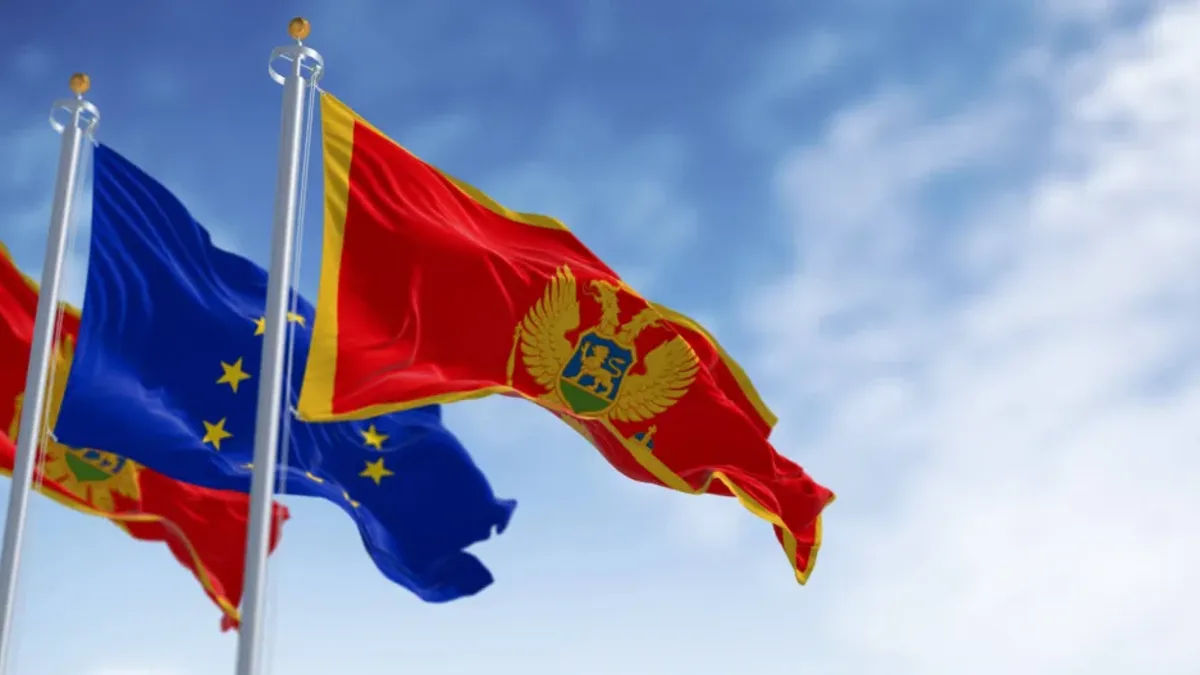
Montenegro closes EU chapters 16 and 22, eight remain
Brussels provisionally closed the tax and regional policy chapters, leaving Podgorica with 25 closed chapters and eight still ahead.
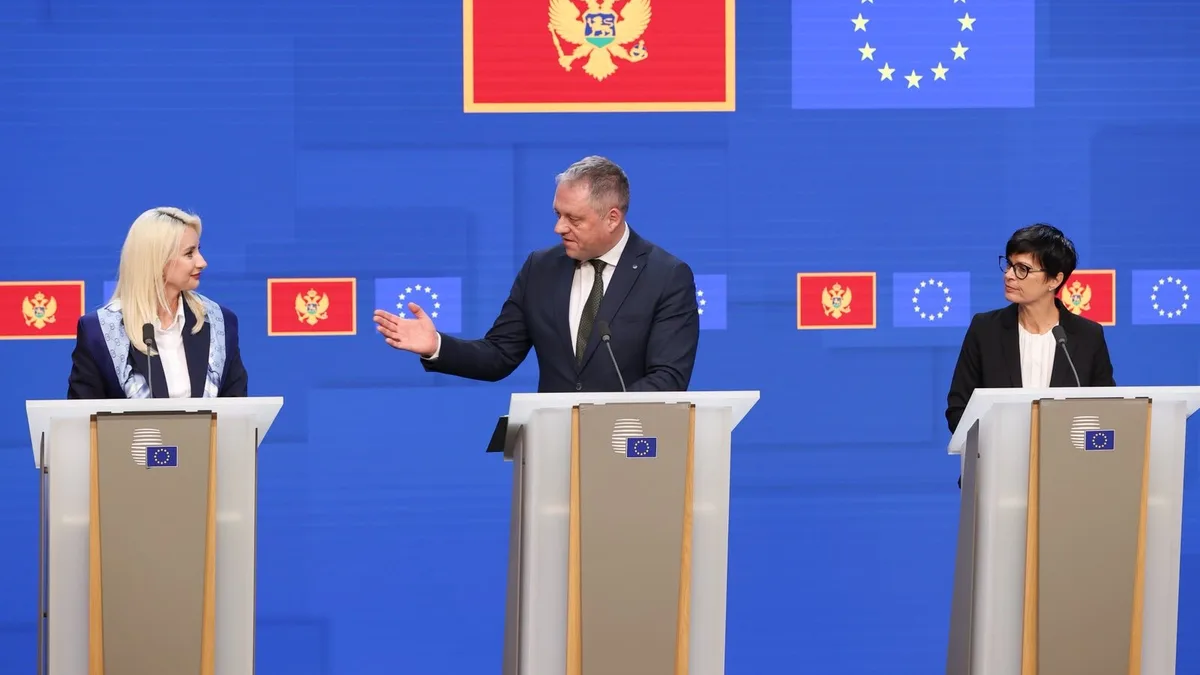
Montenegro provisionally closed two more negotiating chapters with the European Union at an Intergovernmental Conference in Brussels on November 19: chapter 16, on taxation, and chapter 22, on regional policy and the coordination of structural instruments. For the region, it shows how fast the final stretch of talks can move once the benchmarks are met, and European Commissioner for Enlargement Marta Kos said Podgorica’s success sends a message to the whole Western Balkans, Serbia included.
The closure was announced by the Council of the EU. According to N1 and RTCG, Montenegro now has 25 of 33 chapters closed. CdM reports that Kos spoke of 25 out of 35 in a post on X. The sources differ on the total, but they agree that 25 are closed, and the list of remaining chapters published by RTCG has eight items, which makes 33 with the 25.
Which chapters remain before the end of the year?
According to RTCG, Montenegro has eight chapters left:
- 9, financial services
- 14, transport policy
- 15, energy
- 23, judiciary and fundamental rights
- 24, justice, freedom and security
- 27, environment and climate change
- 31, foreign, security and defense policy
- 33, financial and budgetary provisions
According to the same source, the government’s plan and the European Commission’s road map call for all remaining chapters to be closed by the end of December. Podgorica intends to sign the accession treaty in June 2027 and become a member in 2028.
At the previous Intergovernmental Conference, on November 6, chapters 1, on free movement of goods, and 12, on food safety, veterinary and phytosanitary policy, were closed. Irish Minister of State for European Affairs Tomas Birn, who chaired the conference on behalf of Ireland’s presidency of the Council of the EU, said nine chapters were closed during that presidency. Before the conference began, RTCG had reported seven, which with today’s two gives the same total.
What Kos and Birn said
At a press conference, Marta Kos said 13 chapters have been closed since the start of the year, which puts Montenegro third for chapters closed in a single year, behind Lithuania and Latvia. She assessed that there is a strong chance it will overtake them.
“Today’s achievement is the result of great, long-standing work and proof of what can be achieved when politics and interests are set aside,” Kos said.
The commissioner added that Montenegro has met the conditions to close all the remaining chapters by the end of the year, but that the job is not done:
“But the work is not finished yet, and it is important that we make an additional push so that Montenegro completes the remaining work during the Irish presidency,” Kos said.
Birn struck the same tone, saying “Montenegro is closer to the goal of closing all chapters by the end of the year.” Asked whether the deadline could be missed, he answered that he does not believe it will come to that:
“I do not believe anyone can fall off the radar if people believe in the rule of law. If it happens that we fail to close the last chapters, we are already there,” Birn said, adding on the pace of the process: “This can be done very quickly, and we can see there is great flexibility.”
What Podgorica says
European Affairs Minister Maida Gorcevic wrote in a post on X that with the provisional closure of chapters 16 and 22 they have reached three quarters of the way, with the final eight chapters still ahead. In her words, closing chapter 16 means more orderly tax rules, more predictable business conditions and fairer competition, while chapter 22 calls for timely preparation of projects for EU funds.
Ahead of the conference she told RTCG:
“EU membership will let us use cohesion funds to finance better roads, more reliable water supply and investments that create new jobs. That is why projects need to be prepared before we join the EU, so that we can use the funds when they become available.”
On the benchmarks, Gorcevic said: “The provisional closure of these chapters will also mean the closure of the benchmarks. We will do everything the EC deems necessary.”
Croatia and the open bilateral issues
Disputes with Croatia complicate the final stretch of the talks. In October 2026, Zagreb presented the other member states with eight demands toward Montenegro, and ties their resolution to the conclusion of the negotiations. Most of them concern the wartime legacy of the 1990s, and the issues of the state border, ownership of the training ship “Jadran” and the property rights of Croatian citizens are also open.
Kos said that bringing bilateral issues into the enlargement process is nothing new and that something similar has happened in other negotiations.
“I hope Montenegro and Croatia will manage to resolve the bilateral issues,” Kos said.
Gorcevic repeated that talks with Croatia are being held at a high level:
“We want to resolve all disputes with Croatia before membership and thereby prove that we will not create any problems by joining the EU,” the minister said.
On the land border, Gorcevic said Podgorica will wait to see how the dialogue unfolds before deciding whether arbitration is needed.