European Parliament votes Thursday on Vukovar resolution
Political groups agreed a single text with five changes, including a mention of Tadic's apology at Ovcara. The resolution sets no new conditions for Serbia.
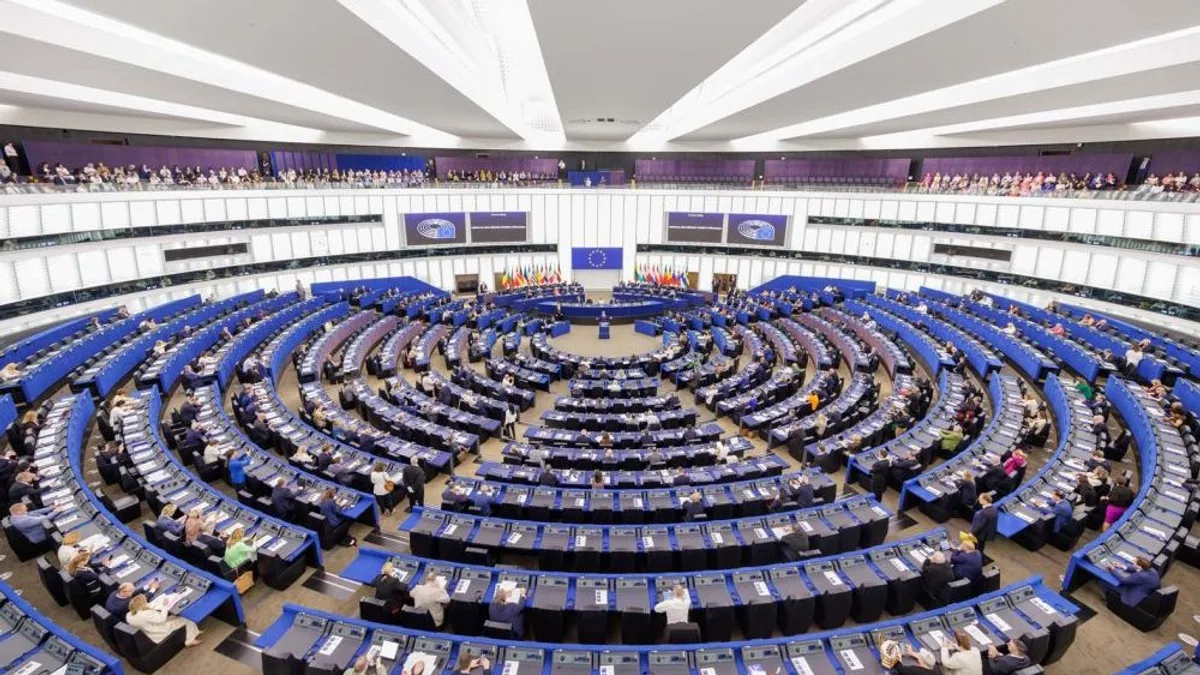
The European Parliament votes Thursday in Strasbourg on a resolution marking 35 years since the fall and destruction of Vukovar, and the text MEPs will decide on was changed at the last minute. The political groups agreed on a single proposal with five changes, among them a mention of the apology Boris Tadic made at Ovcara. For Serbia the burden is political rather than legal: the resolution is not binding and adopting it introduces no new conditions for European Union membership, but the Croatian proposal asks Belgrade for concrete steps on war archives and missing persons. The hour of the vote has not been announced, and the outcome is not yet known.
What changed in the text of the resolution?
The proposal was launched by MEP Karlo Resler (HDZ, European People’s Party), with the backing of Croatian members of the European Parliament. The original text was supported by four political groups: the People’s Party, the Social Democrats, the Conservatives and the Greens. After the changes, as reported by Vecernji list, the liberals of Renew Europe, who had earlier tabled a proposal of their own, have also thrown their weight behind it.
The five changes are:
- Victims of all wars: the wording on Milosevic’s Greater Serbian aggression against Croatia stays, but the tribute is extended to the victims of the other wars during the violent breakup of Yugoslavia.
- Ovcara 2010: the text now includes the visit of Serbia’s then president Boris Tadic and Croatian president Ivo Josipovic to Ovcara, where Tadic bowed to the victims and apologized for the crimes committed.
- The missing: it stresses that the families of missing persons of all nationalities are still waiting for information about the fate of their loved ones.
- Responsibility in Serbia: in place of the wording on Milosevic and members of the Serbian political and social establishment, Milosevic is now joined by influential individuals from Serbian analytical, political and intellectual circles.
- Terminology: the term “Territorial Defense of Serbia” is replaced by “Serbian Territorial Defense.”
Tadic apologized to Croatia twice. The first time was in 2007, on the show “Sunday at Two” on Croatian Radiotelevision. In November 2010, on an unofficial visit to Vukovar with Josipovic, he laid a wreath at the Ovcara memorial and said he had come to bow to the victims, offer words of apology, express regret and create the possibility for Serbia and Croatia to turn a new page in history.
Who backed which text?
The agreement followed disagreement. The liberal proposal was written by Austrian MEP Helmut Bransteter and supported by seven human rights organizations from the former Yugoslavia, among them Croatia’s Documenta and the Humanitarian Law Center in Serbia. They asked that the resolution mention Serbian civilians killed or missing in Vukovar before the siege of the town began, that equal standards be applied to all countries of the region in dealing with the wartime past, and that individual responsibility for crimes be stressed. Unlike the Croatian proposal, that text did not mention concentration camps in Serbia.
After the debate in the European Parliament, Resler said:
“I am glad the debate took place and that the European Parliament for the first time paid tribute to the defenders and victims of Vukovar, to the superhuman effort in the Vukovar hospital, and that the victims who followed the occupation of the town, which culminated in the massacre at Ovcara, were also marked.”
The debate on this resolution was already the subject of our earlier report. What is new is that the vote now covers one agreed document.
Why does the Student Movement object?
The Student Movement of Serbia publicly opposed the proposal on November 23, arguing that the document does not contribute to an objective view of historical events or to building trust among the peoples of the former Yugoslavia. In a statement they said:
“The proposed resolution almost entirely ignores the suffering of the Serbian civilian population in Croatia, including killings, persecution, destruction of property and mass displacement. Events such as Operations ‘Flash’ and ‘Storm,’ as well as crimes committed against Serbian civilians during the war, cannot be left out of a comprehensive view of this historical period.”
They also found it unacceptable that the complex processes of the breakup of the SFRY and of relations between nations are reduced to a simplified picture of collective responsibility of the Serbian people. They added this:
“Responsibility for war crimes must be individual and established on the basis of evidence and final court rulings, not attributed to entire peoples.”
The questions of missing persons, opening archives and prosecuting war crimes, they added, have to be resolved through regional cooperation, mutual respect and equal standards for all states. Commenting on the students’ objection, Resler said the incoming government in Serbia will decide for itself which path to take.
What does the resolution ask of Serbia?
The Croatian proposal asks Serbia to open its war archives, hand over data on the locations of graves, cooperate in prosecuting war crimes and adopt a law on missing persons. The aim of the initiative is for the suffering of Vukovar to become part of shared European historical memory. If adopted, it will be the first European Parliament resolution devoted solely to the suffering of Vukovar.
Legally, the resolution is not binding, and its adoption does not in itself introduce new conditions for Serbia’s membership of the European Union. Politically, MEPs will vote in Strasbourg on Thursday on one agreed text instead of two competing ones.