Hormuz Strait: tankers hit mines, US urges Americans out
The Revolutionary Guard navy says two tankers hit mines, and the US Virtual Embassy urges its citizens to leave Iran immediately. There is no independent confirmation.
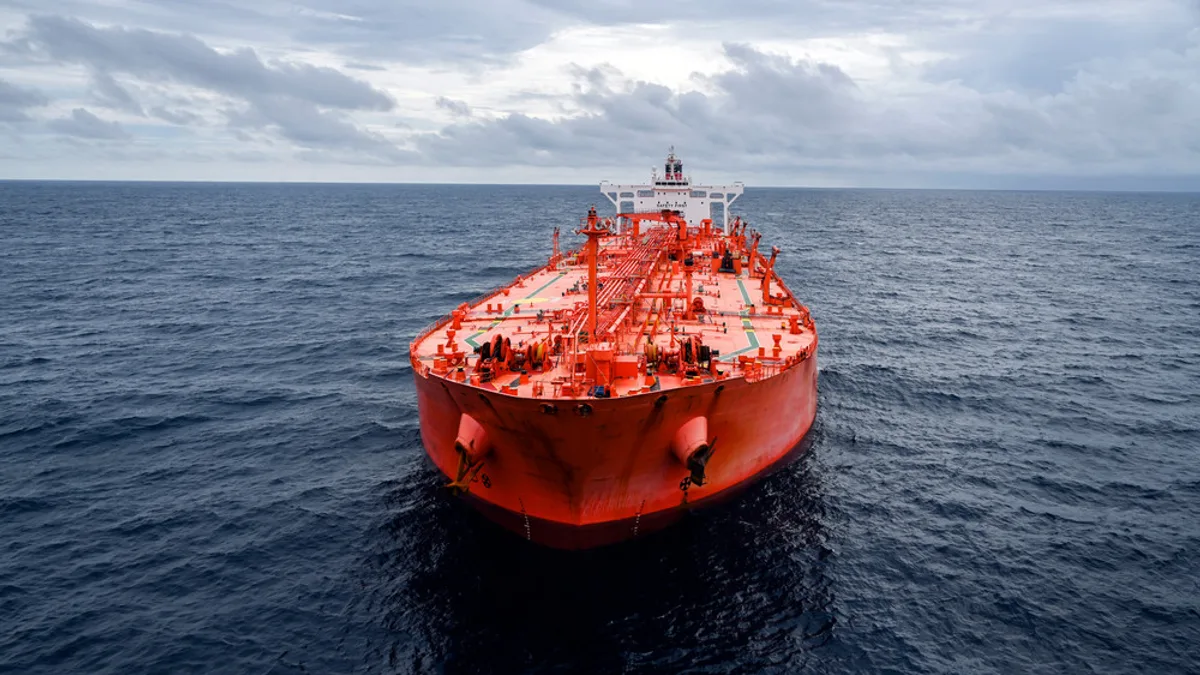
Tehran and Washington pointed to danger in the same strait on Wednesday, November 25, each in its own way. The Revolutionary Guard Navy of Iran announced that two oil tankers hit naval mines early in the morning in the Strait of Hormuz, and the American Virtual Embassy in Iran told US citizens the same day to leave the country at once. The claims about the mines come exclusively from Iranian statements.
What did Iran say about the tankers that hit mines?
According to a statement carried by the Iranian agency IRNA, the tankers were sailing near the southern and eastern coast of the strait, the mines caused explosions, and fires broke out in the engine rooms. The Revolutionary Guard claims the ships used a route Iran had not approved and violated the instructions of its Strait Traffic Control Center. The statement as reported by the agencies does not name the ships, their flags or their crews.
The Revolutionary Guard Navy says in its statement, in translation: “These oil tankers imagined they could slip through the Strait of Hormuz on a false route, but naval mines blocked their path and caused a huge explosion and fire.”
The Traffic Control Center, the same text says, warned the crews of ships sailing with their navigation and positioning systems switched off: “Be careful that the lies of American officials do not drag you into the explosion and fire of naval mines.”
Later that day the Iranian military reported, according to the Fars agency, that a third tanker had also hit a mine and caught fire in the “forbidden zone” of the strait. That claim, too, has only one source.
The sources we read contain no independent confirmation of any of these events. Iranian military spokesman Mohamad Akraminija said in a separate statement that new systems have been installed and existing ones upgraded to monitor and control the strait, warning that ships passing without an agreement with Iranian forces face greater risk and that such ships have already hit mines in recent weeks.
How often does Iran report incidents like this?
The American portal OilPrice says such Iranian reports about tankers “violating” Iranian shipping rules have become almost daily over the past few weeks. Earlier this week Iran announced that three more tankers had hit mines and caught fire because they had violated the instructions of the Traffic Control Center.
According to data compiled by Bloomberg and relayed by OilPrice, the number of attacks on tankers in October was the highest since the war with Iran began at the end of February, and it continued almost daily in November. At the same time, the flow of crude oil from the Persian Gulf is recovering and prices are falling, with a supply surplus expected in the coming months. The volume of oil passing through the strait has dropped in recent days, but it is unclear whether more frequent attacks on tankers are the only reason.
What does Tehran want in return for reopening the strait?
Tehran has told Washington it will not restore normal shipping until its conditions are met: lifting the American naval blockade of Iranian ports and ending the war “on all fronts.” In a proposal passed through Qatari mediators, Iran offers to open the strait within 48 hours of Washington meeting those conditions.
Iranian Vice President Mohamad Reza Aref said the same day that Iran is not worried about the American blockade, because cargo traffic across other borders has risen significantly.
What does the American warning say?
The US Virtual Embassy in Iran issued a security alert that says, in translation: “Do not travel to Iran for any reason. United States citizens should leave Iran immediately.”
The alert refers to Iranian attacks on American targets in Bahrain and Kuwait. In Bahrain on Saturday, according to the country’s Interior Ministry, two people were wounded and a fire broke out at a civilian industrial facility. The embassy also states that Iran, the Houthis and groups close to Tehran may target American interests, companies and institutions, and that the situation can deteriorate quickly.
Citizens were advised to monitor airline and airport operations and to expect flight cancellations and airspace closures, to avoid demonstrations, large gatherings and areas with a heavy police presence, and to enroll in the State Department’s information system for security notices. The embassy also warns that rules for crossing Iranian land borders may change at short notice.
The listed contact for assistance is the US Interests Section at the Swiss Embassy in Tehran. The US and Iran have had no diplomatic relations since 1980, and Switzerland has represented American interests in the country ever since.
How does this fit into the rest of the day in the Middle East?
The alert also mentions the Yemeni Houthi attack on a tower in Riyadh’s financial district on Tuesday, in which 11 people were injured, according to Saudi Civil Defense. We wrote earlier today about that front and the threats against Jeddah, in our piece on the Houthis and the coalition that struck Hodeidah. The Strait of Hormuz is a separate matter: it concerns Iran, the American blockade and maritime traffic, and the sources we read give no sign that either side backed away on Wednesday from the conditions it had set earlier.