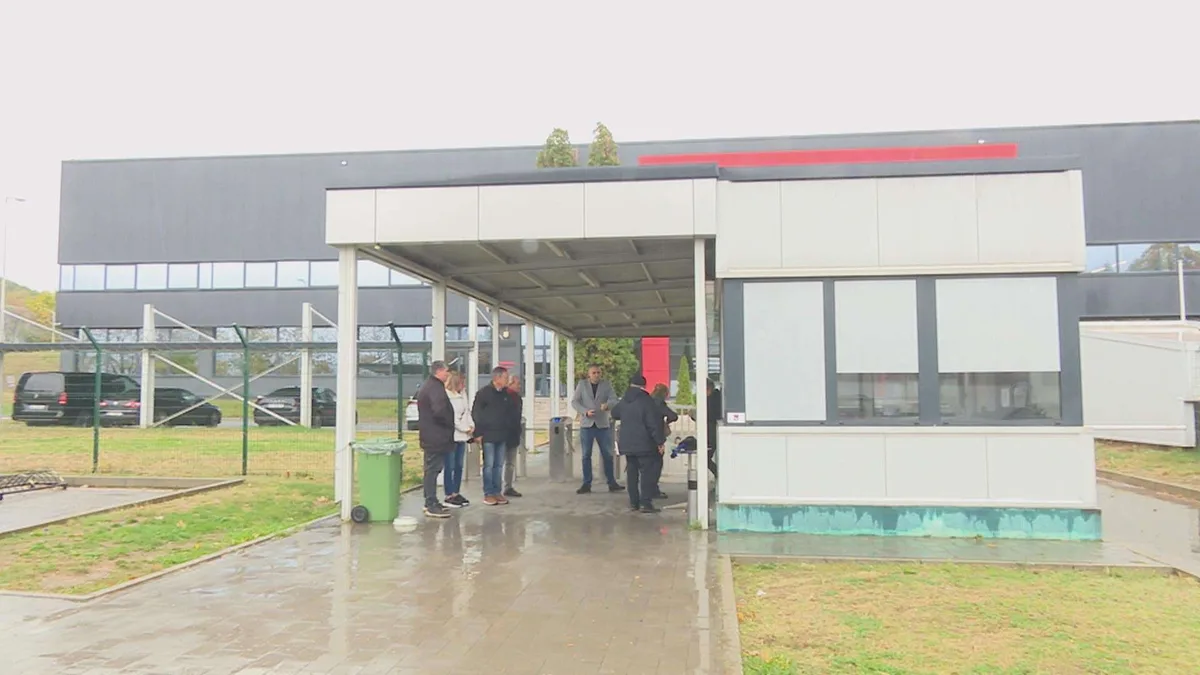
Elid Fires 27 Workers After Strikes Over Unpaid Wages
The Elid factory in Donji Dusnik fired 27 workers who twice went on strike over unpaid wages, citing breaches of work discipline that strip them of severance pay.

Elid, an electrical installation materials factory in Donji Dusnik near Gadzin Han, fired 27 workers on August 25, two months after they twice went on strike over unpaid wages. According to the dismissal notices workers showed to the Beta news agency, the terminations were justified by breaches of work discipline, a designation that strips the fired workers of both severance pay and unemployment benefits from the National Employment Service.
Factory owner and director Slavisa Milic handed out the notices after workers rejected his proposal that they work for three months without pay before he would settle their overdue wages.
“Since they kept refusing to sign the agreement I offered them, I had no other option, I had to hand them their dismissal notices. They’re announcing they’ll sue me over this, and I will certainly defend myself, I won’t just sit and watch them sue me,” Milic told Beta.
How much have the workers been paid since January?
The workers and the owner disagree on the size of the debt. Worker Zvonko Petkovic told Beta that from the start of the year through June 15, each employee received a total of 30,000 dinars. Milic claims otherwise: that in April, using money from the sale of his own apartment in Novi Sad, he paid the full January, February and March wages, plus half of April’s.
“For the past three years our wages had been arriving two, three or four months late, but from the start of the year until June 15 we worked for 30,000 dinars. The owner kept postponing our pay, saying the company was operating at a loss, while we kept working normally and the products kept going out to customers,” Petkovic explained.
By June, Petkovic says, the workers had had enough, and halted production for two days. On the second day of that first strike, he says, Milic showed up at the factory with two lawyers and a written proposal for a payment schedule.
“On the second day of the strike, Milic came to the factory with two lawyers and his own proposal for paying the overdue wages. He signed and stamped that proposal in front of all of us,” Petkovic said.
Under the proposal, workers were to receive the remainder of their January pay, all of February and half of March by July 23, and the remaining two and a half wages, the other half of March plus April and May, by July 20.
“That proposal, which we’re keeping as evidence for court, also included commitments that the owner would keep buying raw materials, that wages would be paid regularly going forward, and that production would stop again if payments fell behind again,” Petkovic said.
Workers then went back to work, he says, but the promised payments never arrived, so they went on strike again in July.
“That’s when he started threatening us with dismissal. He told us there’s a law that lets people work without pay, and brought up examples of pharmacies in Belgrade where employees allegedly haven’t been paid in a year,” Petkovic said.
Lawsuit, bailiffs and workers a year from retirement
The workers then hired a lawyer, Petkovic adds, filed a lawsuit with the Commercial Court and began collecting the overdue wages through court bailiffs. Milic sees that step as an added cost the factory can barely absorb.
“Unfortunately, the workers took their pay slips to bailiffs, who couldn’t wait to get their hands on it, since they charge 23,400 dinars to collect a single wage payment. Collecting two wages for 27 workers, plus enforcement costs, is a lot of money for Elid,” Milic said.
Of the 27 who were dismissed, 15 workers had spent their entire working lives at Elid, and some are only a year away from retirement. According to Petkovic, throughout all 11 years that Milic has owned the company, workers have earned the minimum wage, with the exception of a handful of machine maintenance technicians who were paid roughly 10,000 dinars more.
A factory that once employed 450 people
Elid was founded in 1963 and was one of the most successful factories in southern Serbia through the 1970s and 1980s, employing around 450 people. After its first privatization in 2004, when it was bought by Nis businessman Jovica Stefanovic Nini, output and staff numbers began to shrink.
Elektroplamen, a company owned by Milic, bought Elid and its 14 production facilities 11 years ago for 54.9 million dinars (about 469,000 euros).
Milic says a limited market and expensive production leave him without enough revenue to cover operating costs, which is why he has spent recent months selling off assets, both his own and the company’s.
“Our market is limited, and production is expensive, so we don’t earn enough to cover all our operating costs. I had no choice but to sell off Elid’s property and my own personal property to keep the business running,” Milic said.
He says he tried to sell the factory’s kindergarten for 200 euros per square meter, as well as apartments in a residential building Elid had previously built in Dusnik, but found no buyers, so he sold his own apartment in Novi Sad instead. He is now also planning to sell an apartment in Bijeljina to keep the factory operating.
According to Petkovic, the workers have already received their dismissal notices, but the dispute over unpaid wages, severance pay and the paperwork they need to register with the National Employment Service is now headed to the Commercial Court.