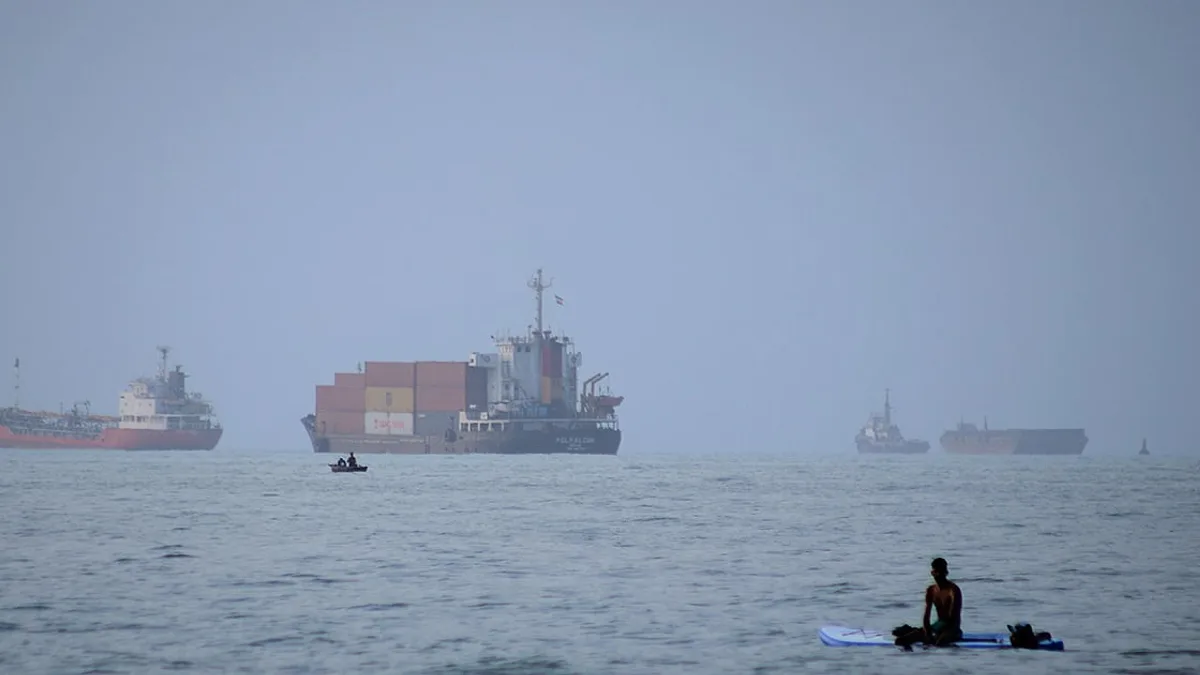
Tanker Hit Off Oman Coast, Brent Crude Jumps to $91.64
The price of a barrel of Brent crude jumped to $91.642 this morning after a tanker was hit by three projectiles in the Strait of Hormuz, a day after Iran fired missiles at US bases in Jordan.

Brent crude oil was trading at $91.642 a barrel at 9:30 a.m. this morning, up 1.24% from the previous close, according to exchange data cited by RTV. US benchmark WTI stood at $87.002 a barrel at the same moment, up 1.39%.
The jump followed a statement from the UK Maritime Trade Operations agency (UKMTO) that a tanker, whose identity has not been officially disclosed, was struck by three unidentified projectiles in the southern shipping lane of the Strait of Hormuz, near the coast of Oman. The agency said there were no casualties.
A Second Jump in Under 48 Hours
Prices had already climbed the day before. On August 31 at 2 p.m., Brent jumped 3.23% to $90.853 a barrel, breaking through the $90 mark after a strike on Iran’s Larak Island. This morning’s attack on the tanker off Oman pushed the price higher again, the second jump in under two days.
The Russian outlet Vedomosti reports somewhat different figures for the same day. According to its data, November Brent futures were trading at $91.10 at 12:50 p.m. Moscow time (11:50 a.m. Central European Time), up 3.4% from the previous close, while October WTI contracts stood at $86.55, up 3.75%. The gap with RTV’s figure of $91.642 comes down to timing and contract type: Vedomosti tracks November-delivery futures, while RTV measures the spot price recorded this morning, Central European Time.
The Military Backdrop
Behind the price surge lies a military escalation between the United States and Iran. On August 30, US forces struck Iranian missile-launcher positions after detecting preparations to lay mines in the Strait of Hormuz. The following day, August 31, Iran retaliated with missiles and drones against US military bases in Jordan.
Iranian President Masoud Pezeshkian said Tehran is ready to return to the commitments made under the June agreement if Washington takes the same step. Neither side has so far signaled a return to full-scale war, but shipping through one of the world’s busiest energy corridors has now been threatened twice in a single week.
Ripple Effects Across Other Markets
The unease spread to other energy and equity markets as well. October-delivery gas contracts on the Amsterdam-based TTF exchange traded at €70.16 per megawatt-hour. Germany’s DAX index fell 0.32%, Britain’s FTSE 100 slipped 0.27%, while France’s CAC 40 rose 0.41%.
The moves were visible outside energy markets too. Gold fell to $4,428.68 per troy ounce, wheat rose to $7.61 a bushel, and the euro held steady against the dollar at $1.16022.
How High Will Brent Go by Year’s End?
A Reuters poll of 31 economists in August put the average 2026 price of Brent at $85.08 a barrel, and $80.20 for WTI. If current levels above $91 hold, the market would spend the rest of the year well above that forecast, driving up the cost of energy imports and boosting revenue for oil-exporting nations.
The next test for the price will be whether attacks on vessels in the Strait of Hormuz stop, or whether, as in the past 48 hours, they happen again before diplomacy gets a chance.