Energetika Kragujevac Still Owes 1.8 Billion Dinars for Gas
Srbijagas announced a debt writeoff by September 2025, but Energetika Kragujevac still owes 1.8 billion dinars for gas, plus 2.3 billion for electricity, and its losses keep growing.
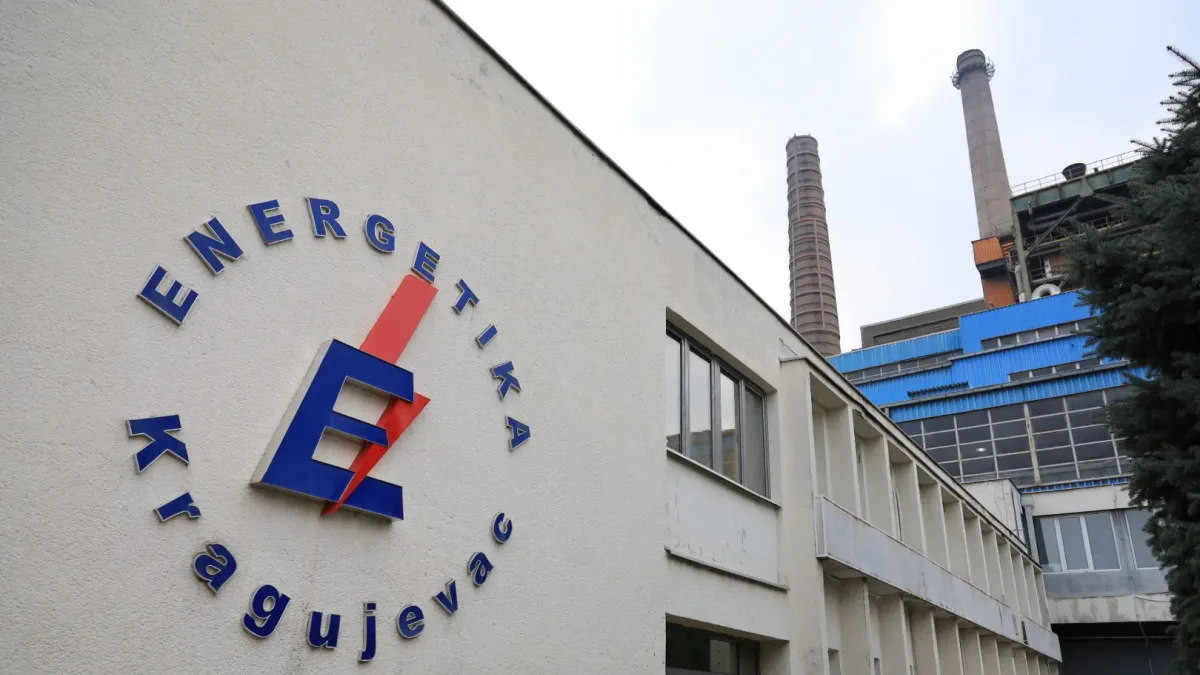
Energetika Kragujevac owes 1.8 billion dinars (about 15.3 million euros) for natural gas, according to reports by Kragujevacke novine on September 11 and Glas Sumadije on September 13, 2026. The debt was supposed to have been written off a year ago, under a plan announced in the summer of 2025.
Dusan Bajatovic, director of Srbijagas, said on July 1, 2025, that the debt would be annulled by the end of September that year. The deadline passed without a single concrete step. Energetika’s management now says the company is undergoing financial restructuring and that a partial or full debt writeoff is one of the possible outcomes, but it has given no date.
The first official movement came only on April 9, 2026, when the Government of Serbia requested a set of proposed measures to resolve Srbijagas’s claims against Energetika. Biljana Sipovac, assistant director for system development, says the measures could include deferred payments, a partial or full writeoff of the debt, or a change to the interest rate. There is still no concrete agreement: a meeting with the selected consulting firm was held only on May 7, 2026, and the ministry and the consultants are now analyzing data on which a restructuring model will be based.
The company also owes money for electricity
Besides gas, Energetika owes 2.3 billion dinars (about 19.6 million euros) to Elektroprivreda Srbije (EPS), the state power utility. That debt has been partly settled: in January 2026, the two companies signed an agreement to reschedule it over ten years, with annual installments and a 50 percent writeoff of accrued interest. The first installment has been paid this year, and Energetika is paying its current obligations to EPS on time.
The source of the debts is operating losses, Sipovac says: 713 million dinars (about 6.1 million euros) in 2025 and 1.2 billion dinars (about 10.2 million euros) the year before. Management lists reducing technical losses in the network, reconstructing heating pipelines, and stepping up collection of receivables as measures against further losses.
Sources disagree on the exact size of the debt to Srbijagas. An earlier report by Glas Sumadije, published in late August 2026, put the debt to Srbijagas at more than 3 billion dinars (over 25.5 million euros). The reports from September 11 and 13 put the gas debt at 1.8 billion dinars. Neither report explains whether the difference of more than a billion dinars comes from different components of the debt or from a change in the meantime.
Three new buildings out of 1,700 built
While the debt keeps growing, the inflow of new customers is weak. Only three newly built commercial and residential buildings have signed up for district heating ahead of the coming heating season. According to the Republic Statistical Office, 1,700 buildings have gone up in Kragujevac over the past two years. Of around a hundred requests to disconnect from the network, 27 have been approved.
Nikola Nesic, head of the Nova snaga council group in the Kragujevac City Assembly, says three new buildings are not enough to show recovery, and that the real problem is that Energetika, unlike district heating companies in Belgrade, Novi Sad, and Nis, is funded not by local government but by the state budget. He argues that the fixed monthly charges of central heating, which gas bills do not carry, are driving potential customers away, and is calling on the city to adopt a heating expansion plan as a mandatory part of its urban planning.
Nesic also warns that the gas network is expanding into villages around Kragujevac, further narrowing Energetika’s customer base, while uncertainty over gas supply raises the question of an alternative fuel.
“If we are left without gas, we need to have a solution to go back to the previous energy source,” Nesic told Kragujevacke novine, referring to coal as the heating plant’s backup fuel.
For now, the restructuring of Energetika’s debt remains at the data analysis stage. The ministry and the consulting firm have not set a deadline for their proposed model, and more than a year has passed since Dusan Bajatovic’s last announcement that the debt would be annulled.