Serbia's 980 Million Euro Aid Package Splits Mali, Nikezic
Mali says the 980 million euro aid package does not endanger the budget, since revenue is up 112.5 billion dinars. Nikezic and economist Draskovic forecast a bigger deficit and rising public debt.

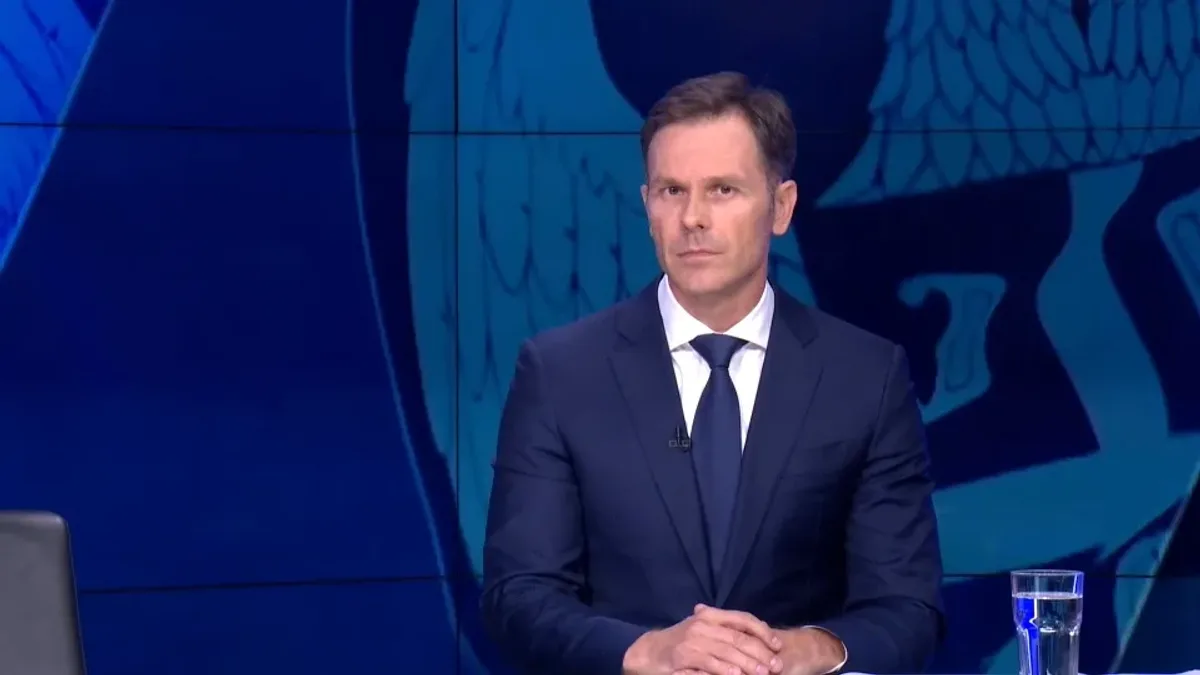
Serbia’s 980.6 million euro state aid package faced its first direct budget test in a public debate on RTS’s Takovska 10 show. Caretaker Finance Minister Sinisa Mali argues the measure fits within the allowed deficit, while Freedom and Justice Party deputy leader Dusan Nikezic and economist Bozo Draskovic warn the budget deficit will run deeper than the September rebalance projects.
Srpske novine reported earlier that 1,504,000 citizens had applied for the one time payment of 6,000 dinars. By the time of the broadcast, that number had grown to 1,650,000, and applications remain open until September 21. Payouts are planned from September 22 to 25, paid directly into accounts at the Postal Savings Bank, based on ID card number and personal identification number. More than four million people are entitled to a payout from the Share Fund without applying at all, meaning that, by Mali’s math, almost every adult citizen of Serbia will receive money.
What Mali counts as the 85 billion dinar cover
Mali said this year’s budget brought in 112.5 billion dinars more revenue than planned, while the one time aid, by his estimate, costs 85 billion dinars.
“We have 112.5 billion dinars in higher budget revenue than planned. This aid costs 85 billion dinars. So it does not endanger macroeconomic stability in any way. We have never played games with that,” Mali said on the Takovska 10 show on RTS.
By his projection, public debt as a share of gross domestic product will reach 44.5 percent by the end of this year and 44.2 percent next year. Public sector wages are rising 8 percent starting December 1, social welfare payments by 12 percent, and pensioners are also getting a raise.
Nikezic: Debt up by 27 billion euros
Nikezic reads the same numbers differently. He says public debt has grown by 27 billion euros since the current government took power, while every government before it, from Karadjordje to Boris Tadic, borrowed a combined 15.3 billion euros for Serbia.
“That is money that belongs to the citizens of Serbia. What is not good is that money like that gets handed out only before elections,” Nikezic said on Takovska 10.
He also pointed out that the budget rebalance passed by Serbia’s National Assembly on August 31 raised the deficit from 3 to 3.5 percent of gross domestic product, adding 59 billion dinars and pushing the total deficit to 396 billion dinars, or roughly 3.4 billion euros. By his calculation, the aid package will widen the budget gap to more than 3 billion euros and push public debt to 42 billion euros, which would make it the second largest budget deficit in Serbia’s history, after the one recorded in 2020 during the coronavirus pandemic.
Draskovic to Beta: Excise cuts and Expo spending further strain the budget
Economist Bozo Draskovic offered a similar assessment in comments to the Beta news agency, adding a reason that did not come up in the television debate: the state cut fuel excise taxes to stop prices rising at the pump, which also cut revenue from that source.
“The budget deficit of 3.5 percent of gross domestic product (GDP), projected in the rebalance, will certainly deepen because of lower revenue from taxes, excise duties and other sources, and higher spending on investments in Expo and other projects, on top of the cost of gifts to citizens from the state treasury ahead of elections, aimed at winning over part of the electorate,” Draskovic told Beta.
Employers and economists: Package does not threaten stability
Milos Nenezic, president of the Serbian Employers Union, disagrees that public debt is a problem, even though he shares the opposition’s view that borrowed money should go toward investment rather than current spending.
“Our public debt, which is around 44 percent, is almost half the European average,” Nenezic said.
Veljko Mijuskovic, a professor at the Faculty of Economics, goes further and rejects the idea that the package is an election measure, arguing the measures should not be judged in isolation.
“You cannot break these measures apart like that. You have to look at them as an integral package,” Mijuskovic said.
The disagreement over the same set of numbers, then, is not a dispute about the figures themselves but about what those figures mean for a budget already widened by 59 billion dinars in the rebalance. Whether the deficit stays at 3.5 percent of GDP, as the Ministry of Finance projects, or exceeds that mark, as Nikezic and Draskovic argue, will only be confirmed once the final accounts for the 2026 budget are closed.