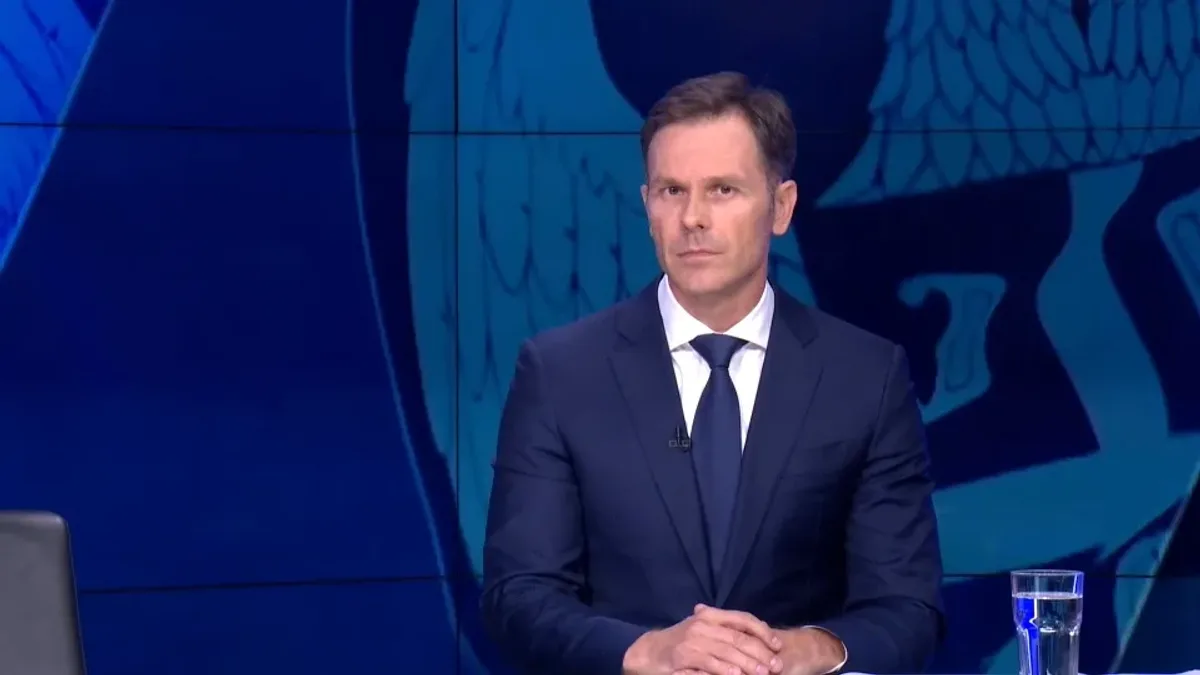
Mali to Culibrk: Deficit Is 3.5%, Not a Record High
Finance Minister Sinisa Mali responded to former NIN editor Milan Culibrk, saying this year's budget deficit stands at 3.5% of GDP, while it topped 6% between 2009 and 2012.

Finance Minister Sinisa Mali gave a sharp reply to Milan Culibrk, the former editor in chief of the weekly NIN, after Culibrk told the public that Serbia is running the largest budget deficit in its history. The response came on August 27, in a Facebook post, in the middle of a parliamentary debate on the budget revision.
Mali argues that Culibrk’s assessment is not a discovery but a miscalculation. According to him, the sustainability of public finances is not measured by comparing dinar figures from different years, but by the deficit as a share of gross domestic product. This year, Mali says, that figure comes to 3.5% of GDP.
For comparison, the minister pointed to the period from 2009 to 2012, when the deficit exceeded 4% and at times topped 6% of GDP, while capital investment during those years barely reached 3% of GDP. In his assessment, the shortfall back then was larger than all of the state’s investments combined, and the borrowing went toward wages and pensions.
Why the Deficit Interpretation Differs
The core of the dispute is what the deficit actually covers. Mali says the state is now investing around 780 billion dinars, or 7% of GDP, twice the size of the deficit itself. In his Facebook post he wrote:
“Today the state is investing around 780 billion dinars, or 7% of GDP, twice as much as the deficit.”
Average capital investment over the past decade, according to the figures he cited, stands at 5.5% of GDP. Mali argues that without capital spending the budget would be running a strong surplus, that wages, pensions and all regular obligations are paid out of current revenue, and that the shortfall appears because railways, highways, power facilities, hospitals and schools are being built at the same time.
The basic yardstick, the minister says, is the ratio to GDP, not the absolute figure in dinars:
“The sustainability of public finances is not assessed by comparing dinar amounts from different years, but by the deficit relative to GDP.”
Public Debt Below Half the EU Average
One part of Mali’s response he singled out concerns public debt. According to him, Serbia’s debt remains under 45% of GDP, at 44.2% to be exact, and continues to fall. For comparison, he cited the European Union average of 82.9% of GDP and the eurozone average of 89.4%, against a Maastricht ceiling of 60%. By that measure, Serbia sits at roughly half the European average level of indebtedness, alongside capital investment of 7% of GDP, which he says is closer to the exception than the rule in Europe today.
Mali also leans on outside assessments to back his case. He noted that S&P rates Serbia investment grade at BBB minus with a stable outlook, while Fitch has affirmed a BB plus rating with a positive outlook. He also pointed out that the Fiscal Council holds the mandate to assess the sustainability of public finances, while the government sets economic priorities and answers for them to parliament and to citizens, and that cautious revenue planning at a time of global uncertainty, in line with messages from the International Monetary Fund, is a form of responsible management.
Srpske vesti had earlier reported on 5.2 billion euros in borrowing for the purchase of Rafale jets and road construction, part of the same cycle of capital investment Mali now points to when explaining the relationship between the deficit and public investment.
The minister’s response closes with a direct message to Culibrk:
“Culibrk didn’t uncover a hole in the budget. He uncovered a hole in his own math.”
The exchange broke out in the middle of the parliamentary debate on the budget revision, where lawmakers are set to vote in the coming days on changes that also include new measures of support for citizens. Whether Culibrk will respond to Mali’s numbers remains unknown for now.