Serbia's $195.5M Gas Pipeline Fight With Environmentalists
Serbia's Ministry of Mining and Energy has dismissed claims by 14 environmental groups that a World Bank backed gas pipeline conflicts with climate goals, ahead of a $195.5 million loan decision.

With a $195.5 million loan, the International Bank for Reconstruction and Development (IBRD), part of the World Bank Group, is financing the first phase of Serbia’s Strategic Gas Infrastructure and Institutional Strengthening Project. The bank’s board was scheduled to vote on approval on September 24, and ahead of that session, Serbia’s Ministry of Mining and Energy issued a statement rejecting claims by 14 environmental organizations that the project is not aligned with climate goals. The outcome of the vote has not been published in available sources.
In a statement carried by the Tanjug news agency, the ministry said:
Claims that the project is not aligned with climate goals ignore the fact that its preparation was carried out in accordance with World Bank procedures.
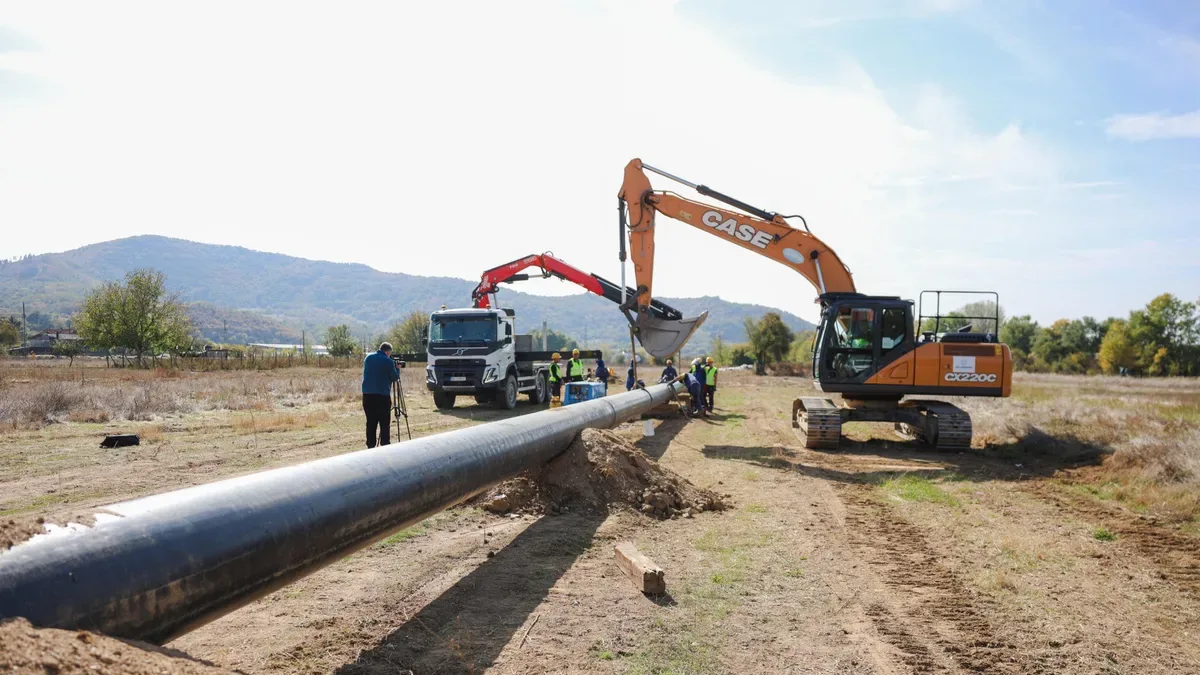
According to the ministry, the project underwent feasibility studies, an assessment of alternatives and an evaluation of environmental and social impacts, all following World Bank procedure. The goal, officials said, is not higher gas consumption but the removal of bottlenecks in the system and greater supply capacity. The largest infrastructure component of the first phase is the Trupale to Pojate high pressure pipeline, roughly 62 kilometers long, which the portal nistv.rs identifies as the contested section.
The letter to the World Bank was signed by 14 organizations from Serbia and the region, including CEE Bankwatch Network, WWF Adria, the Belgrade Open School, RERI, the Center for the Advancement of the Environment, the Platform for Social Development and Innovation (CORE) and the Coalition for Sustainable Mining (KORS). They are asking the bank to reexamine the project’s justification, its alternatives and its alignment with climate goals, and they warn about plans for a 500 megawatt gas power plant in Nis and another in Novi Sad. The letter states:
Together with the proposed project in Serbia, this points to a growing role for the World Bank in supporting gas infrastructure in the Western Balkans.
Part of that reasoning draws on an earlier move by the same institution: in June, the World Bank approved $2.4 million in grant funding to prepare a gas project in Bitola, North Macedonia, where a combined heat and power plant with a district heating system is planned.
The first phase, backed by the $195.5 million loan, is, according to available information, only the start of a broader program. Later phases include the Pojate to Veliko Orasje pipeline, about 80 kilometers long, the 15 kilometer Mokrin to Belgrade pipeline, and the Tilva underground gas storage facility. The entire gas program with the World Bank is estimated at around one billion euros. The ministry adds that beyond building infrastructure, the project also carries reforms of the gas sector: separating ownership of infrastructure from system management and regulatory oversight, in line with Serbia’s obligations to the Energy Community and the European Union.