Russian Gas Annex Expires Sept. 30, No Extension Yet
Serbia's Russian gas annex expires today. Vucic announced an extension from Monday, but there is no official confirmation. He cites 318 euros per 1,000 cubic meters; the market price is 868.

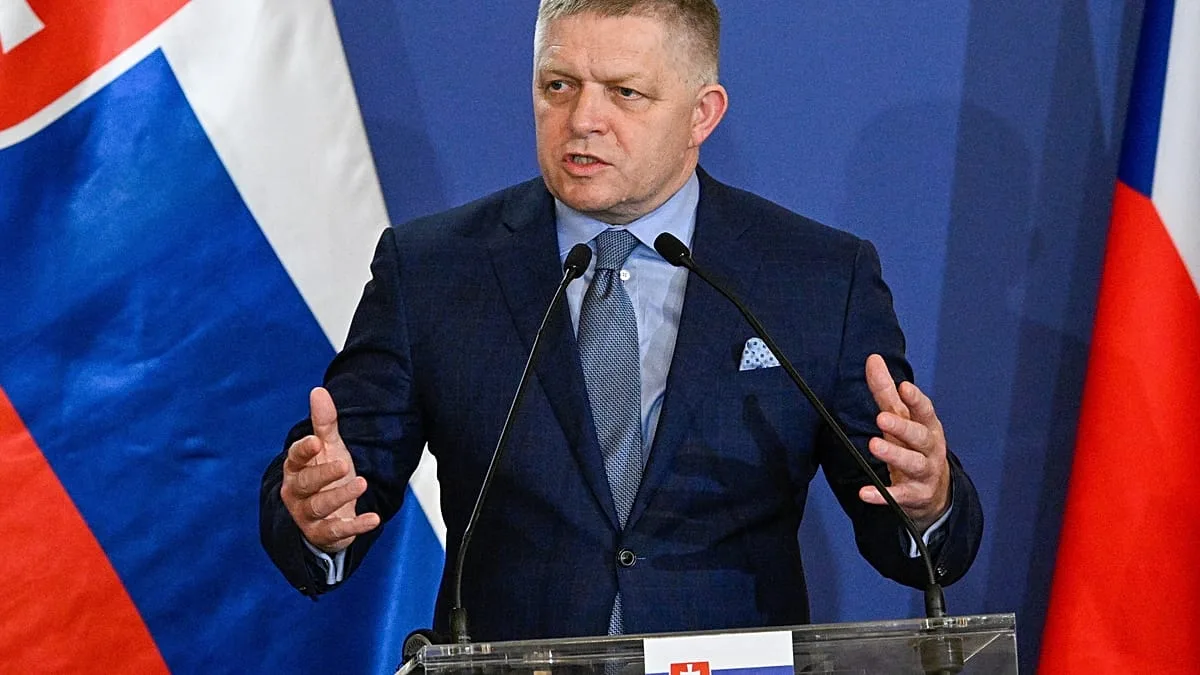
The annex to Serbia’s Russian gas supply contract is valid until today, September 30, and no official confirmation of a new annex had been published by this morning. President Aleksandar Vucic announced after a one-hour phone call with Russian President Vladimir Putin on September 26 that the arrangement would be extended.
“I am sure that from Monday this annex will already be extended,” Vucic said, according to Bloomberg Adria. Monday, September 28, has passed and the deadline falls today, so the extension is still only an announcement. The annex in force since June 1 is the latest in a series: the multi-year contract with Russia expired in May 2025, no new long-term deal has been signed, and supply has continued through successive extensions since. A new contract is complicated by the question of Russian ownership in the Petroleum Industry of Serbia (NIS), which is under US sanctions.
How much does Serbia pay for Russian gas, and what does it cost on the market?
Vucic said Serbia pays about 318 euros per 1,000 cubic meters of Russian gas, while the market price is 868 euros. According to NS Reporter, the second figure is the price at the Dutch TTF hub as of September 26. The gap is 550 euros per 1,000 cubic meters, so the market price is about 2.7 times higher. Vucic assessed that the current arrangement secures a favorable price, flexibility and the quantities needed.
Sources differ on the currency. Bloomberg Adria and NS Reporter give 318 euros. Jasna Stojanovic Petrovic, economics editor of the daily Politika, mentioned 318 dollars per thousand cubic meters on RTS’s morning news, and Srbijagas director Dusan Bajatovic announced 320 dollars for the next quarter in late March, according to Bloomberg Adria. None of those sources explains the difference, so it cannot be attributed to the exchange rate or to a reporting error.
How is the price set under the oil formula?
The price of Russian gas is tied to average oil and oil product prices on the world market over the previous three quarters, so it does not follow daily moves on European exchanges. The purchase price is mostly not published. Bajatovic said in July that an increase could be up to 10%, provided the oil price does not exceed 100 dollars a barrel.
Some of it is still visible in Srbijagas’s 2025 report. The weighted price the company paid to Yugorosgaz, the mixed Russian-Serbian firm, fell from about 37.6 euros per megawatt-hour at the start of the year to about 30 euros by year’s end. Srbijagas cites the drop in oil prices and the fall of the dollar late in the year as the reason. Srbijagas, as the parent company, bore most of the cost of the gas it sold: 116.7 billion dinars (994.2 million euros).
How much gas is in storage?
According to data the Ministry of Mining and Energy presented in early September, storage holds about 682 million cubic meters of gas. Of that, 481.4 million is at Banatski Dvor and 201 million is in storage Serbia leases in Hungary. The ministry told Bloomberg Adria at the time that it expected the arrangement to be extended to the end of the year.
Economist Branimir Jovanovic of the Vienna Institute for International Economic Studies says about 75% of the gas Serbia consumes this year comes from Russia, with the rest from Azerbaijan. Industry accounts for 63% of total gas consumption, so more expensive or constrained supply would first reach the production costs of domestic companies.
Europe heads into winter with storage 70% full
Gas storage in the European Union is a little over 70% full, against a usual level of 86% at this time of year. NS Reporter, citing Reuters, says that is about 12 percentage points lower than last year. Storage was 59% full on August 10, the lowest seasonal level since 2009. Gas prices have more than doubled since the US-Iran war began in late February, and in early September they reached their highest level since late 2022.
European Energy Commissioner Dan Jorgensen wrote in a letter to the energy ministers of the 27 member states: “We are facing a price crisis linked to a supply crisis.” According to NS Reporter, the commissioner also stressed that there are currently no immediate risks to security of supply.
How well is Serbia protected from the European crisis?
Jovanovic told Bloomberg Adria that a lower purchase price does not mean immunity:
If prices jump on world markets, whether it is food, gas or oil, our domestic prices are not immune either
He concedes that Serbia is in a better position than parts of Europe, but not free of risk:
Serbia may indeed be in a better position than Western European countries because it buys gas directly from Russia at a preferential price, but that is no guarantee that there will be no crisis
The World Bank approved 600 million dollars for Serbia last week for a ten-year Gas Sector Development Program. Jovanovic says that money does not help this winter because, in his words, it cannot be invested overnight:
The arrangement with the World Bank is long-term, and that 600 million dollars should be invested in the gas network and new interconnectors to reduce dependence on Russian gas
On who might bear a price increase, Stojanovic Petrovic said on RTS:
As for gas, Bajatovic said it will not get more expensive for households. Well, we will see. For the economy, some correction will most likely have to come, given that gas has also become much more expensive, but I think nothing will change for households now
She also judged that at this moment there is a bigger problem with gas than with oil, “because there is less of it.”
What does NIS have to do with the gas deadline?
After the talk with Putin, Vucic said the NIS question is “more complicated” than extending the gas annex, but he did not say whether the sides had moved closer to a solution. RTS reports that Serbia expects Washington’s decisions today on three licenses: for NIS, for MOL to continue negotiations on buying the Russian majority stake, and for JANAF for oil deliveries to the Pancevo refinery. Stojanovic Petrovic says a negative answer would be a surprise, and that a lasting solution for NIS is further off than expected.
For the gas annex, the length of the extension, the price and the quantities remain to be published. Bloomberg Adria assesses that for the economy, besides the extension itself, it will matter at what price and for what period supply is contracted.