Exchange offices refuse euro sales, NBS: 744.9 million sold
Serbia's central bank reports net euro sales of 98.8 million euros over a month, while staff at Belgrade exchange offices say they cannot sell even 100 euros.
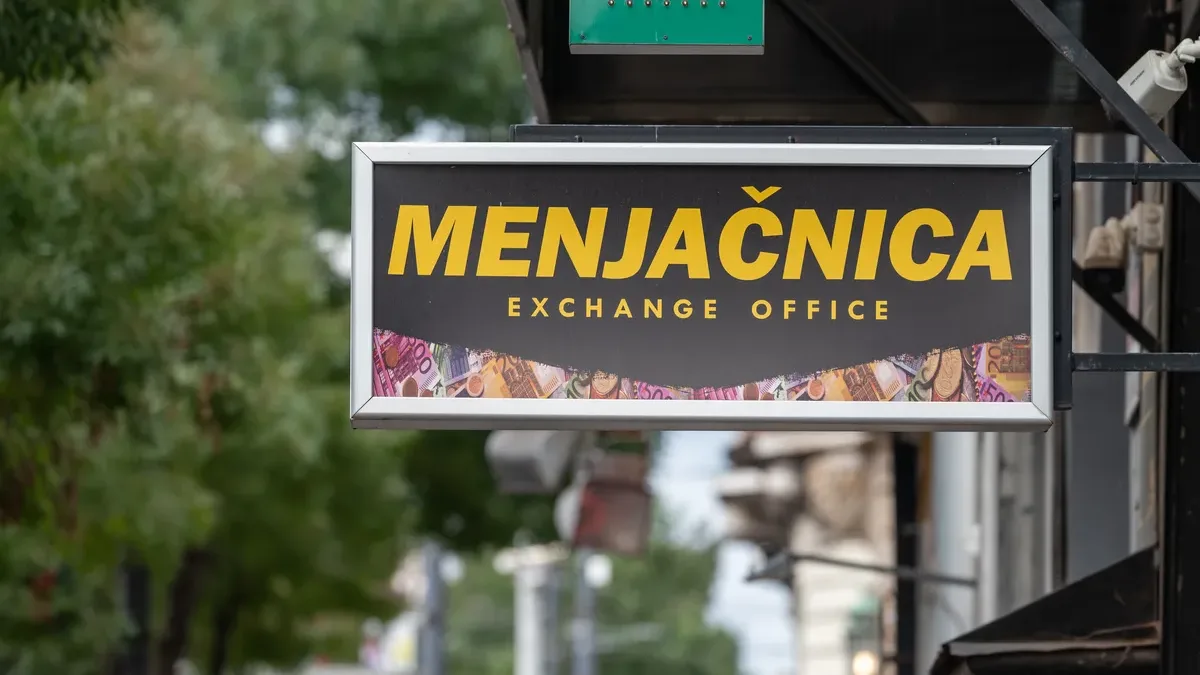
Exchange offices in Serbia sold citizens 744.9 million euros between October 1 and November 2, 2026, and bought back 646.1 million, the National Bank of Serbia (NBS) said in a reply to N1. Net sales come to 98.8 million euros, or about 11.6 billion RSD at the NBS middle rate of November 4 (117.6013 dinars per euro). The total sold is worth about 87.6 billion RSD. Meanwhile, in its report from Belgrade counters, N1 recorded employees telling customers there are no euros.
What did customers hear at the counter?
An elderly man asked one exchange office for 700 euros and got a curt answer: “None.” At another office, a woman asked whether she could buy 300 euros, and the employee replied:
“I don’t have even a hundred euros to sell you, madam.”
Staff put it down to demand. “Everyone wants euros because of what happened with Alta Banka,” one of them told an N1 reporter, and another added: “When people calm down, there will be euros again. Right now everyone wants to buy foreign currency.” Buying back runs without a hitch: every exchange office N1 visited takes euros from citizens immediately.
What does the NBS say?
The central bank claims there were no restrictions. Its reply to N1 reads:
“During October, citizens were able to buy euros at exchange offices without limits, because the exchange offices fully met the increased demand.”
The NBS adds that banks “supplied the exchange offices with cash in an orderly way throughout” and that it “monitors the exchange market daily and will take all measures within its remit to prevent artificial disruptions and protect the interests of citizens”.
Earlier, on October 28, the NBS published figures for October up to that date: exchange offices sold 571.6 million euros and bought 515.3 million, a net 56.3 million. Banks sold them about 40.27 million euros in cash that month. For October 26, preliminary data put sales at about 26.2 million euros across about 41,060 transactions, and purchases at about 23.4 million across about 137,580 transactions. That works out to an average sale of about 638 euros and an average purchase of about 170 euros. The two releases cover different periods, so they cannot be added together directly.
On October 27, the NBS Executive Board held an extraordinary session and extended the deadline for exchange offices and the public postal operator to return unused cash to banks from 15 to 30 days. The change took effect on October 28 with publication in the Official Gazette and applies until December 10, 2026. According to the NBS, this lets exchange offices take larger amounts of euros without the risk of being left with unused cash.
Rates are limited by regulation: exchange offices may deviate by no more than 1.25% from the middle rate. The middle rate was 117.4991 dinars per euro on October 1 and 117.6013 on November 4, about 0.09% higher. The NBS also says its inspections over the past year found no irregularities in rate setting, and that exchange offices did not charge a fee for buying or selling valid banknotes.
What do the exchange offices say?
Borislav Brujic of the Association of Exchange Offices of Serbia told Kurir television that cash is at times unavailable:
“Because of the high demand, we occasionally do not have enough currency at the moment.”
Brujic describes the demand as temporary: “At the moment we are facing increased demand for the euro.” The association expects the market to settle fully once a new government is formed. “I have always been an optimist that there would be no negative changes,” Brujic said.
So the central bank speaks of sales without limits, while the exchange offices’ association speaks of currency running out at times. How many euros a citizen can get currently depends on which exchange office they walk into.