Sterijino Pozorje at 71 opens without its international wing
The 71st Sterijino Pozorje in Novi Sad opened with the play Gospa Nola, but for the first time in decades without its international Circles (Krugovi) program, after the provincial government withdrew funding for the festival's foreign-stage line.

The applause for “Gospa Nola” (Lady Nola) at the Serbian National Theatre had subsided. In the foyer, among the part of the audience that stayed on for a glass of wine, an argument that had been running through Novi Sad for weeks broke out again.
It concerned what this year’s Sterijino Pozorje does not have, and what for decades was one of its defining elements. “Krugovi” (Circles), the international program that for years brought directors from Berlin, Warsaw and Zagreb to Novi Sad, simply did not exist in this May’s edition.
The provincial government decided not to fund that program line. The festival opened instead with selector Svetislav Bule Goncic leading eight productions in the competitive selection. All domestic, with one each from Slovenia and Bosnia-Herzegovina.
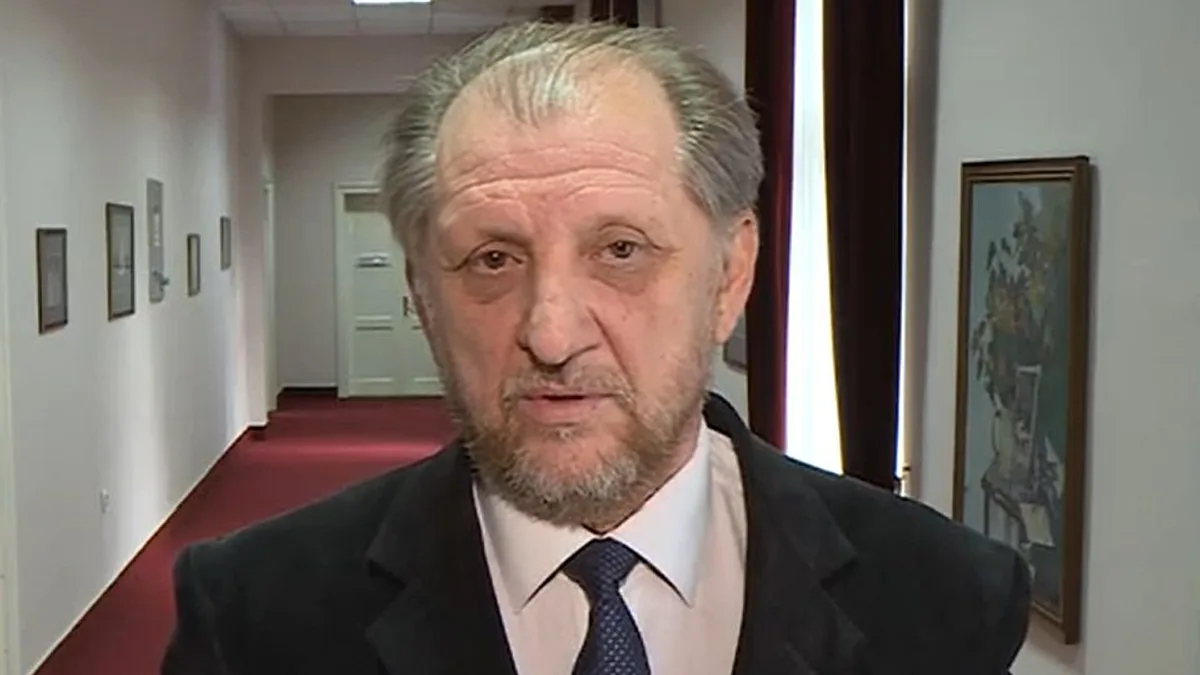
The festival opened on Tuesday, May 26, with “Gospa Nola”, staged from a text by Isidora Sekulic in a production directed by Sonja Petrovic. The opening address was given by Svetozar Rapajic, director, pedagogue and theatre theorist, professor emeritus at the University of Arts in Belgrade. His phrase, that Pozorje has entered “the fat and the lean years, the harvests, the droughts and the floods”, carried through the foyer as if it had been spoken to the building’s owner rather than to the audience.
The festival runs until June 3. Audiences have a week to follow eight productions and the selector’s observations, but without any reference to the world beyond the region.
The context of the opening
Sterijino Pozorje in Serbian culture is not only a festival. It is also a competition that awards the Sterija Prize, the most important national theatrical award. Every selection, especially a competitive one, sets the canon of the year.
Goncic, who has selected for earlier editions, this time described his choice as “keeping a small flame alive”. A formulation that leaves no room for self-congratulation. The flame is kept alive because the infrastructure persists, but does not grow. That is institutional critique built into official rhetoric, which has not happened often.
What exactly has been cut
The cancellation of “Krugovi” is not a minor item. Over the past decade it brought:
- productions directed by Tomaz Pandur, Oliver Frljic, Ivica Buljan and Jan Klata
- shows from the Sibiu border-festival circuit
- the latest work of Krzysztof Warlikowski in co-production with Tel Aviv
- regular touring from Berlin, Warsaw and Zagreb
Without those productions, the Novi Sad public loses an annual window in which it can encounter, on stage, what is happening in European theatre.
This is not only about attraction. It is about a system of references within which domestic production gains its measure. Without foreign productions, the unit of comparison is itself, which for a serious canon is a problem.
The festival’s representatives explain informally that the provincial decision is part of a broader cultural budget cut. The Novi Sad city assembly granted Pozorje roughly half of the previous allocation, while the republic held its standard contribution. “Krugovi”, on the figures circulated, cost about 19 million dinars. Not a negligible item, but also not a budget that would be measured against the province’s investments in sports events.
The question raised is not only financial. It is cultural-policy in nature. It concerns the decision to scrap the international wing of a national institution without a public debate.
Gospa Nola as the opening
The play with which Pozorje opened has already received mixed critical reception.
“Gospa Nola” is one of four Serbian National Theatre productions in this year’s competitive selection, a record for a single house. Sonja Petrovic has built a notable directorial career over the last four years with an approach to classical material stripped of romantic patina. In the case of Sekulic, that is a risk, because her prose and language are far more complex than contemporary stage dramaturgy.
By initial reactions, the production stays faithful to the author’s dramaturgical arc. Good for those who love Sekulic. Not necessarily good for those who expect a radical directorial signature from Pozorje.
Goncic wrote in the program booklet that this year he wanted to show the variety of Serbian directorial voices. That comes through in the other productions in the selection. The Slovenian “Zene u kostimu” (Women in Costume), directed by Josko Kogovsek. The Bosnian-Herzegovinian “Stari roman” (The Old Novel). All of this provides a regional measure, but not a full European one.
Pozorje has received an edition aware of its own limits, one that does not pretend to be a full program. It admits what is missing and builds something within those limits. That is grown-up institutional behaviour, which can be both praised and mourned at the same time.
Has Pozorje lost part of its identity?
The question that will accompany this year’s edition is not who will win the Sterija Prize, but whether “Krugovi” will return next season, or whether this is the start of a permanent change in concept.
In Serbian culture, a few institutions are evaluated by their international openness. Pozorje was for decades one of them, particularly in the years when BITEF was closed or in crisis.
The canon is not built only from domestic selection, but from the possibility of measuring domestic production against foreign. That is the principle every serious theatre maintains. Goncic’s “small flame” phrase is honest, but a small flame is not a program. The question remains how the selector and the board will position themselves toward the context in which Pozorje has been operating for years.
What do you think: is an international selection part of the identity of a national theatre festival, or is it a luxury that can be paused when the lean years come?