Chinese and Serbian singers stage a chamber Figaro
Nine strings and a piano stand in for a full classical orchestra at Belgrade's Dusko Radovic theatre. The first night was August 1, the second is tonight, and neither one charges admission.

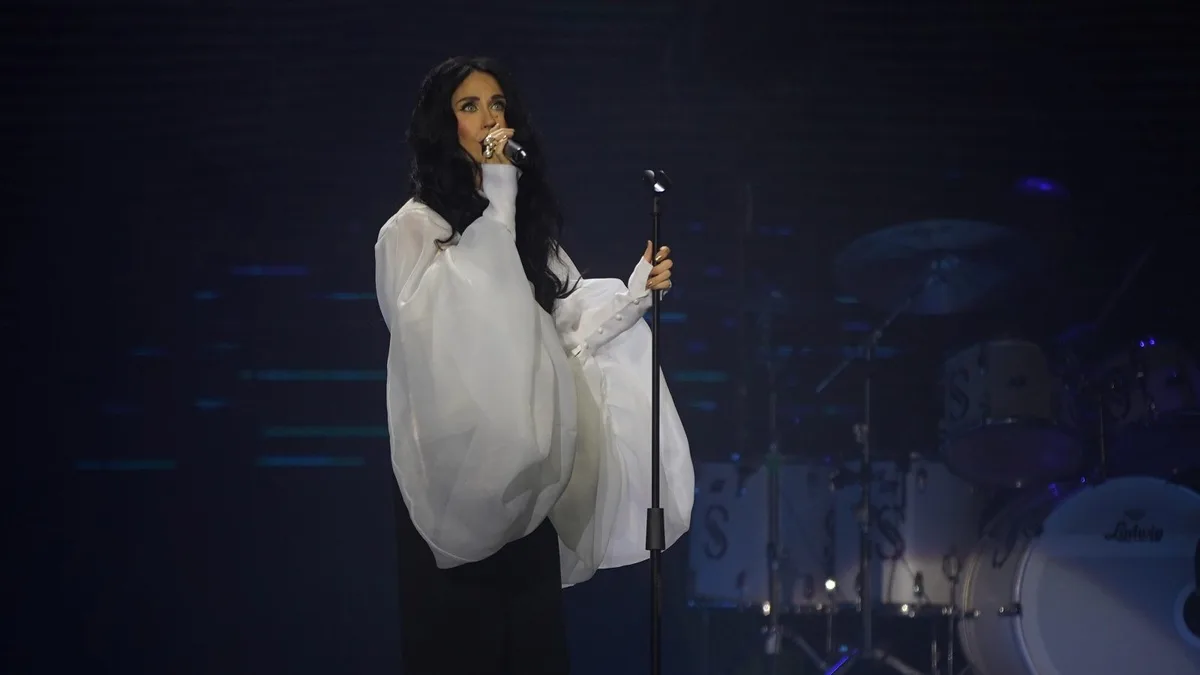
Nine string players, a piano and Mozart, on a stage never built to hold an opera. That was the whole apparatus behind Friday night’s Marriage of Figaro at the Dusko Radovic small theatre in Belgrade, sung by young voices from China and Serbia standing side by side. The second performance is tonight, August 2, on the same stage and on the same terms: nobody pays to get in.
The piece itself needs little introduction. Mozart’s opera of 1786, on a libretto by Lorenzo Da Ponte after Beaumarchais, is one of those scores repertory houses take for granted, because every ensemble has it in its fingers. Which is exactly why any reduction of the orchestra shows up on it like an X-ray, and why a chamber version is not a smaller edition of the same thing but a different decision.
Why a reduced orchestra is a risk, not a saving
The original calls for a full classical orchestra with winds. Here only strings and piano were left. What disappears is the colour the woodwinds carry through the entire second act; what arrives instead is something a large house rarely permits, which is that the words can be heard. In an opera whose whole dramatic arc rests on who overheard what, who intercepts whom in a corridor and whose letter ends up in whose pocket, textual clarity is not a technical footnote but the condition for the comedy to work at all. The pianist in this setup absorbs the job normally split between winds and continuo, so recitative and set numbers follow each other without the dead air in which an audience cools off. Nine strings is also an unforgiving measure, because in a texture that thin every unsteady intonation is audible.
Who runs the programme
The performance belongs to the GIPAC China-Serbia Young Opera Artists Programme 2026. GIPAC, short for Global Intercultural Performing Arts Cast, was founded and is led by Prof. Dr Vanzhe Zhang, who teaches at the Yehudi Menuhin University in China and at the Faculty of Music in Belgrade, so the link between the two scenes is part of her own biography rather than a theme invented for a brochure. Soprano Zhang Zhang, associate professor at the Beijing conservatory, came with her class. The staging is by director Aleksandar Nikolic, Mihajlo Miletic conducts, and Valentina Dobric designed the costumes.
Project director and pianist Nevena Zivkovic does not locate the reason for the Chinese half of the repertoire in diplomacy. “Chinese music fascinates me. These are beautifully written works,” she said.
A cast where two schools meet
The Serbian side is held by singers and musicians from the National Theatre in Belgrade:
- Tamas Kis, baritone, sings Figaro and took part in the same programme back in 2024
- Vlada Andric is Count Almaviva
- Milan Obradovic sings Bartolo
- Mihailo Otasevic doubles as Basilio and Don Curzio
Students and guest singers from China perform alongside them. The fact that the casting repeats across years, with Kis as the point of continuity, suggests this is not a one-off guest evening but a school that remembers who has passed through it.
What came before
The opera was preceded by a concert of traditional Chinese songs at the National Museum of Serbia at noon on July 26, inside the same programme. The order was deliberate: first the repertoire Belgrade audiences almost never hear live, then the title everyone recognises and will turn up for. Princess Jelisaveta Karadjordjevic is credited with helping this collaboration take shape.
What lingers after an evening like this is not the fact that two countries did something together, since such evenings happen every season and end up as a line in an annual report. The open question is what happens to the singers who spent a summer inside this programme once they return in September to their home stages in Beijing and Belgrade, and how much of it survives into their next role. In the case of Kis, who came back after 2024, part of the answer is already known. For the rest, it will take another year to find out, and the only chance to hear them now is tonight, on the same small stage, still free of charge.