City Fest Niska Banja: Thirteen Films, No Actors
The sixth City Fest opens tonight by the fountain in Niska Banja: three nights, 13 documentaries from Serbia, Bosnia and Herzegovina and Montenegro, free entry, plus Saturday's film shot in Kosovo.

A row of white metal panels has stood for days in front of the fountain in Niska Banja, each one covered in film posters and marked in the corner with the City Fest logo. Merosina, Mihajlo Sporic, Elvis, a war surgeon in a green scrub top, the folk costume of Abrasevic: thirteen faces under the open sky, arranged like a small portrait exhibition, even though this is only the preview for a program that starts tonight.
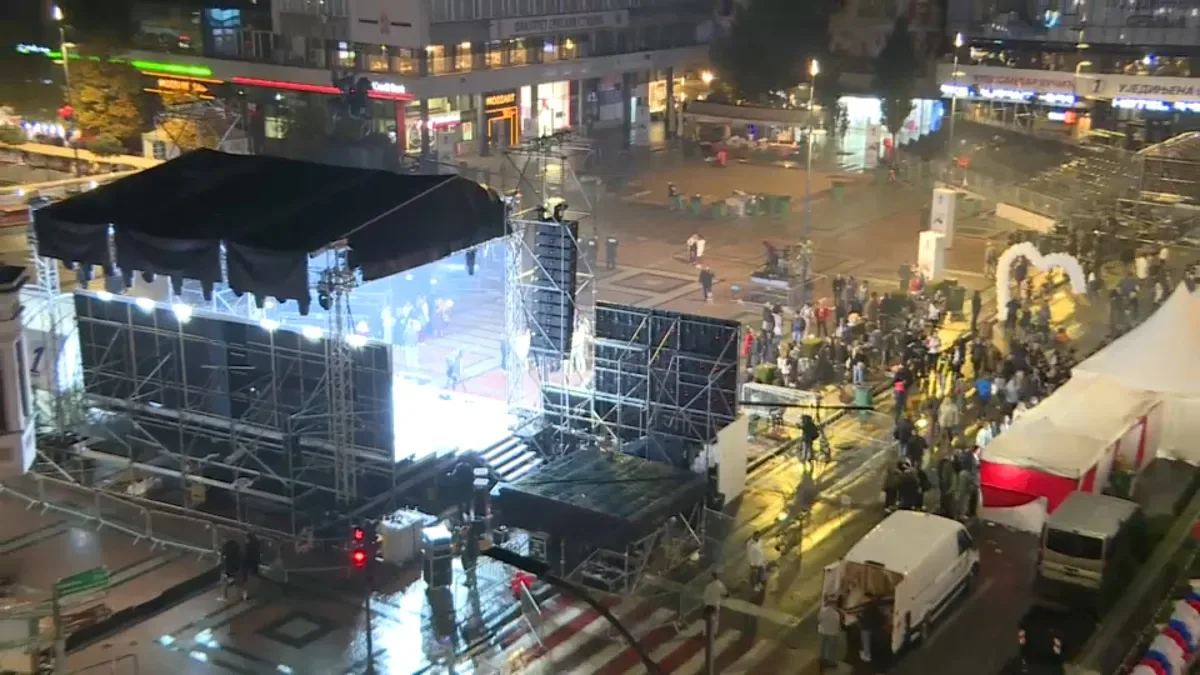
The sixth International Documentary Film Festival City Fest opens on Friday, August 7 at 8 p.m., at the open air cinema by the fountain, and runs through Sunday, August 9. Over three nights, audiences will see 13 documentaries from Serbia, Bosnia and Herzegovina and Montenegro. Screenings are outdoors, admission is free for all three nights, and the festival is backed by the Niska Banja municipality.
One detail breaks with the usual festival script. Awards for the best films in several categories are handed out at the opening ceremony, before the audience has seen a single screening, rather than at the close, as festival tradition usually has it. The trophies are cast and engraved before the first night even begins. Anyone who finds that order backwards should keep in mind that the selection process is the finished work here. The three nights by the fountain are its unveiling to the public, not a competition playing out in front of them.
Friday’s screenings open at 8:30 p.m. with “Kolo”, marking 120 years of the Nis folk ensemble KUD Abrasevic. At 9 p.m. comes “Ratni hirurg” (“The War Surgeon”), about Dr. Miodrag Lazic. At 10:20 p.m. is “Moj komsija Elvis” (“My Neighbor Elvis”), directed by Goran Gonzo Lukic, about a man from Sarajevo whose musical ambitions outgrew the town he lived in. The night closes at 11:45 p.m. with “Secanje na Mihajla Sporica” (“Remembering Mihajlo Sporic”), about a young scientist.
What’s Screening on Saturday?
Saturday’s lineup is the densest and most varied of the festival, with five titles spanning everything from World War One to a footballer’s biography:
- “Junaci sa Solunskog fronta” (“Heroes of the Salonika Front”)
- “Bulevar Ivice Osima” (“Ivica Osim Boulevard”)
- “Merosina, tamo gde legende hodaju” (“Merosina, Where Legends Walk”)
- “Kralj Milan Obrenovic i Nis” (“King Milan Obrenovic and Nis”)
- “SPRZM 20.26”, at 10:50 p.m.
The range is typical of a festival at this scale. One night stitches together national history, local legend and a sports icon, with no attempt to force a theme between them. An audience that arrives at eight stays past midnight, moving through five entirely different sensibilities.
A Film About a Film That Was Hard to Make
“SPRZM 20.26” is the most interesting bet of this year’s selection. Directed by Goran Avramovic and Igor Vukovic, produced by Kim Radio and Klicker, the film follows the making of the feature “Sporazum” (“The Agreement”), the first Serbian feature film shot in Kosovo since the war. It won first prize at Grafest last year.
A documentary about the making of a feature film is usually a niche genre, a small extra alongside the main work. Here it is different, because the production itself was the event. The film is about lost time, hopes that never materialized and the attempt to keep creativity alive under the weight of history and politics, a description that sounds on paper like material for a scripted drama but in practice is the diary of a crew trying to do its job somewhere that job was never meant to happen. The film’s arrival in Niska Banja, after its win at Grafest, means its audience is widening beyond the community where it was made, and for a production this size that matters more than any review.
Sunday, From Cobra to Pustood
The final night opens with “Kobrin put: Darko Pancev” (“Cobra’s Path: Darko Pancev”) at 8 p.m., the story of a footballer who stayed “Cobra” to Yugoslav audiences long after his career ended. At 9:25 p.m. comes “Celik” (“Steel”), about the Nis boxer Dragisa Stankovic. The program continues with “Svega ce biti, maestro Radovan Papovic”, about the Montenegrin music teacher and conductor, and the festival closes with “Pustood.”
Looked at as a whole, the program shows exactly what City Fest is. Nearly all thirteen titles are portraits and local memory: a conductor, a surgeon, a boxer, a footballer, a neighbor with musical ambitions, a folk ensemble that has run for 120 years, a king and a village. There is no observational documentary about the present moment here, the kind that follows a situation with a camera without knowing the ending in advance. That is a choice, not an oversight, and it comes with a limitation: a biographical documentary slides easily into a memorial, so a selection built this way stands or falls on how well its makers avoided a commemorative tone.
The festival was launched in 2018 by producer Oliver Paunovic, together with Miroljub Mika Jovanovic of the band “Lutajuca srca” and film critic Dejan Dabic, and according to the organizers it is the only festival of its kind in Nis. Six editions in a spa town usually described in cultural policy as a tourist destination rather than a film address, with free admission and an outdoor screen, say enough about what a program like this is for. Regional documentary film has no distributor and rarely reaches a cinema screen. By the fountain, for three nights, it does.