Smartwatch sleep tracking in 2026: how accurate is the data, really?
Apple Watch, Garmin and Fitbit all promise sleep stages, REM phases and recovery scores. The peer-reviewed research shows limits that the marketing copy quietly skips.
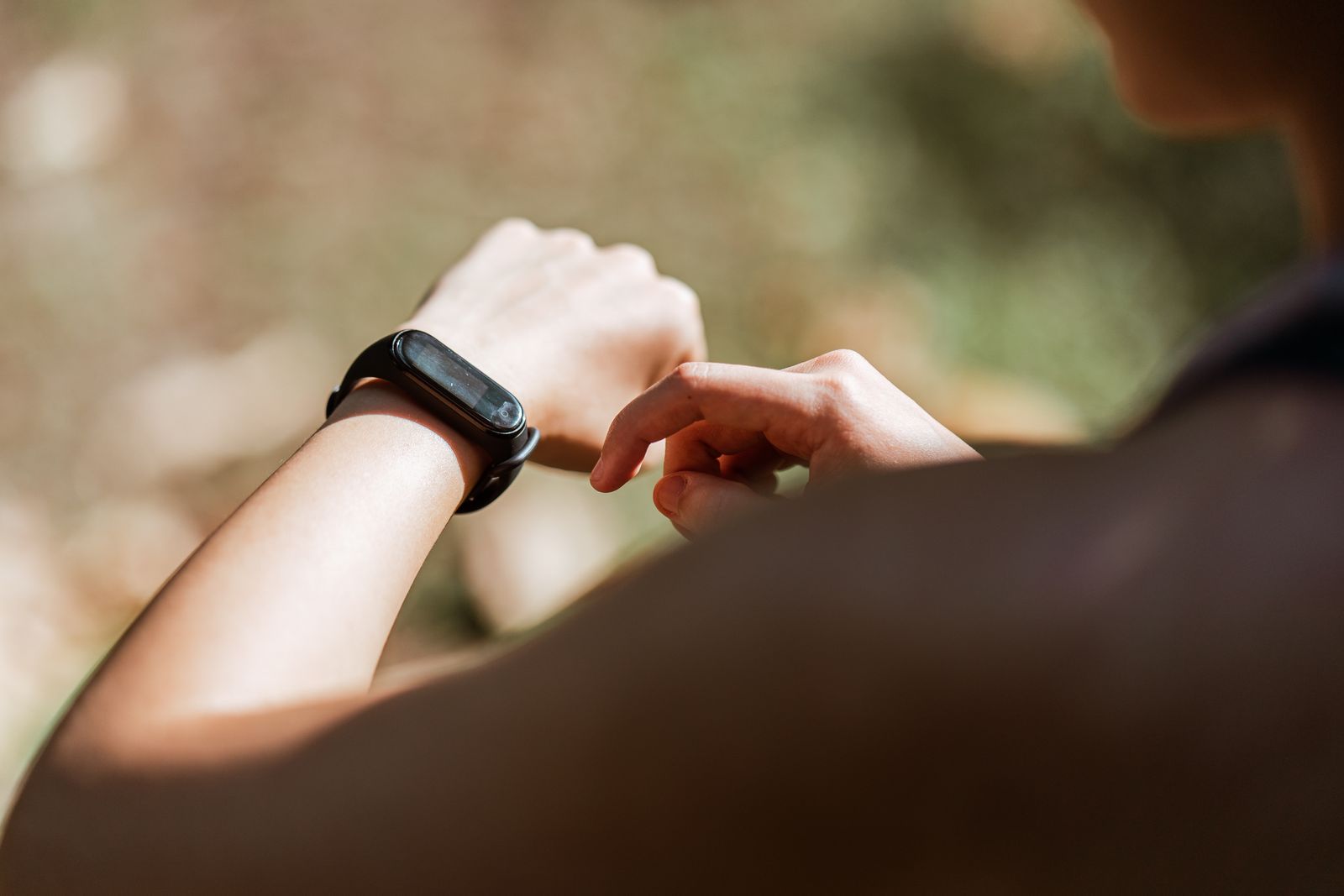
Does a smartwatch actually know when you are in REM sleep? Short answer, no. It estimates with an algorithm built from wrist movement and pulse data.
The distinction matters if you plan to overhaul real habits based on those numbers. Marketing around Apple Watch, Garmin, Fitbit, Whoop and Oura runs ahead of medical validation. But the tech is genuinely useful once you understand its limits.
What the watch on your wrist actually measures
Most devices do not measure sleep directly. An accelerometer tracks wrist motion. An optical sensor reads pulse. From those two signals, an algorithm guesses whether you are awake, in light sleep or in deep sleep.
Polysomnography is the gold standard in sleep medicine. It uses EEG for brain waves, EOG for eye movement and EMG for muscle tone. That equipment lives in a sleep lab, not on a wrist.
The gap between the two data sets is large.
What smartwatches do well
- They estimate total sleep time with 80 to 90 per cent accuracy. Multiple peer-reviewed studies confirm it.
- They detect when you lie down and when you get up, again with high precision.
- They track overnight heart rate, which gives a useful read on stress and recovery.
- They flag anomalies. A very short or very long night can be an early signal.
Where they fall short
REM versus deep sleep runs at 50 to 70 per cent accuracy depending on the device. If your watch shows only 15 minutes of REM, do not panic. A real test would probably show 30 or 45.
Sleep apnoea alerts now exist on the newest models, but a medical diagnosis still needs proper equipment. Your watch can flag the pattern. It cannot confirm the condition.
Sleep scores or readiness numbers are composite metrics that differ across brands. Apple, Whoop and Oura do not measure the same thing. Do not compare scores between devices. Only track your own trend.
Five reasons the data goes wrong
- Worn incorrectly. The watch sits two fingers above the wrist bone, snug but not tight. A loose watch loses the pulse.
- Tattoos under the sensor. Dark ink blocks the optical reader. Apple explicitly warns about this in its user guide.
- Charging overnight. If the watch charges while you sleep, you collect nothing. Switch charging to the afternoon.
- Cold hands. Low skin temperature degrades the heart rate sensor, which adds noise to every sleep metric.
- Restless sleep. Frequent position changes confuse the accelerometer and the algorithm.
How to use the numbers wisely
The real value of a smartwatch is the trend, not the single-night reading. If your monthly average sits at 6 hours and 20 minutes and you still feel tired, that is a credible signal.
You need an extra hour or two.
A one-night number can mislead you. A bad week does not mean you have a problem. It might just mean the week was stressful.
Prices in Serbia for 2026
- Xiaomi Mi Band 9, around 4,500 to 6,000 dinars, roughly €38 to €51, solid entry option
- Fitbit Charge 6, around 18,000 to 22,000 dinars, roughly €154 to €188
- Apple Watch SE 2, around 28,000 to 34,000 dinars, roughly €240 to €290
- Garmin Venu Sq 2, around 24,000 to 30,000 dinars, roughly €205 to €256
- Oura Ring generation 4, around 35,000 to 45,000 dinars, roughly €300 to €385
- Whoop 4.0 with subscription, around 8,000 dinars per month, roughly €68
Price does not guarantee better sleep accuracy. Studies show a Xiaomi at one-tenth of Apple’s price delivers similar core sleep numbers, just without the ECG and the workout tracking.
When not to buy one
If the numbers would frustrate you or amplify anxiety, skip the purchase. Psychologists now use the term orthosomnia to describe sleep-tracking anxiety. Some people sleep worse once they start watching the score.
If you have diagnosed apnoea or severe insomnia, your doctor will tell you what to use and how. A wearable without clinical context is not a diagnostic tool.
A practical plan for the first month
When you start tracking, give yourself two weeks without looking at the data. Wear the watch, sleep normally, do not open the app in the morning.
After two weeks, check the trend.
The reason is psychological. Daily checking turns the score into a stress source, not an insight. The trend tells you something. The daily numbers are noise.
Do you wear a smartwatch or a ring to track sleep? How much do the numbers actually help? Let us know in the comments.