The Disappearance of the Moderately Informed Citizen: Why My Cousin in the Pharmacy Will Not Ask About the War
In the pharmacy my cousin asked how I was, what age I am, whether I have grandchildren. She did not ask about Ukraine, about Senjak, about the elections. Twenty years ago she would have. That is the sociologically most important change in Serbian society no one is writing about.
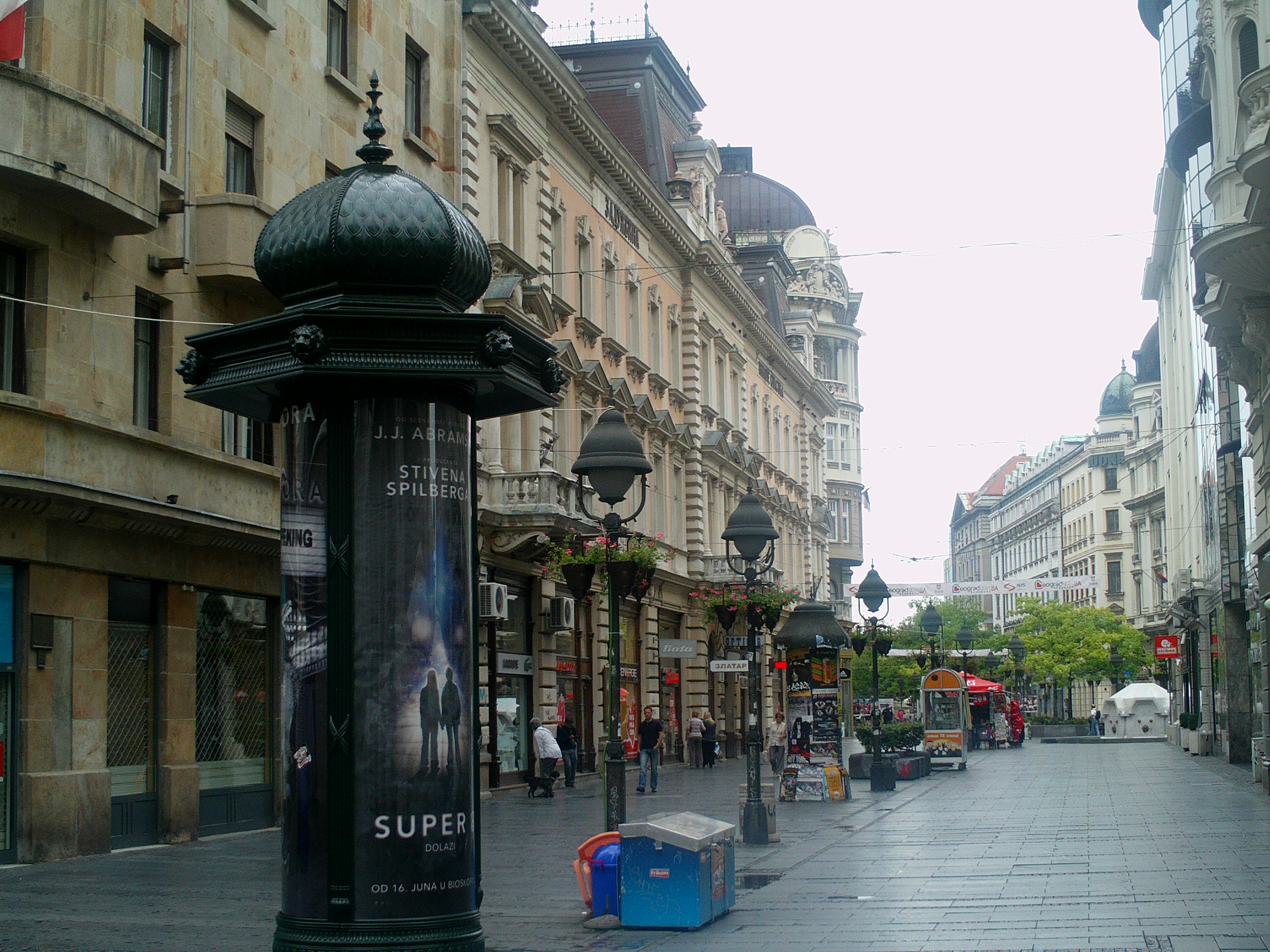
At a pharmacy on Bulevar oslobodjenja, last Monday morning around nine, I ran into the godmother of my late sister, whom I had not seen in nearly a year. She is sixty-eight, lives alone in the new part of Vozdovac, a retired secondary-school teacher of Serbian.
We talked for about ten minutes. She asked how my son and daughter were doing, whether I was still writing my column, whether I had a summer holiday planned. I asked how her health was, whether her pension was arriving on time, whether she was still in the same flat. The conversation was warm, human, in nothing remarkable.
What struck me was what was not said. She did not ask about Ukraine. She did not ask how many people had been at Slavija. She did not ask what had happened with Veselin Milic. She did not ask whether the elections would be in October or November.
A change no one is writing about
Twenty years ago, a teacher of Serbian who reads Politika every morning would have asked me about all those things. She would have assumed that I read Politika every morning too, and that we shared a language in which we could discuss it, at least for five minutes, with mildly different views.
Now she did not ask. Not because she did not care, I know her well enough to rule that out. She did not ask because we no longer have a shared safe language in which to put those questions without quarrelling.
This is the sociologically most important change in Serbian society in 2026. No one writes about it, because it escapes the standard measures one sees in tables and percentages.
More media than trust
I pivot to the sociology of media. The 2024 Eurobarometer shows that 41 percent of Serbia’s population trusts public media, a lower figure than in:
- Bulgaria (52 percent)
- Croatia (47 percent)
- Hungary (45 percent)
Private media enjoy 28 percent trust. Social networks 14 percent. The sum of these three is 83. But when the Eurobarometer asks individuals which media they use for information, the total approaches 130.
In other words, the average Serbian citizen uses more media than they trust. Sociologically, that is the definition of the condition called the “lost moderately informed public.” The problem is not that people lack information. It is that they do not trust what they have, so they seek more, but with each new source trust falls.
Habermas and the three conditions of the public sphere
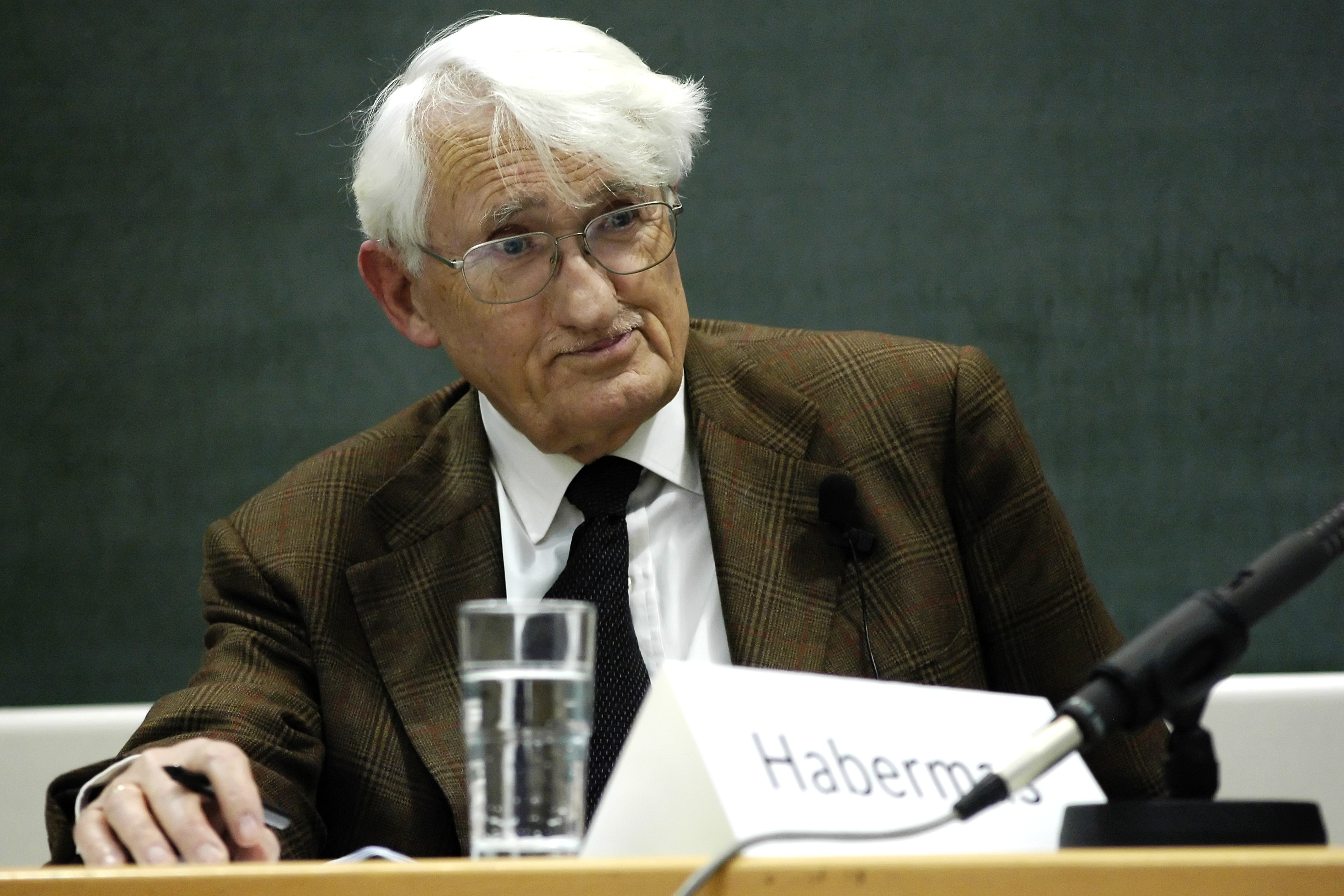
Here the name of German sociologist Jurgen Habermas matters. His early book “The Structural Transformation of the Public Sphere” (1962) described almost seventy years ago what happens when the public loses the capacity for shared debate.
Habermas argued that the public sphere exists when three conditions hold:
- unrestricted access to information
- rational debate over that information
- a shared language that binds participants to argument
In Serbia 2026, the first condition is formally satisfied (there is too much information, not too little). The second is hard to meet, because no forum exists where different positions could meet. The third, a shared language, is in real collapse. My cousin and I, two highly educated members of the classical Serbian intelligentsia, no longer share a language for politics.
Three countries that share an administrative name
This is best seen in a sociological fact political analysts often miss. According to IPSOS research in April 2026, when asked “Which medium do you most often use for political information,” the data are as follows.
The ruling majority (around 47 percent) names Pink, Prva, Happy, Informer as primary sources. Opposition voters (around 22 percent) name N1, Nova S, Newsmax Adria, Vreme. A third, undecided group (around 31 percent) names, if anything, exclusively social networks, most often Instagram and TikTok, rarely Facebook.
Sociologically, these three populations share absolutely nothing. Not a common topic, not a common vocabulary, not a common frame of reality. Politically, they share the same administrative name of Serbia. Communicatively, they live in three different countries.
The imagined audience that no longer exists
Twenty years ago it was not so. Politika, Borba, Nasa Borba, Vreme, NIN, Nedeljni Telegraf, Reporter, Beorama, the war reports of RTS, all were sources that, however biased, used a similar linguistic structure and addressed the same imagined audience.
That audience consisted of literate citizens who read and listen, with enough shared frame to understand one another, even when they disagreed.
That imagined audience no longer exists. In its place have come three imagined audiences, mutually unreadable. The voter who follows Pink does not understand the vocabulary of the voter who follows N1. The latter does not understand the vocabulary of the one who follows Instagram pages with nine thousand likes. All three groups consider themselves informed. All three are informed, but each in a different world.
Castells, the network society, the limits of the model
A counter-argument I take seriously. There is a reading, common in circles close to digital culture, that the disappearance of the shared public sphere is a normal consequence of media pluralisation. By that logic, more different audiences means more different experiences of democracy, which is itself a democratic achievement, not a democratic crisis.
It is an argument worth weighing. Sociologist Manuel Castells, in “The Information Age” (Blackwell, 1996-1998), in three volumes, describes this as a “network society” of interlocking, previously unconnected publics.
But Castells warned at the same time:
Interlocking works only if there is a minimum of mutual intelligibility. Without it, the networks remain, but the societies disappear.
Serbia 2026 seems to me to be in Castells’s second phase, where the networks exist, but society is fraying.
REM, BIRODI, a systematic erosion
One more thing should be said plainly. The disappearance of the moderately informed citizen is not an accidental consequence of media evolution. It is the political outcome of specific institutional choices, which over the past thirteen years have systematically eroded balance in the media sphere.
REM, the Regulatory Authority for Electronic Media, has for years awarded national frequencies to TV stations that, according to regular reports by the BIRODI coalition and the Slavko Curuvija Foundation, breach professional standards on average twenty times a week, without sanction. The state budget has not produced a system that would secure balanced funding for different voices. Local media are largely dependent on municipal budgets, which makes them loyal to local power-brokers.
Without balance, the moderately informed audience has no medium of its own, so it disappears.
Before noon, briefly
I return to the pharmacy. As my cousin and I parted, she said: “Get in touch some time, but in the morning, after eleven it isn’t fair to the day’s obligations.”
That sentence I found hardest to understand. Once she would have said “call on the weekend, let’s have a coffee and talk about Djindjic.” Now contact belongs to the time zone “before noon, briefly,” and the topics are absent.
Not because they do not exist. They do, in great number. But because there is no longer a form in which they could be discussed between two moderately informed citizens.
The question that remains, and which belongs to those of us columnists still read by five or six thousand people, is: if we no longer write to the moderately informed citizen because there is no such citizen, who are we writing to. And does that name still mean anything at all.