Two Meteor Showers and a Comet Over Serbia in Late July
Late July pairs two peaking meteor showers, a brightening comet and moonless nights for the Milky Way. A practical guide on when, where and how to watch, no telescope needed.

- The Southern Delta Aquariids peak on the night of July 30 to 31, with up to 20 meteors an hour under ideal conditions.
- The weaker Alpha Capricornids peak at the same time (about 5 an hour) but are known for bright fireballs.
- A new Moon on July 14 brings near-total darkness, the best conditions of the year for the core of the Milky Way.
- Comet 10P (Tempel) brightens through July and is visible through binoculars near month's end.
Do you need an expensive telescope for a good show overhead? You do not. Late July is one of the richest naked-eye stretches of the year, and the only required gear is a clear night and a spot far from city lights.
In an earlier piece we covered the Moon, Mars and the Pleiades. This is the follow-up, focused on what arrives at the very end of the month: two meteor showers overlapping at their peak, a comet growing steadily brighter, and a few nights with no moonlight, when the Milky Way shows in full.
When should you head outside?
The key date is the night of July 30 to 31. That is when the Southern Delta Aquariids peak, with up to 20 meteors an hour in ideal conditions. This is not a record-breaking shower like August’s Perseids, but it is reliable and spread across the week, so meteors show up a couple of nights before and after the peak too.
At the same time a second shower, the Alpha Capricornids, culminates. It is far weaker, around five meteors an hour, but it has one trick: it is known for bright, slow fireballs that linger long enough for you to call out to whoever is next to you. Add the two together and you have a solid chance of catching a dozen trails in an hour of patient watching.
Our advice for watching is simple. Find a place with no street lamps, give your eyes at least twenty minutes to adjust to the dark, and do not look at your phone, because the screen sends you back to square one. Lie on your back, take in as much of the sky as you can, and be patient. Meteors come in bursts, so after ten quiet minutes three can easily arrive in a single minute.
For the core of the Milky Way, July 14 is the date to circle, when the Moon is new and the sky is practically free of its light. Those are the best conditions all year to see that faint, cloudy band with the naked eye, again, provided you have left the city.
What else is happening in the sky?
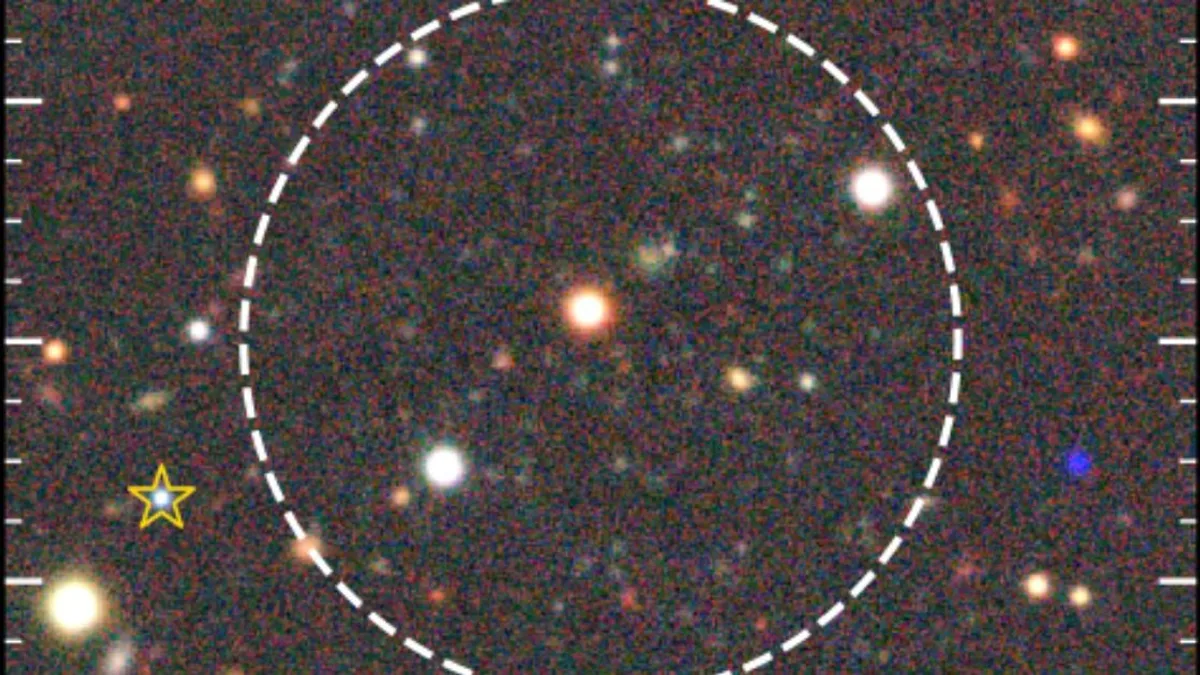
Beyond the meteors, late July brings a comet. Comet 10P, also known as Tempel, brightens gradually through the month and is brightest in early August. It is a tough target for the naked eye, but by month’s end an ordinary pair of binoculars should show it as a faint smudge. Binoculars beat a telescope here because they offer a wider field of view, which makes the comet easier to find.
There were fine sights earlier in the month too. Before dawn on July 11 a young Moon, the Pleiades cluster and Mars lined up in a triangle, and on July 17 the Moon and Venus met low above the western horizon, right after sunset. Such close pairings of planets and the Moon ask for nothing but a clear view toward the horizon.
Put it all together and the last week of July is a rare combination: two showers at their peak, a comet in binoculars, and moonless nights for the Milky Way. You need no app and no equipment, just a little planning and a drive to the nearest unlit meadow.
So, do you already have a spot outside town in mind for watching the sky in late July?