Roman Space Telescope Launches Today
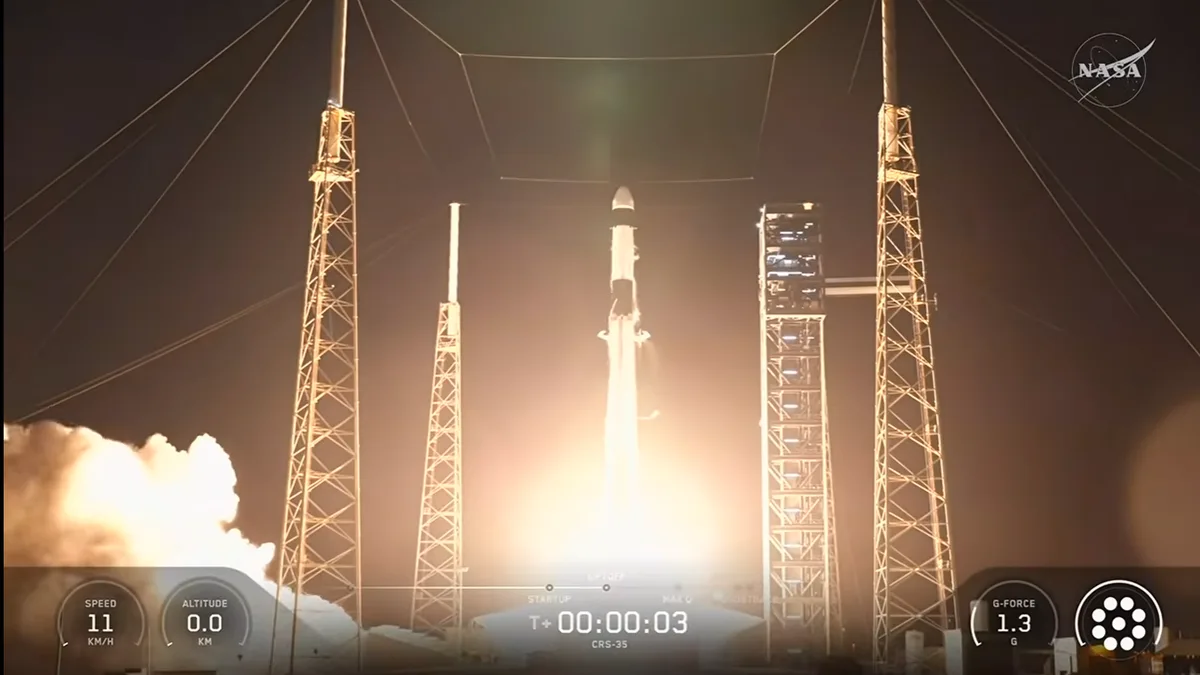
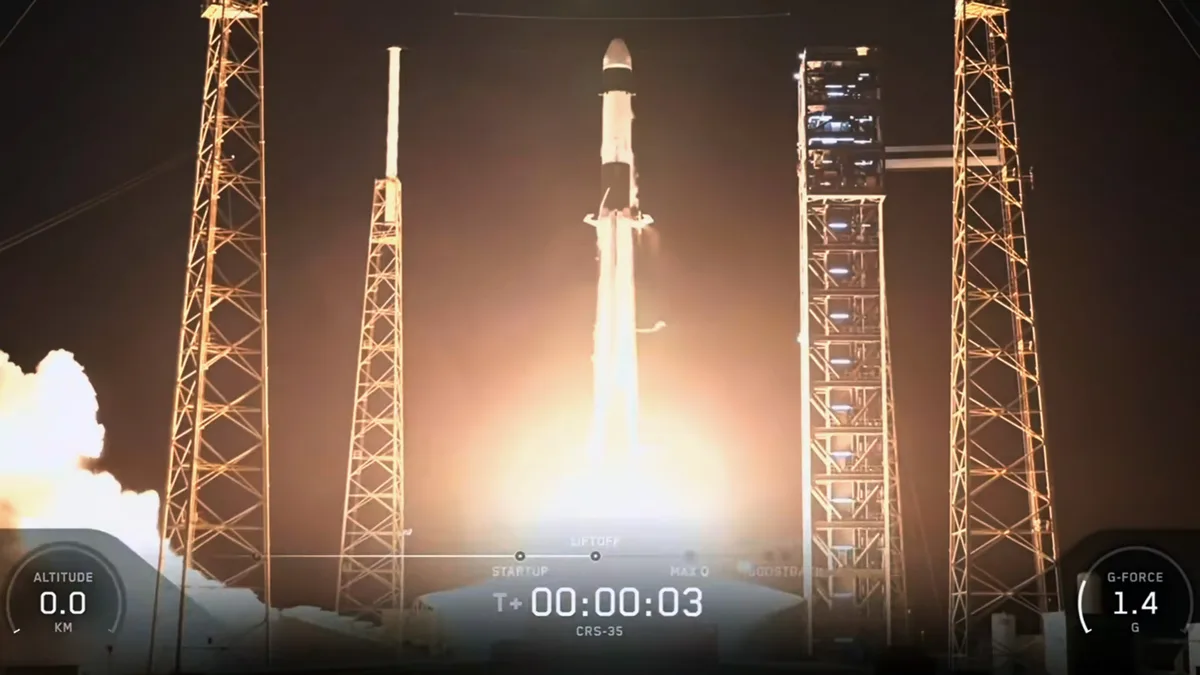
NASA's Nancy Grace Roman Space Telescope launches today aboard a Falcon Heavy rocket from Pad 39A at Kennedy Space Center, headed for the L2 point 1.5 million kilometers from Earth.

NASA’s Nancy Grace Roman Space Telescope is set to lift off today, Sunday, August 30, at 7:26 a.m. Eastern Daylight Time, or 1:26 p.m. Central European Summer Time, from Launch Pad 39A at Kennedy Space Center in Florida. It rides a Falcon Heavy rocket built by SpaceX, standing about 230 feet tall and powered by 27 Merlin engines, nine in each of its three boosters, together producing more than 5 million pounds of thrust.
The go-ahead came on Friday, when NASA and SpaceX finished a launch readiness review at Kennedy Space Center and cleared the telescope for flight, as we reported in “NASA Gives Green Light for Roman Telescope Launch.” The next day, the rocket rolled out of its hangar to Pad 39A and was raised into vertical position, where it stood ready for this morning’s launch. The U.S. Space Force’s weather unit, Space Launch Delta 45, put the odds of favorable conditions at liftoff at 60 percent.
What the Telescope Is Carrying Into Space
Roman weighs about 8,000 kilograms (18,000 pounds) and carries a primary mirror 2.4 meters across, the same size as the one on the Hubble Space Telescope. NASA received that mirror in 2012 as a donation from the National Reconnaissance Office, left over from a canceled spy satellite program. Its main instrument is a 300-megapixel infrared camera with a field of view at least 100 times wider than Hubble’s at matching image sharpness, so a single frame covers a patch of sky roughly 1.5 times the apparent size of the full moon. A second instrument, a coronagraph, flies as a technology demonstration and is meant to directly image planets around other stars by blocking out the light of their host star. Teledyne supplied the 18 infrared detector arrays that make up the largest infrared focal plane ever built for astronomy.
According to Serbian outlet 021, Roman will collect more than 500 terabytes of data a year and image roughly 2 billion galaxies over the course of its main sky survey, compared with the roughly 400 terabytes Hubble has gathered across about 35 years of operation.
Sixteen Years From Concept to Launch Pad
The program has a long history. It began with the 2010 astrophysics decadal survey, which, under the name Wide Field Infrared Survey Telescope (WFIRST), put the mission’s cost at $1.6 billion with a 2020 launch target. After technical changes, including moving the coronagraph to technology-demonstration status to cut costs, NASA formally approved the mission for development in 2020, with an estimated cost of $3.9 billion covering five years of science operations. The program’s total cost today, spanning development, launch, and operations, stands at about $4.3 billion. The official readiness deadline was May 2027; the launch is happening nine months ahead of that.
Shawn Domagal-Goldman, director of NASA’s Astrophysics Division, described that gap in a statement carried by SpaceNews:
Complex things are hard to deliver on time and on budget, and this team has stayed within its resources and is delivering nine months early.
This is the sixth NASA mission launched on a Falcon rocket from Kennedy Space Center, following IXPE, Psyche, GOES-U, Europa Clipper, and IMAP.
Speaking about the mission’s science goals at a July briefing covered by SpaceNews, Julie McEnery, Roman’s senior project scientist at NASA, said:
Roman is poised to carry out revolutionary surveys that will touch every corner of astronomy. We’re going to conduct an incredible census of planets around other stars, and it could confirm existing hints that our standard model of the universe is wrong and point us toward discovering what’s right.
A Hundred-Day Trip to Its Destination
After launch, Roman will deploy its solar panels and sunshield, followed in the coming days by its antenna and aperture cover. The trip to its destination, the L2 point of the Sun, Earth system, about 1.5 million kilometers from Earth, takes roughly 100 days, during which the team will commission the telescope and its instruments. The primary mission is planned to run five years, and the telescope is built to operate for at least that long again, with the fuel supply on board setting the ultimate limit.
A successful launch doesn’t mean the science starts right away. Roman won’t send back data until it reaches its destination and passes a full checkout of its systems, so NASA isn’t expecting the first images before early 2027.