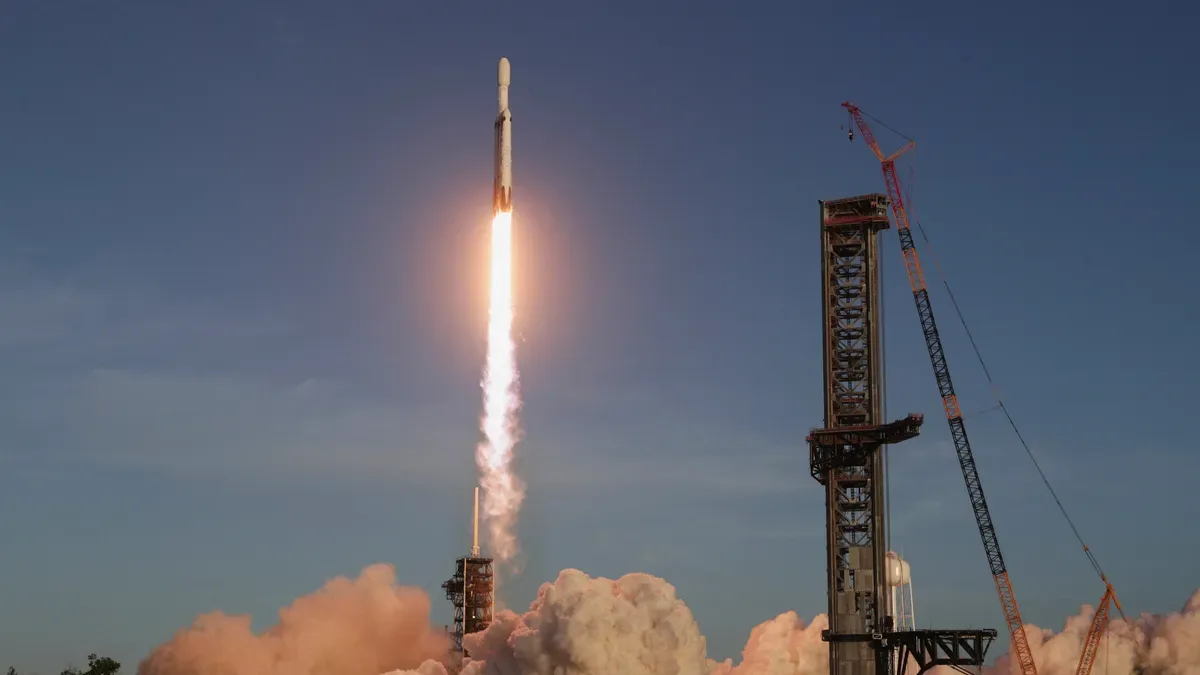
Dragon CRS-35 docks with space station at 11 a.m. ET
The cargo ship carrying about 2,860 kilograms docks automatically, with NASA coverage starting at 3:15 p.m. Serbian time. It stays until mid-November.
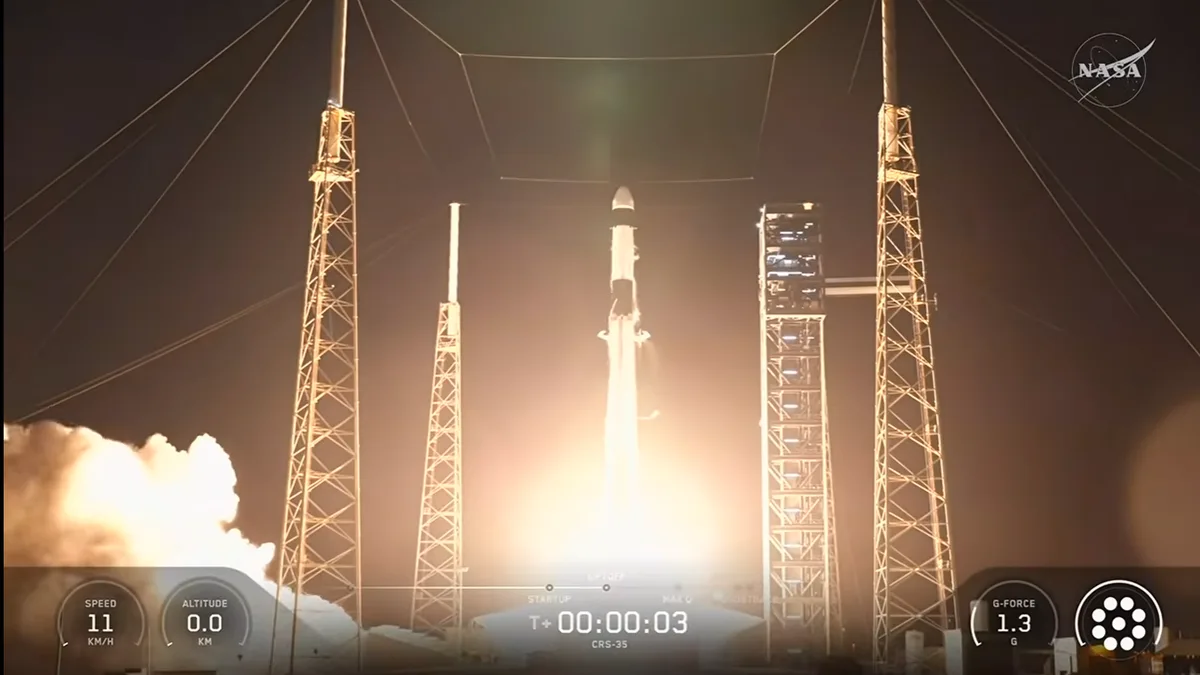
The Dragon cargo ship, launched Tuesday from Florida, docks with the International Space Station today. NASA scheduled the docking at the space-facing port of the Harmony module for Thursday, October 15, 2026, at 11 a.m. Eastern Daylight Time, which is 5 p.m. in Serbia. The approach is automatic, and coverage begins at 9:15 a.m. Eastern, or 3:15 p.m. Serbian time. NASA says it is streaming the event on several platforms, and the station blog mentions NASA+.
NASA astronaut Anil Menon and Canadian Space Agency astronaut Joshua Kutryk will monitor the approach. Jessica Watkins and Luke Delaney joined them on Wednesday afternoon, and together with mission control they discussed how to handle the cargo after docking.
What Dragon brings to the station
The vehicle is Cargo Dragon C211. We reported on the launch on Tuesday, October 13: a Falcon 9 rocket lifted off at 6:33 a.m. Eastern (10:33 UTC, 12:33 p.m. in Serbia) from Pad 40 at Cape Canaveral. The first stage, tagged B1096, landed next to the pad on its eighth flight.
The cargo weighs more than 6,300 pounds, about 2,860 kilograms. Most of the space goes to the fourth and final pair of ROSA roll-out solar arrays, built by Redwire. Each wing produces more than 20 kilowatts for over ten years. The arrays ride in the ship’s unpressurized trunk, and astronauts will install them during a series of spacewalks planned for later this fall. NASA says this pair will complete the station’s power upgrade and increase the electricity available for research, station operations and its safe, controlled descent from orbit.
Gaurang Patel, operations integration manager for NASA’s Low Earth Orbit program, said after the launch during the agency’s broadcast:
“It was quite a journey. Some of you may remember that in 2017 we launched ROSA on the CRS-11 mission, and that is where we actually demonstrated this innovative approach to deploying a solar array.”
Patel added that the station’s old arrays were not set up for standard upgrades, so teams had to find a way to attach the new ones, using modification kits on non-standard mounts.
More than 40 studies
Dragon carries equipment for more than 40 science studies. They include a device for making artificial retina in microgravity, three-dimensional models of heart tissue for drug testing, and brain organoids meant for finding treatment targets for Alzheimer’s disease, Parkinson’s disease and multiple sclerosis. There is also material for studying a new kind of glass. Dr. Liz Warren, deputy chief scientist in NASA’s International Space Station Program Science Office, explained at a pre-launch news conference why it is interesting:
“Most ordinary glass is made from silicon dioxide, the main component of sand. Unusual glass is made from heavier elements that are not traditionally used to make glass. Such unusual glasses could have extraordinary properties, among them a refractive index higher than diamond, greater resistance to breaking, and even the ability to shrink rather than expand when heated.”
These are properties still being tested, not results: Warren is describing what such glasses could have.
What the crew is doing before arrival
Expedition 75 has seven crew members: Menon, Watkins, Delaney, Kutryk and cosmonauts Pyotr Dubrov, Anna Kikina and Sergey Teteryatnikov. Not everyone did the same work. All four astronauts had eye exams in the Harmony module, with doctors on the ground watching their retina, lens and cornea in real time. The goal is to better understand how long stays in space affect vision and the shape of the eye. Delaney and Watkins prepared a spacesuit for the return to Earth in the Quest airlock and stowed charged lithium-ion batteries.
Dubrov and Kikina tested the Teledroid experiment in the Nauka module: an exoskeleton-like suit, paired with virtual reality goggles and handheld controls, that operates robots remotely. Teteryatnikov updated software in the Zvezda module on a laptop that controls the European robotic arm.
Dragon stays at the station until mid-November. It then returns to Earth with research and time-critical cargo, splashing down in the ocean off the coast of California.