NOAA: New Plasma Cloud May Reach Earth Early Oct. 11
NOAA's October 8 forecast calls for a G1 to G2 storm on Friday, notes a coronal mass ejection launched October 7, and expects fast solar wind on October 10.
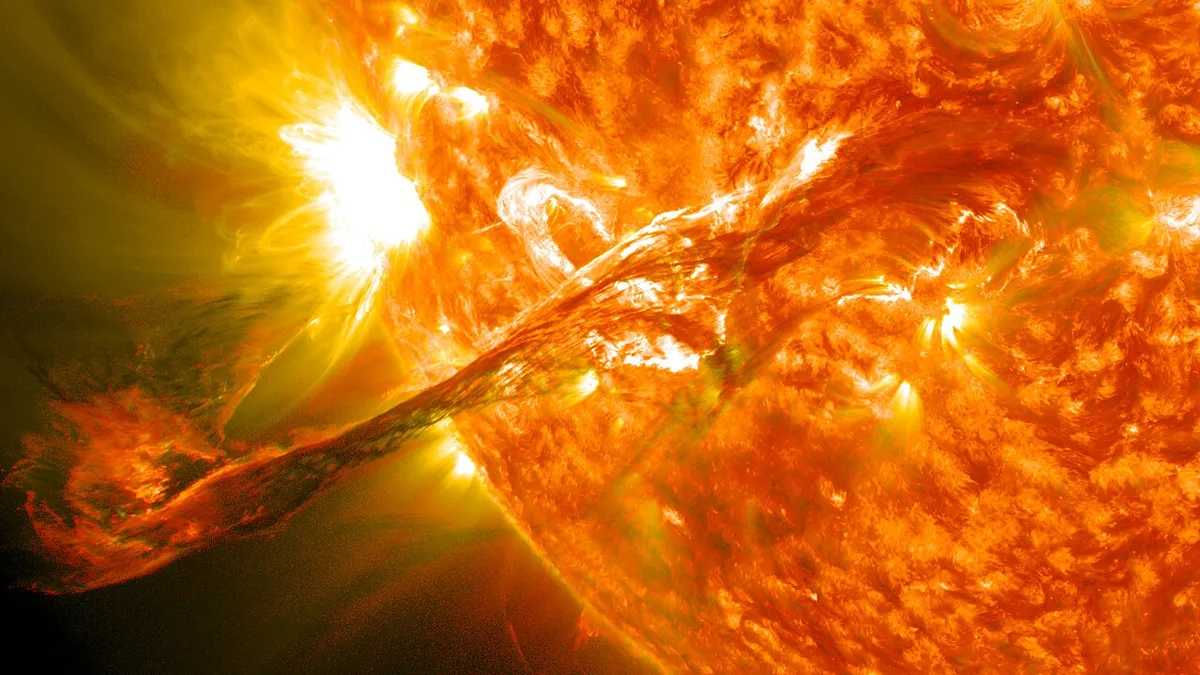
The Space Weather Prediction Center (SWPC) of the U.S. agency NOAA issued a new forecast discussion at 00:30 UTC on October 8, 2026 (2:30 a.m. in Serbia). Alongside a G1 to G2 geomagnetic storm already expected for Friday, October 9, it mentions a second plasma cloud, one that left the Sun on October 7 and could reach Earth early on October 11. For October 10, the forecast counts on another source of disturbance, but it is not an ejection: it is a fast stream of solar wind.
Where did the new plasma cloud come from?
The strongest event of the previous 24 hours was a C7.9 flare from active region 4549, recorded on October 7 at 13:17 UTC (3:17 p.m. in Serbia). The region sits at N10W13, close to the center of the visible solar disk, and according to SWPC it still produces most of the activity. Its leading and trailing portions have contracted in the latest period, while several areas of mixed polarity remain inside the same penumbra. A new region, 4550, appeared at S15W22 and received a number, but stayed relatively quiet.
The flare was accompanied by a partial halo coronal mass ejection, meaning part of the edge of the plasma cloud is aimed toward Earth, not only off to the side. It was first seen in coronagraph imagery from the STEREO-A spacecraft at about 13:38 UTC. Initial modeling, SWPC says, shows an Earth-directed component and arrival early on October 11 by the UTC day. This is an initial model, so the arrival time may shift.
What does the forecast say for Friday and Saturday?
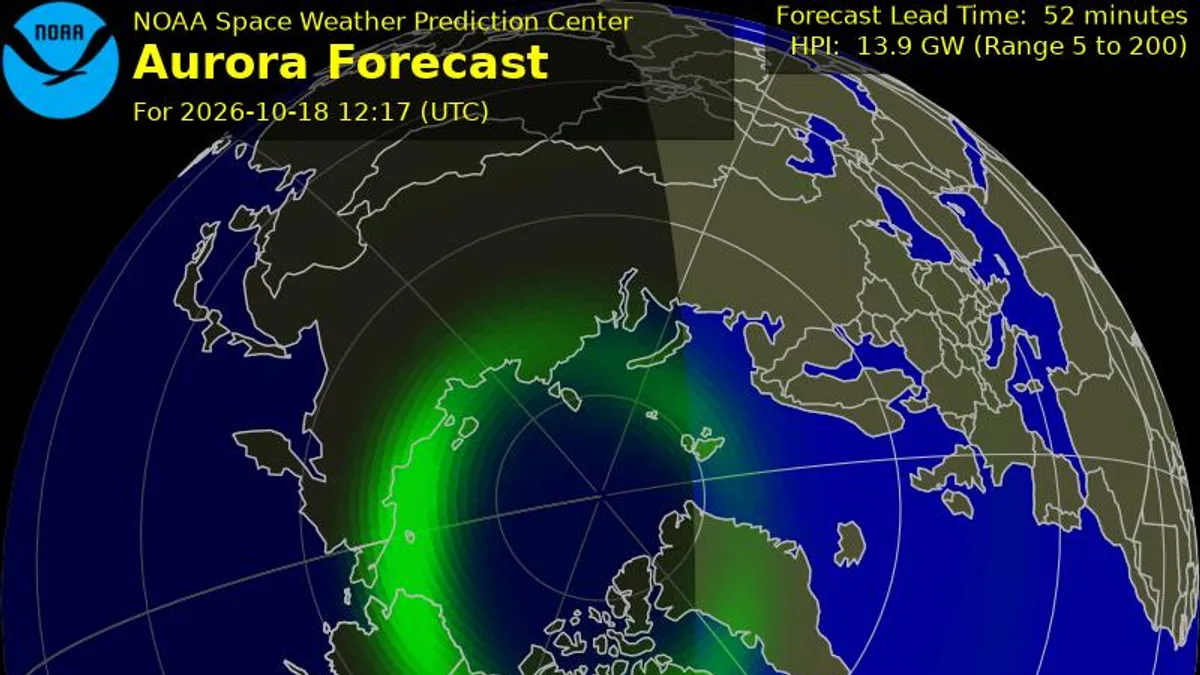
For October 9, SWPC considers G1 to G2 storms (minor to moderate) likely, because of an ejection that left the Sun on October 6. Disturbed solar wind is expected from the early hours of Friday. The highest expected Kp index for the period from October 8 to 10 is 5.67, in the 9 to 12 UTC interval on October 9, and the forecast puts the G1 threshold (Kp 5.00) as early as the 3 to 6 UTC interval. Kp is a scale of geomagnetic activity from 0 to 9, and both of those intervals are marked G1 and G2 in the NOAA table.
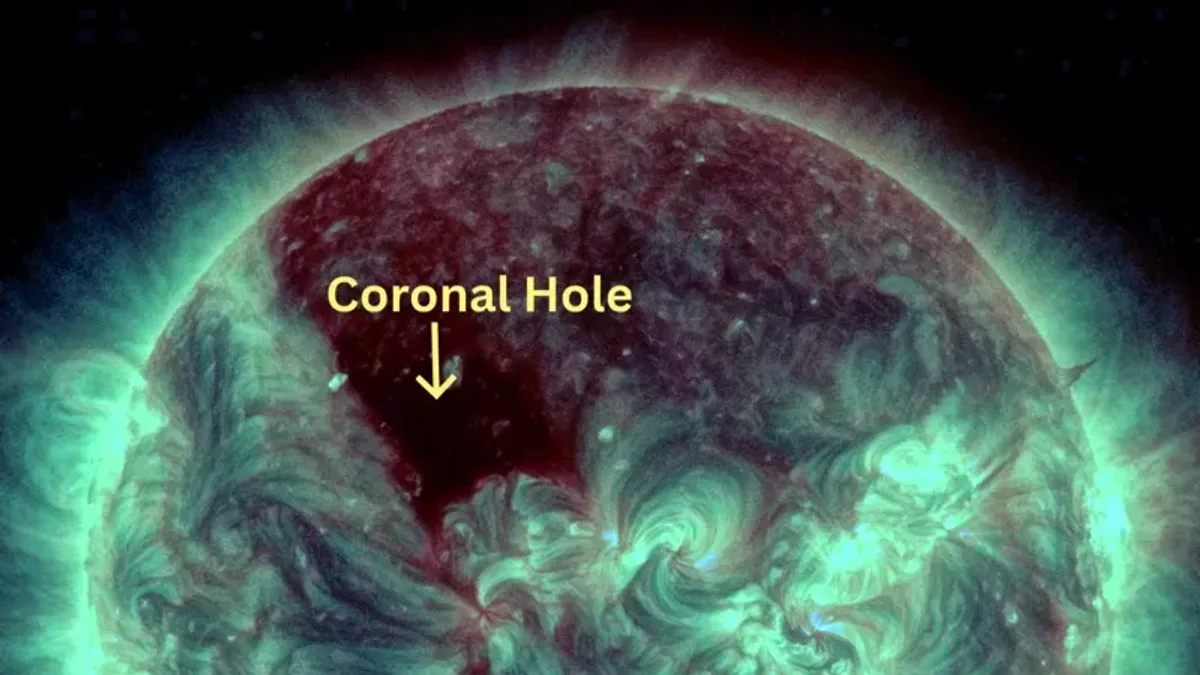
For October 10, SWPC expects the effect of the ejection to give way to a fast stream of solar wind from a negative-polarity coronal hole. Conditions would then be unsettled to active, with a peak Kp of 4.00. The Kp table ends on October 10, so the arrival of the October 7 ejection, early on October 11, has no figure in it yet.
Radio blackouts, electrons and protons
The probability of R1 to R2 radio blackouts from M-class flares is 40 percent for each day from October 8 to 10, mainly from region 4549 and possibly 4545. For R3 or stronger, the estimate is 5 percent per day. The probability of an S1 proton event is 10 percent per day. In the previous 24 hours there were no radio blackouts and no storms, and the highest measured Kp was 3.
The flux of electrons above 2 MeV reached a high level, peaking at 11,900 pfu on October 7 at 16:45 UTC, and according to the forecast it stays high through October 9. Solar wind over the same period was in normal conditions: total magnetic field below 5 nT, the most strongly deflected component Bz down to -4 nT, and speed dropping to about 370 km/s.
What this forecast does not prove
This is initial modeling of the ejection, in a forecast issued while the cloud is still far from Earth. For the October 7 ejection the forecast gives neither a storm strength nor a Kp value, so it cannot be concluded that a storm will occur at all. For the October 9 storm, which we covered earlier, SWPC says it is likely, not certain.