G3 geomagnetic storm on Oct. 10, new M6.4 flare follows
The shock wave arrived at 14:34 UTC, the storm beat the G2 forecast to reach G3, and an M6.4 flare launched a new cloud that NOAA does not rule out.

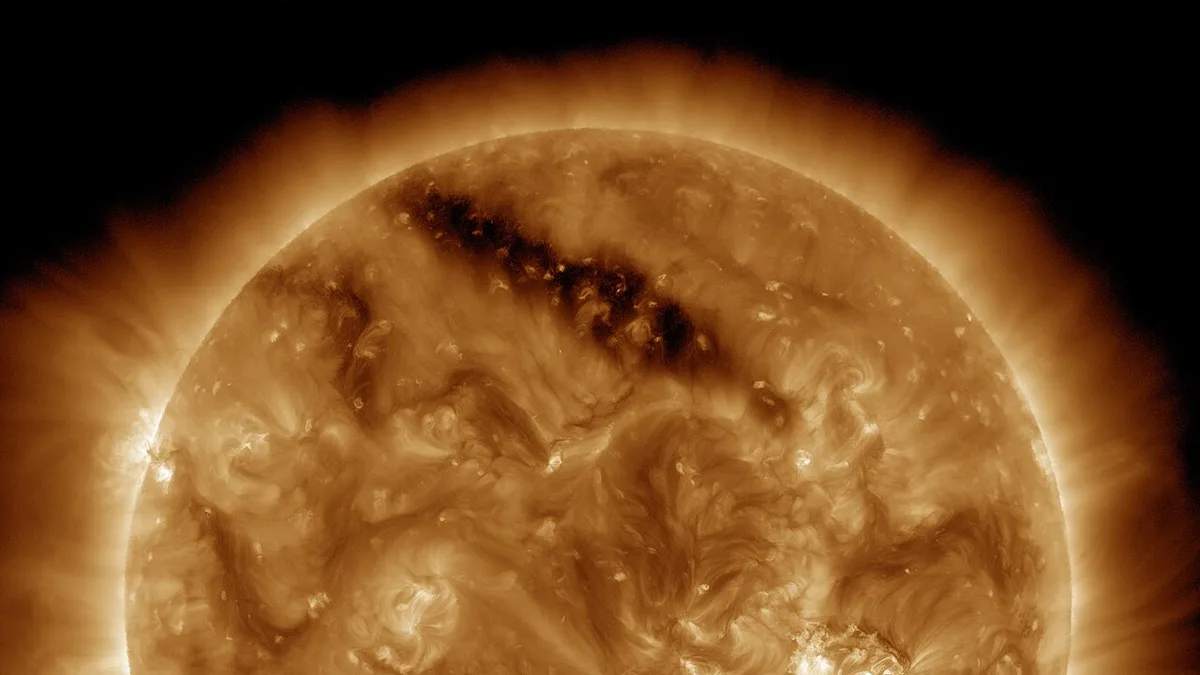
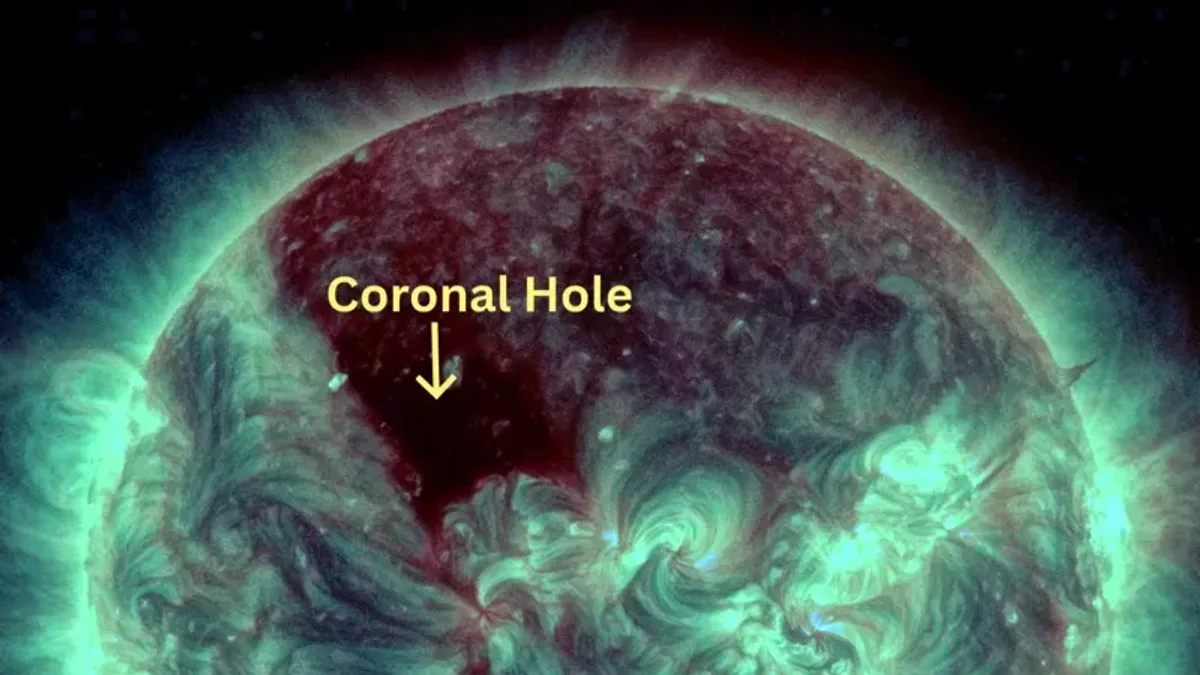
A shock wave from a plasma cloud reached Earth on October 10, 2026, at 14:34 Universal Time, which was 4:34 p.m. in Serbia. The Space Weather Prediction Center (SWPC) of the US agency NOAA had expected the arrival only in the early hours of October 11, and the storm that followed also beat the forecast strength: instead of the announced G2 it reached G3, a strong storm, with a peak planetary index of Kp 7 over the previous 24 hours. The same active region on the Sun also produced a new flare.
How did the storm unfold on October 10?
On October 9 at 19:45 UTC, SWPC issued a G2 storm watch for October 11, citing two clouds that left the Sun on October 7 and 8. We wrote about the first one on October 8, when the forecast mentioned an arrival early on October 11. The shock wave was nevertheless registered at L1, the point ahead of Earth where satellites measure the solar wind, as early as 14:34 UTC. The Niemegk observatory in Germany recorded a sudden magnetic jump of 56 nanotesla on the ground.
Satellite measurements show how strong the impact was. The total interplanetary magnetic field rose from 26 nanotesla to a peak of 46 nanotesla at 15:18 UTC, and its southward component, Bz, the one that opens the door to Earth’s magnetosphere, dropped to minus 29 nanotesla at 16:24 UTC. Solar wind speed jumped from 400 to more than 530 kilometers per second and reached a peak just above 900 kilometers per second at 17:53 UTC (7:53 p.m. in Serbia). Plasma density grew tenfold, to more than 100 protons per cubic centimeter.
Spaceweather.com reports that the two clouds probably merged on the way, with the faster one catching up to the slower one. According to NOAA’s discussion, the arrival of the cloud raised geomagnetic activity to G3 a few hours after the shock wave. A warning for a G3 storm or stronger was issued on October 10 at 18:00 UTC and was valid until 23:59 UTC, and according to Spaceweather.com the G3 level lasted almost six hours.
Where was the aurora visible?
The aurora was seen around the Arctic Circle, including in Levi, Finland, while observers in the United States saw only a faint echo. Photographer Karsten Berger told Spaceweather.com from Levi:
“The colors were visible to the naked eye, simply stunning!”
He added that rare blue auroras appeared too: “Even rare blue auroras were present.”
Can the new plasma cloud graze Earth?
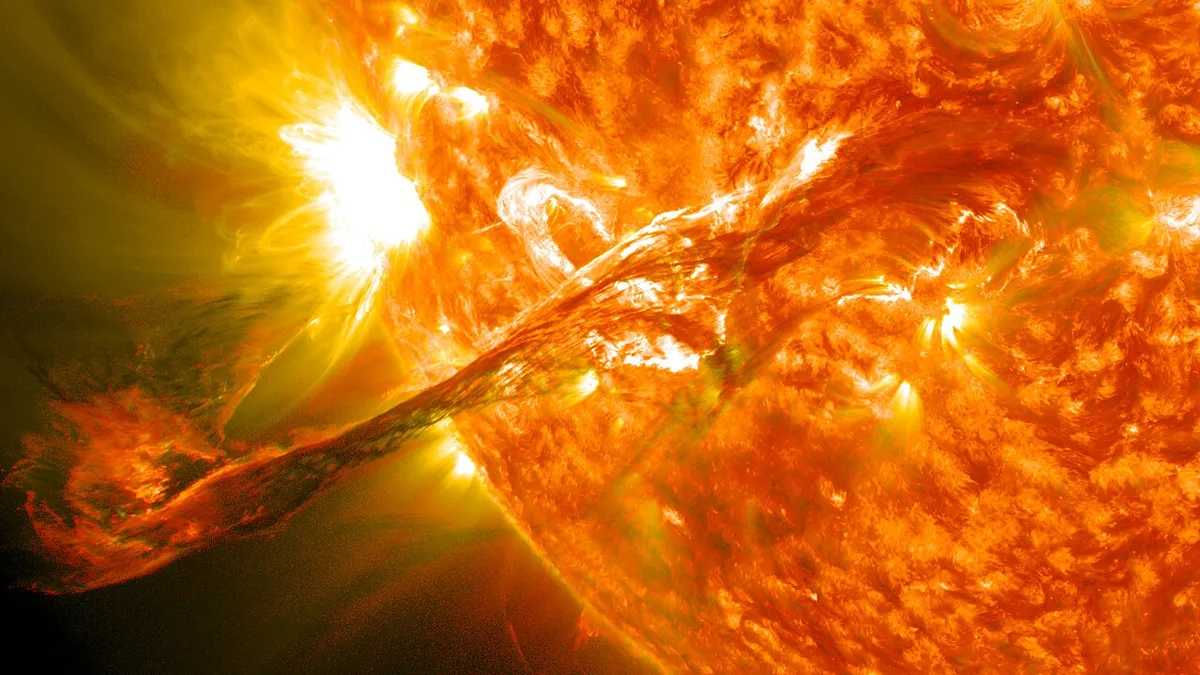
Sunspot 4549 (N09W54, beta-gamma-delta magnetic configuration) produced an M6.4 flare on October 10, along with an R2-level radio blackout. The sources differ on the peak time: NOAA gives 15:10, and Spaceweather.com gives 15:15 UTC. It was followed by a type II radio burst with an estimated speed of 929 kilometers per second and a radio burst of 240 sfu. The plasma cloud was first seen in LASCO C2 coronagraph images at 15:48 UTC.
The two assessments differ. NOAA says the first analysis pointed to a miss just ahead of Earth, but that models do not rule out a glancing blow late on October 12 and that further analysis will give a clearer answer. Spaceweather.com, citing a preliminary NASA model, writes of a near miss or a glancing blow on October 13.
In the forecast issued on October 11 at 00:30 UTC, SWPC expects G1 to G2 storms with a peak Kp of 5.67, on October 11 from 9 a.m. to noon and on October 12 from 3 a.m. to 6 a.m. Universal Time. For October 13, Kp rises to 4. Spaceweather.com warns that the solar wind, still blowing faster than 600 kilometers per second, may cause a weak G1 storm and aurora at high latitudes. The chance of stronger flares remains high: R1 to R2 radio blackouts are put at 65 percent for October 11 and 12 and 55 percent for October 13, while R3 or stronger are put at 15, 15 and 10 percent. Sunspot 4551 is just entering view on the eastern edge of the disk and is quiet for now.
What these measurements do not say
NOAA has no conclusion yet about the new cloud: its discussion speaks only of a possible glancing blow late on October 12, and further analysis is still to come. The forecast does not give the strength of the storm that cloud would cause, so it cannot be concluded that a storm will happen at all, and a miss is still possible. The Spaceweather.com estimate for October 13 is preliminary and rests on a single model. Neither source gives the magnetic properties of the new cloud, so the data from the October 10 impact cannot tell us what its arrival would look like.