Macron and Merz propose a new EU enlargement model in Tivat
France and Germany unveiled a joint non-paper in Tivat to speed up enlargement, and Serbian President Aleksandar Vucic said Belgrade absolutely backs the proposal.

- France and Germany presented a joint non-paper in Tivat titled "New Momentum for Enlargement".
- The proposal calls for a faster process and a simpler accession methodology.
- Candidates would take first steps toward integration even before full membership, with rewards attached.
- Serbian President Aleksandar Vucic said Belgrade absolutely supports the proposal.
The biggest news from the Tivat summit did not come from the protocol agenda but from the margins of the meeting. France and Germany presented a joint non-paper titled “New Momentum for Enlargement”, a document proposing a faster path into the European Union and a simpler version of the existing negotiation methodology.
Under the proposal, candidates could take their first steps toward integration even before full membership. The document also envisions a system of rewards for those who advance, including privileged access to the EU single market and observer status in the Union’s institutions. Serbian President Aleksandar Vucic immediately said Belgrade backs the initiative.
What exactly are Paris and Berlin proposing?
German Chancellor Friedrich Merz said the Union must show that it is willing and ready to enlarge. In Tivat he also offered a self-critical assessment of the years of stagnation.
“If we have not admitted a single new member over 13 years, we can say that the European Union has also made certain mistakes,” Merz said.
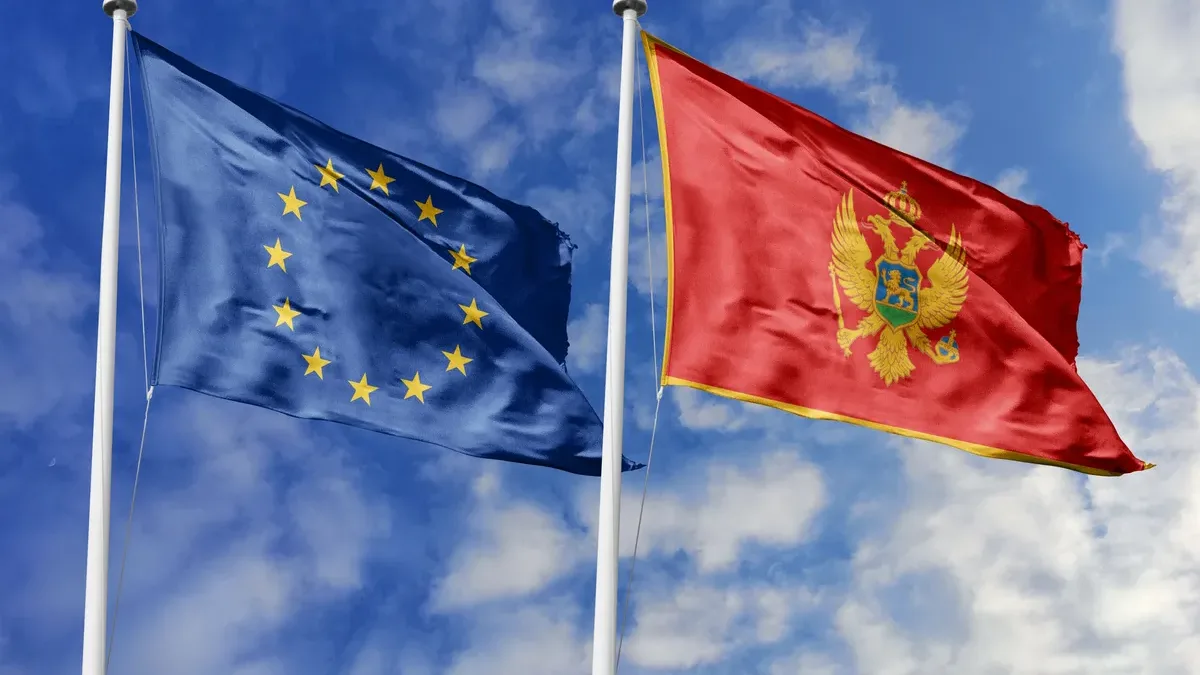
French President Emmanuel Macron said that all European leaders stand on the side of Montenegro, which he described as the most advanced candidate in the accession process.
“We are all here to support Montenegro’s work,” Macron said.
The key points of the Franco-German non-paper, as presented in Tivat, are:
- speeding up the accession process and simplifying the negotiation methodology
- allowing candidates to take first steps toward integration before full membership
- rewards for progress, among them privileged access to the EU single market
- observer status for candidates in certain Union institutions
How did Serbia react?
President Vucic says Serbia absolutely supports the proposal and that the new methodology would change, as he put it, the rhythm and energy of accession. That is a position Belgrade is voicing as part of its own policy, not as a formal decision by the Union, which has yet to weigh in on the document.
By its nature, a non-paper is an informal discussion document with no binding force. Paris and Berlin are using it to open a debate among member states, but any real change to the methodology would require the agreement of all 27 members. It also remains open how a system of pre-membership rewards would square with single-market rules.
Montenegro is cited in the document as the candidate with the most progress, while Serbia remains among the countries for which a faster methodology could mean concrete movement. Will the proposal from the bloc’s two largest members truly revive stalled enlargement, or remain one more discussion paper without an outcome?