Pre-election package: can Serbia's budget afford higher pensions?
Aleksandar Vucic unveils a package promising higher pensions and cheaper medicines on June 27. Some economists and the opposition question how it will be funded amid IMF commitments.

- President Aleksandar Vucic says he will present a package of measures on June 27 that includes higher pensions, lower prices for some medicines, and investment in healthcare.
- Cheaper treatment has been announced for dialysis patients, cardiovascular patients, and diabetics.
- Some economists and opposition figures read the move as a one-off pre-election handout and ask how it will be covered.
- The measures arrive alongside commitments to the IMF, including an announced tariff reform and electricity price increase, with elections expected in October or November.
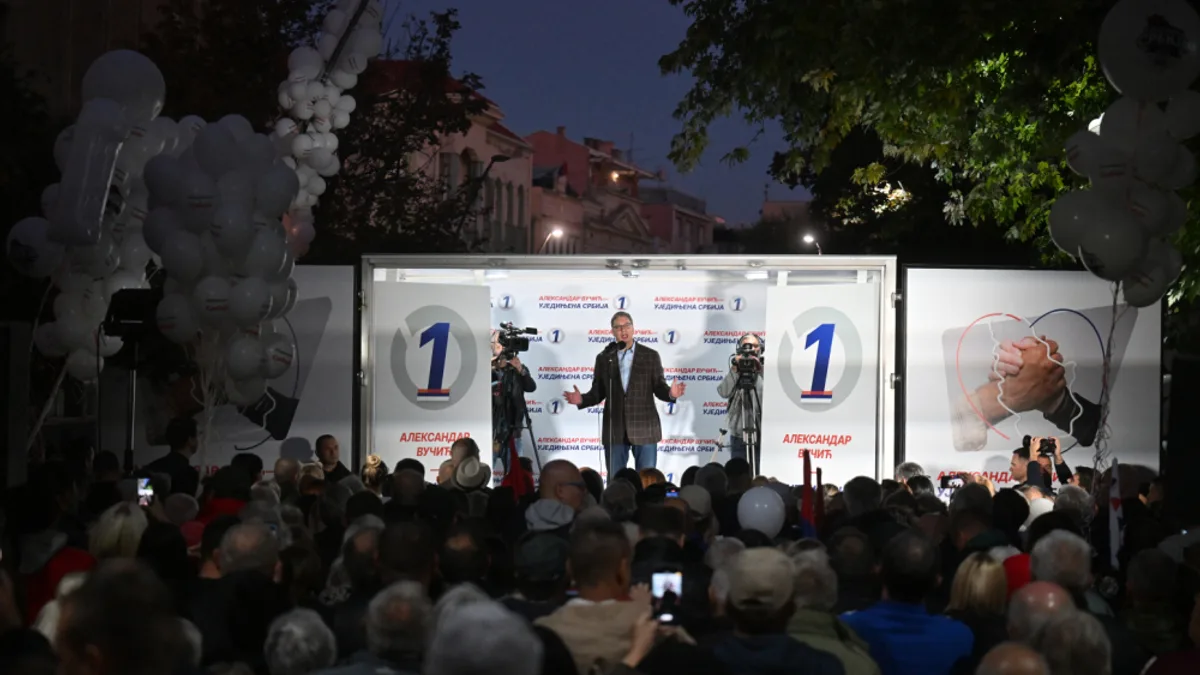
President Aleksandar Vucic has announced that on Friday, June 27, he will present a package of measures meant to deliver higher pensions, lower prices for certain medicines, and fresh investment in the health system. On the same day, at a rally where the name of a new electoral list is also expected, the pre-election cycle opens for a vote billed for October or November.
The contents of the package, judging by the announcements so far, are aimed at the most vulnerable groups. Cheaper treatment has been floated for patients on dialysis, for cardiovascular patients, and for diabetics, that is, for categories whose monthly therapy costs eat up a large share of their budgets. Alongside that comes a pension increase, which simultaneously targets the most numerous and most disciplined voting bloc in the country.
That is where the debate begins. Some economists and opposition politicians do not dispute that higher pensions and cheaper medicines are, in themselves, good news for citizens. What they dispute is the timing and the method. Benefits arriving a few months before a vote are described by some observers as a pre-election treat for pensioners rather than part of a long-term, planned social policy. The question is not whether people deserve it, but whether the budget can carry it without consequences that land after election day.
Where does the money come from?
This is the knot. The measures are announced at a moment when Serbia has commitments to the International Monetary Fund, including an announced tariff reform and an electricity price increase. In other words, while one hand gives, the other prepares a price rise that will claw some of that money back through utility bills. For a pensioner on a modest income, that is not abstract fiscal math, but the difference in what is left at the end of the month.
Critics warn that one-off or short-term payments tend to open a hole that has to be plugged later, once the cameras leave the rallies. If a pension increase is not backed by a permanent rise in budget revenue, it is eventually paid for through higher taxes, new borrowing, or cuts elsewhere. The pro-government side, for its part, presents the package as proof that the economy can sustain higher social spending and that this is planned policy rather than firefighting before a vote.
The concrete figures still have to be seen. Until it is published exactly how much pensions rise, which medicines get cheaper and by how much, and how large the planned healthcare investment is, any estimate of funding remains a guess. What can already be said is that the package is not fiscally neutral and that it comes bundled with an announced electricity price hike, which complicates reading the net effect on an average household.
A measure or a message to voters?
The timing speaks as loudly as the content. The package is being presented on the same day the list name is revealed, at a rally that is in every respect the start of a campaign. Politically, that is a logical move, good news is delivered when the audience is largest. But that is precisely why it is fair to ask whether this is a lasting improvement in living standards or a message ahead of the vote, one that price rises could relativize afterward.
For pensioners, who turn out in greater numbers than younger generations, this matters. An increase of a few thousand dinars looks different if electricity, medicines, and basic groceries are rising in parallel. The next clear marker is June 27, when figures should replace announcements. Only then will it be visible whether the budget really has the money for everything promised, or whether the accounting closes after the election.
And you, when weighing a package like this, do you look more at the size of the increase or at what is getting more expensive at the same time?