Montenegro Passes Draft Charter Changes, Serbian Left Out
Montenegro's parliament approved a draft of judicial constitutional amendments with 70 votes, but Serbian, the language most citizens speak, was again left out of the text.

- Montenegro's parliament adopted the draft of constitutional amendments XVII-XXI with 70 votes, with two lawmakers against.
- The Serbian language, spoken by about 43.5 percent of citizens per the 2023 census, was again left out of the text.
- Final adoption requires a two-thirds majority of at least 54 lawmakers, with a final vote expected by September 4.
- The Democratic People's Party quit the ruling majority over the omission of Serbian.
Montenegro’s parliament in Podgorica has adopted the draft of constitutional amendments XVII-XXI, pushing judicial reform into its decisive stage. The draft passed with 70 votes, while two lawmakers from the Democratic People’s Party voted against. The amendments concern how the Judicial and Prosecutorial Councils are elected and composed, along with the constitutional status of the Central Bank.
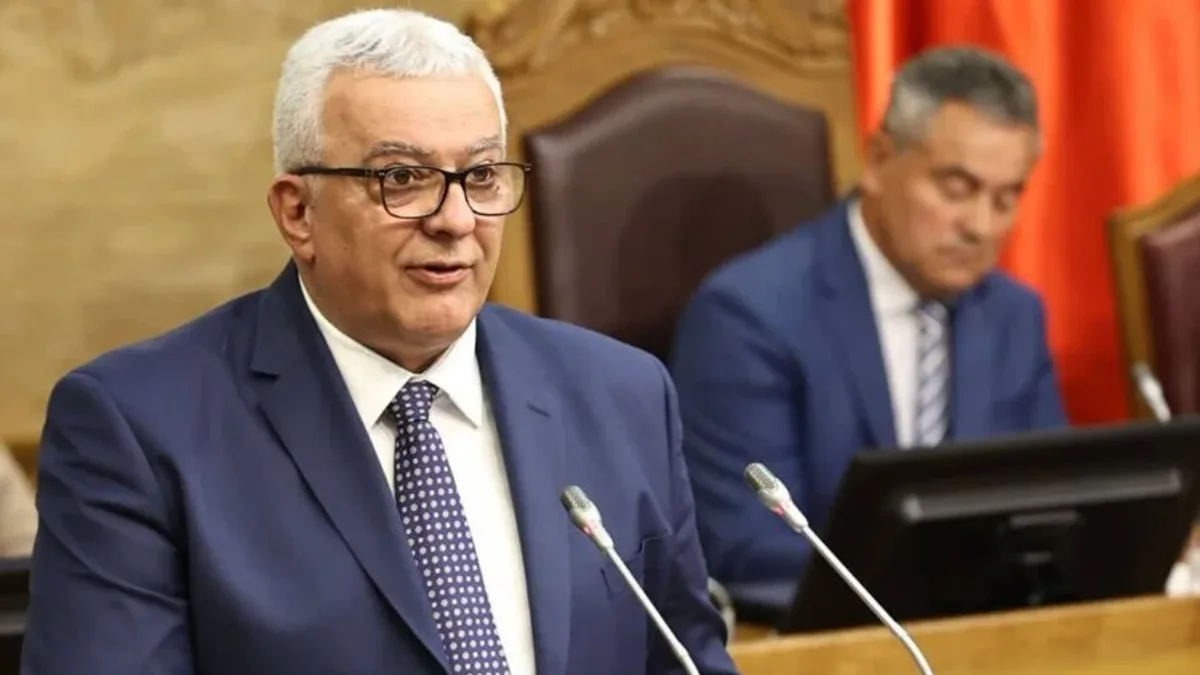
The proposal was backed by Prime Minister Milojko Spajic, parliament speaker Andrija Mandic (New Serbian Democracy) and the Democratic Party of Socialists. Despite the wide majority in the chamber, the text omitted an issue that has weighed on Montenegrin politics for years: the status of the Serbian language, spoken by roughly 43.5 percent of citizens according to the 2023 census, making it the most widely used in the country.
Why did the omission of Serbian trigger a split?
The answer lies in the structure of the ruling coalition. Milan Knezevic’s Democratic People’s Party was the only bloc to vote against the draft and then walked out of the ruling majority. As their reason they cited not only the absence of the Serbian language, but also the questions of the national tricolor and dual citizenship, which in their view remain unresolved.
Knezevic told the parliamentary debate that without constitutional recognition of Serbian he would not accept what he called a false reconciliation. For a segment of Serbs in Montenegro, who make up a significant share of the electorate, reforming the judiciary while the language question stays open looks like a choice of priorities in which their demands are again set aside. The DNP’s departure narrows the government’s room for maneuver at a moment when it needs every vote.
Podgorica, for its part, frames the whole package as a step toward the European Union. The amendments are part of aligning with standards for Chapter 23, which covers the judiciary and fundamental rights and is considered one of the toughest in the negotiations. The government’s message is plain: reforming the courts cannot wait on politically sensitive topics that could stall the entire process.
What comes before autumn
Adopting the draft is not the end of the procedure but its midpoint. A 30-day public consultation follows, during which both the government and the opposition are expected to press for a text shaped to their liking. The final vote is scheduled after that, no later than September 4.
The key obstacle is the arithmetic. Final adoption of the amendments requires a two-thirds majority, meaning at least 54 lawmakers in the 81-seat parliament. With 70 votes for the draft the government sits above that threshold, but the DNP’s exit and three decades of disputes over national questions show the mood can shift before the finish. Some lawmakers who backed the draft now are conditioning their final support on concessions on other points.
The Serbian language remains where it stood before the vote: present in the daily life of the majority, yet without the constitutional confirmation its speakers demand. Will Podgorica manage to align its path into the European Union with the demands of its largest linguistic community, or will judicial reform and the Serbian language question stay on two separate tracks?