Dodik and Covic in Mostar: Annul All High Rep Decisions
SNSD and HDZ BiH delegations met in Mostar and demanded that all decisions by high representatives be declared void, calling for a clear deadline and exit strategy for the acting envoy.

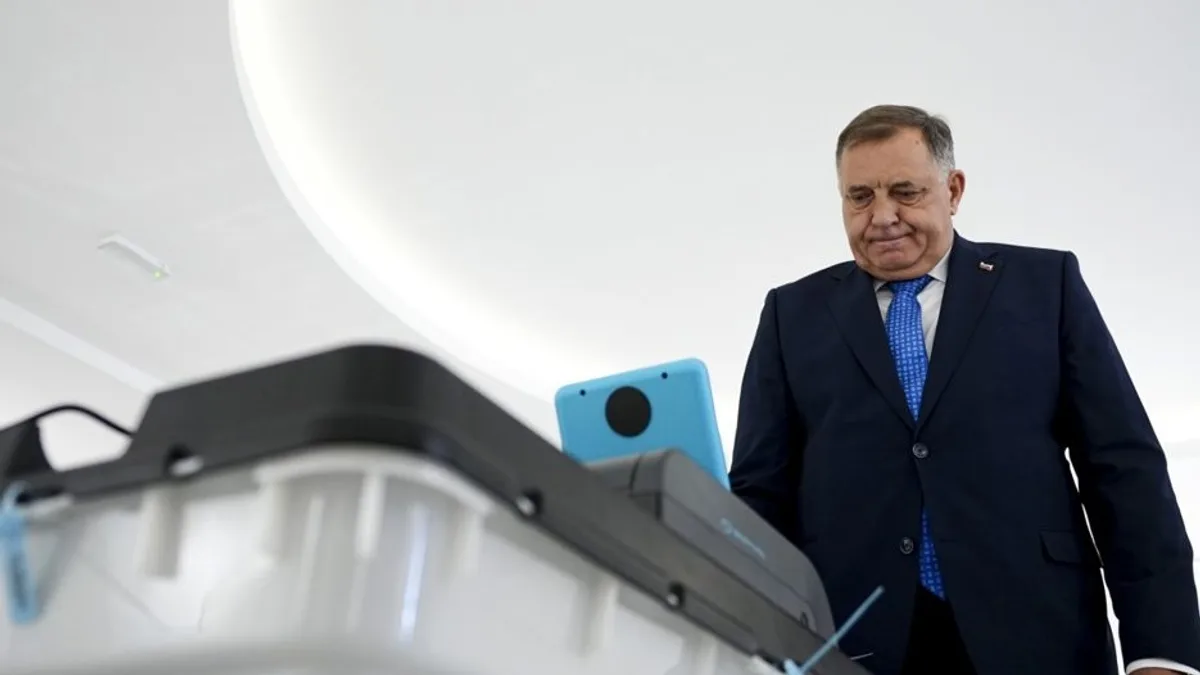
- Delegations of SNSD and HDZ BiH met on July 13 in Mostar, led by Milorad Dodik and Dragan Covic.
- Both parties want all decisions by high representatives to be declared void.
- Dodik said Republika Srpska will not consent to changing how the Bosnian Presidency member is elected.
- Covic asked that the current acting high representative be given a clearly defined deadline and exit strategy.
Delegations of the Alliance of Independent Social Democrats and the Croatian Democratic Union of Bosnia and Herzegovina met on July 13 in Mostar, led by the two party presidents, Milorad Dodik and Dragan Covic. The meeting produced a joint message: the stability of Bosnia and Herzegovina rests on the Constitution, and an agreement among domestic actors is the only way forward. Two political blocs that have spent years operating from different positions this time emerged with a coordinated demand.
The central point of the meeting was the role of the high representative. Both parties want every decision taken by high representatives to be declared void. Covic went further, asking that the current acting high representative be given a clearly defined deadline and an exit strategy, which raises the question of how long that institution will remain in its present form. Dodik said Republika Srpska will not consent to changing the manner of electing the member of the Bosnian Presidency through amendments to the Constitution.
Unlike Dodik’s earlier statements, which he most often delivered on his own, this message came alongside Covic and with a concrete demand tied to the election of the Presidency member and to a deadline for the high representative. The joint appearance of the two parties changes the weight of the message, because both the Serb and the Croat political blocs now stand behind it.
What does a joint SNSD and HDZ front mean for institutions?
The Mostar meeting shifts the debate over Bosnia and Herzegovina from the terrain of individual statements to that of a coordinated platform. When two parties from different constituent peoples advance the same demand, it stops being one side’s message and becomes a political position around which a broader front gathers. That is especially visible in the question of electing the Presidency member, where Dodik explicitly rejects amending constitutional matter without the consent of Republika Srpska.
The demand to annul all decisions by high representatives, together with the call for an exit strategy for the acting envoy, steers the dispute toward the question of jurisdiction. Instead of separate arguments over specific moves, the two parties raise a matter of principle about the mandate and the limits of that institution. The message that stability rests on the Constitution serves as the frame into which every other demand is placed.
The constitutional framework as common ground
By stressing the Constitution as the foundation of stability, SNSD and HDZ BiH try to present their joint demand as a return to agreed rules rather than their dismantling. That moves the debate onto the terrain of constitutional matter, where any change requires the consent of all actors. For Dodik, that consent is precisely the line that, as he specified, Republika Srpska will not cross when it comes to electing the Presidency member.
The message that agreement is the only way forward at the same time leaves room for continued talks, but under the conditions the two parties have now clearly set. The next move depends on how the current acting high representative and other political actors in Bosnia and Herzegovina respond to these demands. Will the joint SNSD and HDZ front move the debate toward a new agreement or toward a new deadlock?