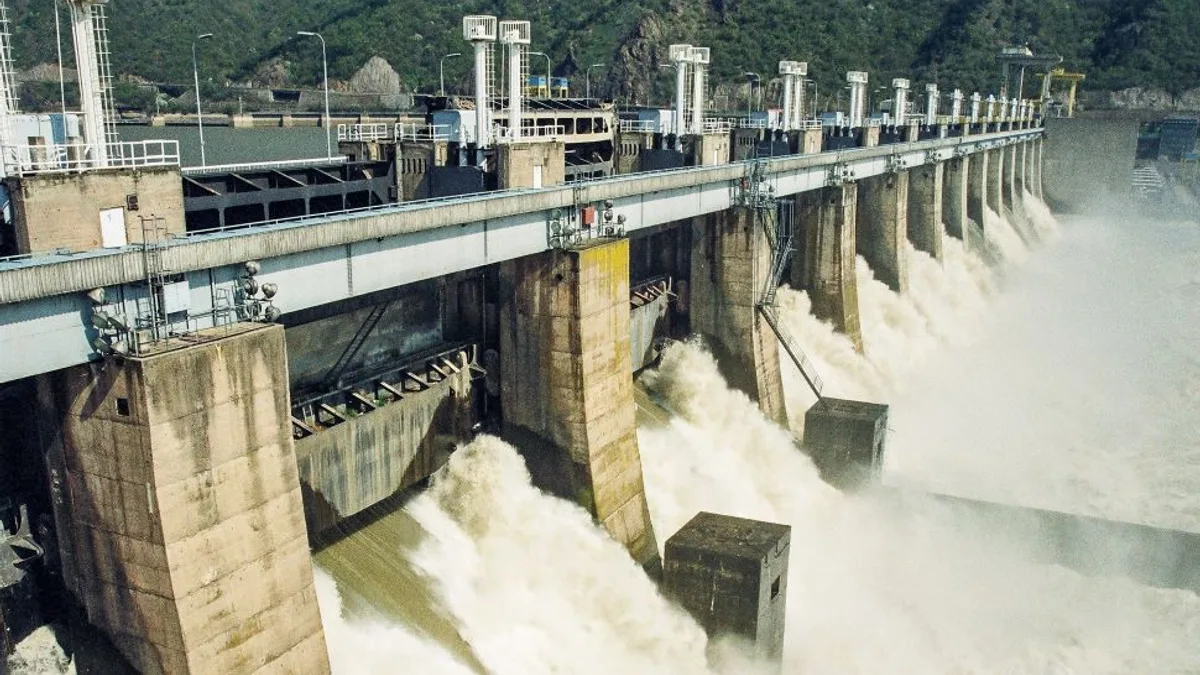
Low Danube Halts Pumping Stations, Water Supply Stable
Serbia's Operational Team says most of the country has no water supply restrictions, but the low Danube has shut down the Bezdan 2 and Bogojevo pumping stations.

The Operational Team of Serbia’s Republic Staff for Emergency Situations said on August 5 that most of the country’s territory has no water supply restrictions caused by water shortages. Any disruptions on record, the team said, are local in nature, and the relevant authorities are working to resolve them. The team includes Serbian Prime Minister prof. dr Djuro Macut, line ministers, and representatives of the relevant ministries and other bodies, and it now meets every day.
The session reviewed the impact of the exceptionally low Danube water level, and of the forecast continuation of the heat wave, on water supply, on the operation of the Danube Tisza Danube Hydrosystem, and on industry and agriculture. It also concluded that electricity supply is under control and that there is no risk of restrictive measures being applied.
The daily meeting schedule was not a decision made over the weekend. It follows from conclusions adopted at a Republic Staff session on July 30, which instructed the Emergency Situations Sector of the Ministry of Interior (MUP) to organize daily meetings of operational staffs from August 4, in response to the heat wave, drought, drinking water shortages, and open air fires. We already reported on the introduction of these daily meetings. The August 3 session was initiated by Macut and chaired by Deputy Prime Minister, Interior Minister, and Republic Staff commander Ivica Dacic. Today’s report is therefore the first concrete status check since that daily mechanism began operating.
Why Did the Bezdan 2 and Bogojevo Pumping Stations Stop?
The exceptionally low Danube water level has made it impossible to operate the Bezdan 2 and Bogojevo pumping stations, so no new water can currently be pumped into the Danube Tisza Danube Hydrosystem. That is the most concrete figure to come out of the session. The canal network is not being replenished and is instead drawing down what it already holds, and irrigation, drainage, and part of Vojvodina’s economy depend on it.
The public water management company Vode Vojvodine has begun preparatory work on emergency deepening of the intake canal at the Bezdan 2 station. Plans also call for building an earthen dam and for installing and starting up mobile generator units at both locations. No deadline for completing this work has been announced.
Health Institutions and Water Quality Control
Health institutions are, in most cases, connected to the public water supply and have regular service, with no reported outages that would threaten their operation, the statement said.
Several institutions are carrying out monitoring. The Environmental Protection Agency conducts regular and extraordinary monitoring of Danube and Sava water quality, the Institute of Public Health of Vojvodina is preparing a risk analysis for the deterioration and contamination of surface waters, and the Institute of Public Health of Serbia “Dr Milan Jovanovic Batut” is tracking the health safety of drinking water and the state of supply. The risk of a disruption to the population’s drinking water supply has not been assessed so far, and sampling and laboratory testing continue. At controlled bathing areas and pools across most of the country, no bans or recommendations against swimming have been issued.
Navigation Continues, But Slower and Costlier
The Operational Team noted that the low water level is a serious challenge for river traffic and transport, since it reduces vessel capacity, lengthens transport times, and raises shipping costs. The statement issued after the session said: “Navigation on the Danube through Serbia has not stopped, but it is taking place under difficult conditions.”
The bigger problem, the team assessed, is in some neighboring Danube countries, where critically low water levels have led to navigation restrictions and the cancellation of some passenger cruises.
The agenda also included the wildfire in the Deliblato Sands, whose firefighting effort is being led by Serbia’s Ministry of Interior.
Health Risk Elevated, High in Two Districts
The public health risk from prolonged exposure to high temperatures has been assessed as elevated, and as high for the Rasina and Pcinja districts. The groups listed as most at risk are:
- young children and the elderly
- pregnant women and people with chronic illnesses
- people who are overweight
- outdoor workers
- people staying in poorly ventilated, non air conditioned spaces
The Labor Inspectorate of the Ministry of Labor, Employment, Veteran and Social Affairs has organized intensified, extraordinary inspections nationwide of compliance with workplace safety and health rules for outdoor work, on construction sites, in agriculture, and in utility services.
According to the forecast of the Republic Hydrometeorological Service, the heat wave will be most intense from August 5 to 8, with maximum daily temperatures around 40 degrees Celsius. These are also the days that will determine whether the emergency work at Bezdan is finished before the water level drops again.