Transparency Serbia Reports RIK Over Voting Screens
Transparency Serbia is asking the Public Procurement Office to check whether RIK broke the law by ordering 30,000 voting screens worth about 700 million dinars without a public tender.

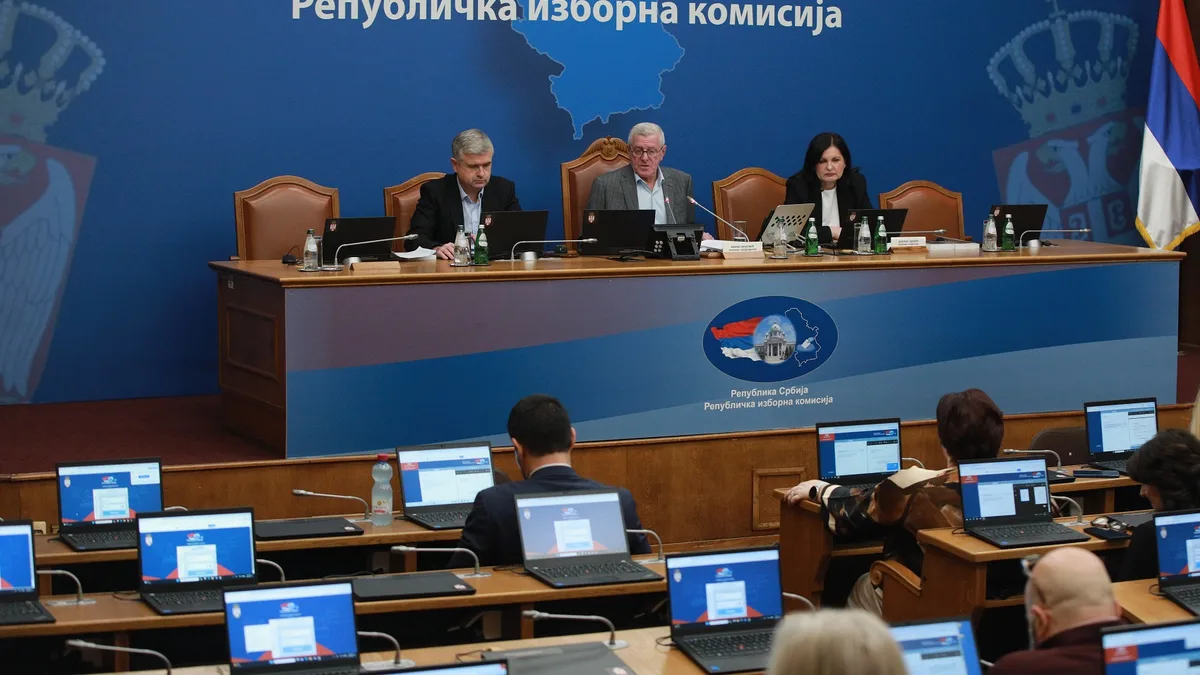
The NGO Transparency Serbia filed an initiative today, August 31, with the Public Procurement Office, asking it to determine whether the Republic Election Commission (RIK) broke the law when it launched a procurement of 30,000 polling booth screens, worth about 700 million dinars, or roughly six million euros, without publishing a public tender.
RIK adopted the decision on the negotiated procedure, public procurement No. 5/26, at an evening session on August 24. The screens are enclosed, cabin type booths meant to supplement, not fully replace, the cardboard screens currently used at polling stations. Under the commission’s decision, both types of screens will stay in use at the same time.
Why Does Transparency Serbia Consider the Purchase Problematic?
In its initiative, Transparency Serbia states that the procurement was not included in RIK’s annual procurement plan, and that there are no legal grounds of urgency that would justify bypassing a public tender. The organization also points out that the recommendation from the OSCE Office for Democratic Institutions and Human Rights (ODIHR) on improving the secrecy of the vote has been known since its report on the December 2023 elections, meaning the commission had two and a half years to address the issue before declaring the procurement urgent.
Sources differ on the numbers from the session where the decision was made. Tanjug reported that of the 13 commission members present, 10 voted in favor, three against, and none abstained. The portal Nova ekonomija, citing information released after the session, reported a different breakdown: 11 in favor, five against and one abstained. RIK has not yet published the minutes that would settle the discrepancy.
RIK Chairman Vladimir Dimitrijevic explained the urgency of the procurement by pointing to the upcoming elections and the need to fulfill ODIHR’s recommendations.
What matters to us, and it does matter, is providing voters with all the technical means to lawfully conduct the elections. In this case we’re talking about screens to protect the secrecy of the vote, and other materials. We already procured the other materials on time. I hope we’ll procure this one on time as well.
He said this at the RIK session, Tanjug reports.
The decision did not pass without pushback inside the commission itself. RIK member Vladimir Dragas said there was no element of urgency since the elections have not yet been officially called, and announced he would vote against the proposal for that reason. Deputy RIK member Marko Zivanovic challenged the estimated value of the procurement and asked why 30,000 booths were being bought at all when the existing cardboard screens would also stay at polling stations. Dimitrijevic replied that the commission was procuring half of the total number needed, and that some media estimates of the procurement’s value, in his words, came from people who were not qualified to make that kind of assessment.
The new voting booths are 200 centimeters tall and 100 centimeters wide and deep, with a possible deviation of up to five centimeters. The frame is aluminum, with dark gray exterior wall panels and black interior panels. What’s new compared to the current design is a fourth side, a dark gray opaque curtain that closes the booth around the voter on all sides. The existing cardboard screens, measuring 160 by 80 centimeters, have only three sides and, under the commission’s decision, will remain at polling stations alongside the new booths.
What Does ODIHR Say About This?
On August 29, the portal Nova asked ODIHR whether the new booths meet the organization’s recommendations, since both President Aleksandar Vucic and RIK have cited that recommendation as the main reason for the procurement’s urgency. The OSCE Office for Democratic Institutions and Human Rights responded that the recommendations are well known, but that the choice of solution is up to the domestic authorities.
While improving the secrecy of the vote has been a recommendation in many of ODIHR’s final election reports on Serbia, decisions on how best to achieve that remain with the authorities.
ODIHR added that it is “aware of the ongoing process and closely following developments regarding the implementation of its previous election recommendations for Serbia, including those on the secrecy of the vote, and the design and placement of voting screens.” According to ODIHR, the observation mission for the upcoming early parliamentary elections will assess, among other things, to what extent earlier recommendations, including the design of the screens, have actually been fulfilled, and its findings will be included in ODIHR’s election observation report.
The Public Procurement Office must now decide whether to open a monitoring procedure into procurement JN 5/26 based on Transparency Serbia’s initiative. Until that decision comes, it remains an open question whether the screen procurement will be finished before President Vucic officially calls the elections, whose date, based on announcements so far, is expected to be October 18 or 25.