Serbian Students Demand Diaspora Voter List From Ministry
Students in Blockade listed countries where diaspora voter registrations have sat unprocessed for weeks and demanded an urgent report from Serbia's Foreign Ministry and the election commission.

On the morning of September 26, a month before Serbia’s snap parliamentary elections set for October 25, the protest movement Students in Blockade posted a demand on social media addressed to the Ministry of Foreign Affairs (MSP) and the Republic Election Commission (RIK). They are asking for an urgent, official report on how many applications for the voter roll have been received, processed and left unprocessed at each diplomatic and consular mission, along with a list of the cities where registrations are still sitting untouched.
“We demand an urgent response from the Ministry of Foreign Affairs and the Republic Election Commission over the systemic violation of the voting rights of Serbian citizens abroad,” the students wrote in their post.
According to them, deadlines are running out, and thousands of people are already feeling the consequences.
“Thousands of citizens around the world have been left without a response or confirmation, which directly prevents them from exercising a right guaranteed by the Constitution,” Students in Blockade said.
What are the deadlines for registering and opening polling stations
The deadline to register for voting abroad expires at midnight on October 3, Belgrade time. The Foreign Ministry is supposed to send its proposal on polling stations abroad to the Republic Election Commission by October 4, while RIK is legally required to formally declare the polling stations by October 5. Opening a polling station in a given city requires at least 100 registered voters, though the ministry can, in exceptional cases, recommend opening one with fewer registrations.
Where students say the biggest problems are
In their post, Students in Blockade listed what they describe as the most alarming cases by country:
- Germany: in Berlin, Stuttgart and Frankfurt, hundreds of applications have gone unprocessed for more than seven days, while voters in Hamburg, according to the students, are receiving contradictory instructions on where they will vote
- United Arab Emirates: applications submitted in Abu Dhabi on September 13 still have not been processed
- China: citizens from Guangdong and Hong Kong have been redirected from the consulate in Shanghai to the embassy in Beijing, where, according to the post, they have been waiting days for a decision
- Czech Republic: the consulate in Brno cited a lack of capacity and referred voters to Prague, while the honorary consul in Singapore, per the same source, refused to consider opening a polling station
- The list also includes Cyprus (Nicosia), the United Kingdom (London), Italy (Rome, Milan, Bologna and Florence), Indonesia (Jakarta), as well as Bosnia and Herzegovina, Montenegro, Belgium, Romania, Slovenia, France, Ireland and Switzerland and Spain
Students in Blockade argue that denying registration on the grounds of insufficient capacity amounts to a violation of the law, adding a pointed assessment of how the diplomatic and consular network is handling the matter.
“We consider any attempt to lower turnout in the diaspora through obstruction and delay a direct attack on the electoral process,” the students said, warning: “Obstructing the right to vote is a criminal offense.”
What the Republic Election Commission says
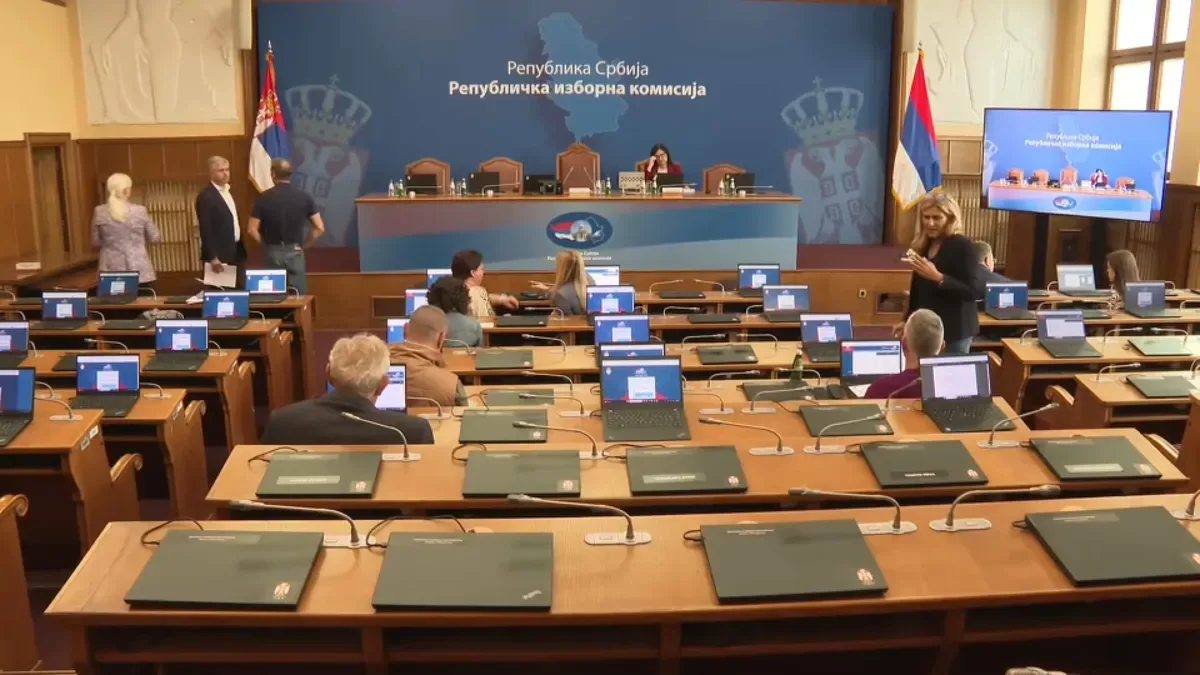
RIK member Jelena Vranjes told N1 on September 25, a day before the students’ post, that the problem lies in communication between the election administration and Serbia’s missions abroad.
“The problem arose because we are not getting feedback from the diplomatic and consular missions,” Vranjes said.
According to her, RIK has had no coordination with the Foreign Ministry on the number of incoming applications since September 10, which is why the two bodies formed a joint working group meant to resolve the issue before a final list of polling stations abroad is set.
As of this article’s publication, the Foreign Ministry had not responded to the students’ request posted on September 26, nor had it previously responded to questions from Danas, whose newsroom sought comment on September 25 about the problems with diaspora registrations. The ministry also declined to tell N1 whether the slow pace of opening polling stations was purely procedural. Foreign Minister Marko Djuric has previously denied accusations that his ministry is deliberately obstructing voting by citizens abroad, without elaborating further on those claims.
This publication previously covered the same issue, in a report titled “Diaspora Faces October 3 Deadline as RIK Says It Has No Data From Embassies,” in which RIK likewise pointed to a lack of feedback from embassies and consulates. The students’ new request, with its list of specific cities and dates, now adds further detail to that claim.
Whether the Foreign Ministry and the Republic Election Commission will publish the requested report before the registration deadline expires at midnight on October 3 remains unknown. As of this article’s publication, no response had arrived to the students’ request sent on September 26.